



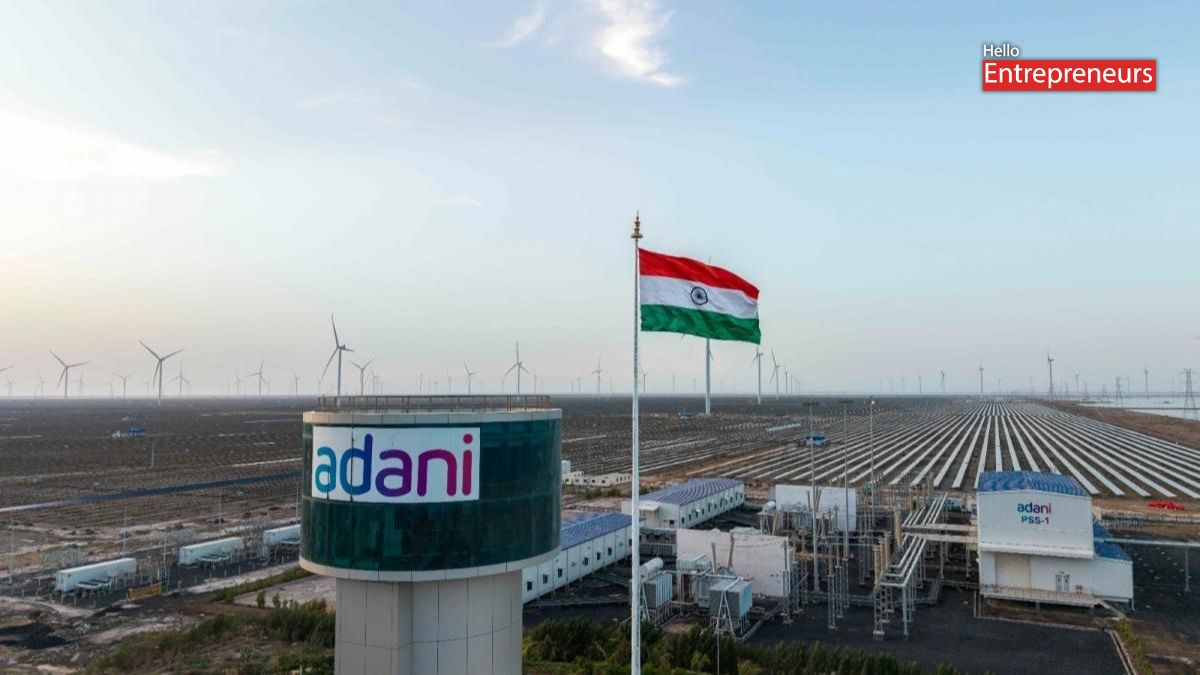
New Delhi: The company’s board approved a proposal in July 2026 to raise up to ₹15,000 crore through a Qualified Institutional Placement (QIP) or other permitted methods. At the same time, Adani Power proposed increasing its overall borrowing limit from ₹75,000 crore to ₹1 lakh crore. Shareholders subsequently approved the higher borrowing limit.
The fundraising plan comes at a time when India’s power sector is entering another major investment cycle. Electricity demand is rising because of industrial activity, urbanisation, data centres, electric mobility and the wider digital economy.
Adani Power is already one of the country’s largest private-sector power producers, with a large thermal-power portfolio. The company is also looking at opportunities to expand generation capacity and secure long-term power supply contracts.
Its latest financial performance gives investors another reason to watch the company closely. For the quarter ended June 2026, Adani Power reported consolidated continuing revenue of ₹17,936 crore, up 26.6% from ₹14,167 crore a year earlier. Continuing EBITDA increased 21.6% to ₹6,983 crore, which the company described as its highest-ever quarterly performance.
Net profit was reported at ₹4,806 crore, representing a 42% year-on-year increase.
The ₹15,000-crore capital raise could give the company additional financial flexibility at a time when the group is investing across multiple infrastructure and energy businesses.
However, raising capital also comes with questions. If the company issues fresh equity through a QIP, existing shareholders could face dilution. On the other hand, raising money through debt can increase interest costs and leverage.
This is why the increase in the borrowing limit to ₹1 lakh crore is important. It does not mean that Adani Power will immediately borrow the entire amount. Instead, it gives the company greater room to raise funds when required for acquisitions, projects, expansion or refinancing.