



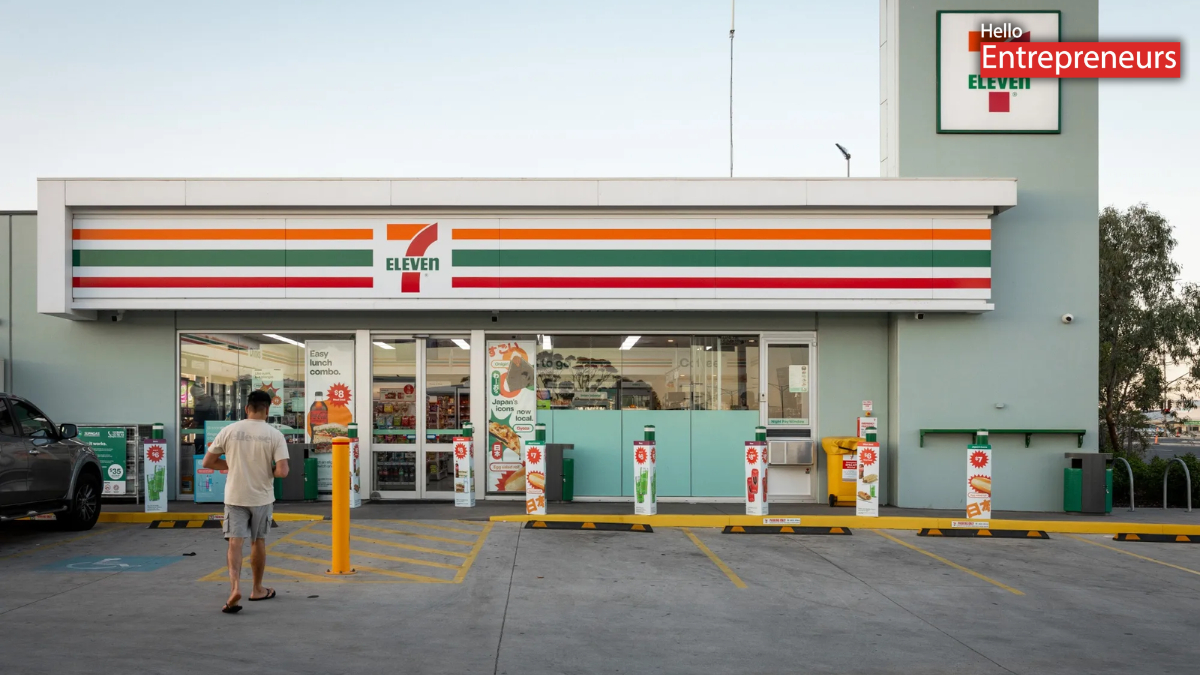
New Delhi: Somewhere in Mumbai or Pune, a shutter came down on September 30 for the last time. By the end of that day, all 31 remaining 7-Eleven stores in India had closed. Seven & i Holdings confirmed that Reliance, its master franchisee in the country, shut every outlet on that date.
It took the parent company until October 6 to say so publicly. The stores had mostly slipped away without much fuss.
The chain arrived with some fanfare. Reliance Retail opened India’s first 7-Eleven in an Andheri East apartment complex in 2021, promising a fast rollout across Mumbai. The network eventually reached a peak of around 60 locations. Then it shrank. By the end of 2025 the count was still about 60, and within a year it had been cut roughly in half before the rest were wound down.
So why? Nobody on the record is saying. Seven & i declined to comment on the reasons, and Reliance hasn’t made an official statement either. What we have is a pattern in the reporting, and it’s a consistent one: the stores got squeezed.
On one side sat the kirana, the neighbourhood grocer that has been selling cigarettes, biscuits and phone recharges for generations, usually at lower prices and often on credit. On the other side were quick-commerce apps that promise groceries in minutes. That left physical convenience stores struggling to bring in enough sales to cover rent, staffing, inventory and distribution. A 7-Eleven needs a lease, a uniform and a cold chain. The kirana has none of that overhead, and the app doesn’t need you to walk anywhere.
The numbers back it up. In the year to March 2026, 7-India Convenience Retail posted revenue of about Rs920m and a net loss close to Rs900m. That’s roughly ₹92 crore in sales against a ₹90 crore loss. Put differently, the business lost almost as much as it earned. It’s hard to see how any franchise partner sits through that for long.
There’s a wrinkle worth flagging, though. Reliance isn’t exactly retreating from retail. If anything it’s doubling down, just on different formats. Reports say it’s sharpening its focus on Smart Bazaar, Smart Point and JioMart, and putting more money into larger grocery formats and digital commerce. The company’s own CFO said JioMart’s hyperlocal service draws on more than 3,100 stores across more than 1,200 cities. So the same company that couldn’t make 7-Eleven work is a serious player in the quick-delivery model that helped sink it. Make of that what you will.
Staff, at least, seem to be landing softly. Employees from the 7-Eleven operation are reportedly being absorbed into Reliance Retail’s wider grocery and neighbourhood businesses. Whether that holds for everyone, I can’t say. One outlet asked Seven & i about job losses and, as far as the published piece shows, hadn’t gotten an answer.
Online, the reaction has been a mix. Some people were surprised the chain had been operating at all, which says something on its own. Others shrugged and pointed out that apps now do the job faster than a corner store ever could. Both reactions are fair, honestly.
Seven & i isn’t calling it a permanent goodbye. The company said its wish to serve Indian customers remains and that it’s exploring options to build a presence over the long term. That could mean a new partner, a different format, or nothing for years. There’s no timeline.
For now, 7-Eleven has left the market it entered five years ago. India didn’t reject convenience, as one analyst put it, but it changed what the word means. The kirana stayed, the apps grew, and the franchise in between ran out of room.

