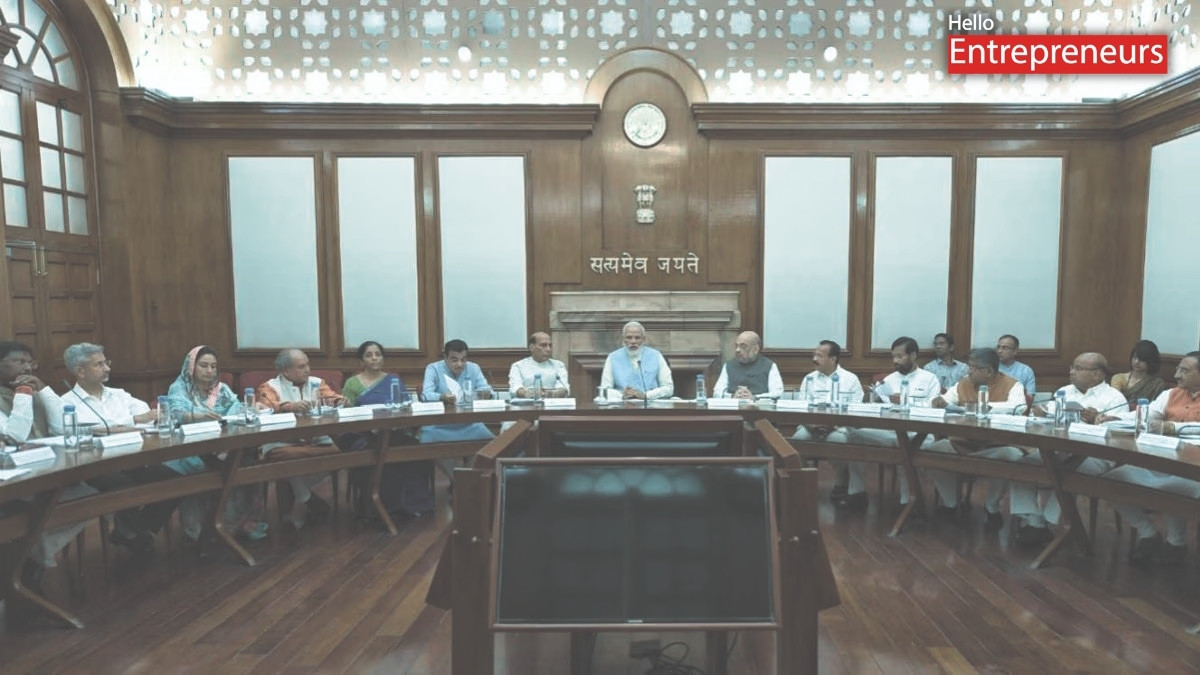








New Delhi: India is preparing a large credit guarantee plan worth around ₹2–2.5 lakh crore, aimed at improving access to loans for small businesses and supporting smoother credit flow across the economy. The proposal, which has reportedly received Cabinet approval, is expected to work as a risk-sharing system between the government and lenders rather than a direct lending program.
At a time when businesses continue to face uneven demand and occasional cost pressures, credit availability, especially for MSMEs, remains an important policy focus. The new framework is designed to make banks and financial institutions more confident about lending by reducing their exposure to defaults.
How the scheme is expected to work
Under the proposed structure, lenders may receive up to 90% credit guarantee coverage on loans up to ₹100 crore, depending on the category and borrower profile. This means that if a borrower fails to repay, a large part of the loss would be covered under the guarantee system.
The program is likely to be implemented through the National Credit Guarantee Trustee Company (NCGTC), which already manages several MSME-related guarantee schemes.
The government’s estimated financial backing for the scheme is around ₹17,000–18,000 crore, which will act as a buffer for the guarantee commitments. Importantly, this is not direct spending but a contingent liability that is used only in the event of defaults.
Focus on MSMEs and credit access
MSMEs remain at the center of this plan. The sector contributes about 30% of India’s GDP and employs over 110 million people, making it a key part of the country’s economic structure.
However, access to formal credit has often been uneven. RBI data show MSME credit growth slowing to around 5–6% in recent periods, reflecting cautious lending by banks amid risk concerns and past sector stress.
By offering guarantees, the government aims to reduce this hesitation and encourage more lending, especially to small and medium-sized enterprises that lack strong collateral or long credit histories.
Building on earlier credit guarantee schemes
India has used similar models before, especially during the pandemic. The Emergency Credit Line Guarantee Scheme (ECLGS) helped support businesses during the COVID-19 period by ensuring liquidity flow when economic activity slowed sharply.
Overall, MSME-focused guarantee programs in recent years are estimated to have supported over ₹9 lakh crore in lending, making them one of the largest credit support systems in the country.
The new proposal, however, is larger in scale and is expected to extend beyond emergency support to a more structured, long-term credit enhancement system.
Economic context behind the move
The timing of the scheme comes as businesses continue to navigate a mixed global environment. Supply chain pressures, fluctuating input costs, and uneven export demand have created working capital stress in some sectors.
Reports suggest that part of the scheme’s focus is also on supporting industries indirectly affected by global trade disruptions, including higher logistics costs and uncertain external demand.
In this context, smoother access to credit is seen as important for maintaining business stability and supporting expansion plans, especially for smaller firms.
Impact on banks and financial institutions
For banks and NBFCs, the scheme could change lending behavior at the margins. With up to 90% risk coverage in some cases, lenders may be more willing to extend credit to segments that were earlier seen as moderately risky but commercially viable.
Public sector banks, which handle a large share of MSME lending, are expected to benefit significantly. Private lenders and fintech-driven platforms may also find more room to expand unsecured or semi-secured lending portfolios.
However, financial institutions still need to maintain strong credit assessment practices. While guarantees reduce losses, they do not eliminate the importance of borrower quality and monitoring.
Structure and fiscal exposure
The scheme’s design balances expansion with caution. Although the total guarantee cover is pegged at ₹2–2.5 lakh crore, the actual government exposure is limited to around ₹17,000–18,000 crore, depending on utilization and default levels.
This structure allows credit expansion without immediate large fiscal outgo, while still providing confidence to lenders.
Execution will be key
While the framework looks strong on paper, its success will depend on execution. Past credit guarantee schemes have shown that delays in claim settlement or unclear eligibility rules can reduce lender confidence.
Smooth digital processing, faster approvals, and clear guidelines will be important to ensure the system works efficiently. Coordination between banks, NBFCs, and the implementing agency will also play a key role.
The road ahead
If implemented effectively, the ₹2.5 lakh crore credit guarantee plan could support small businesses, improve liquidity in supply chains, and deepen formal lending across India’s economy.
More importantly, it reflects a broader policy direction using structured risk-sharing tools rather than direct lending to expand access to credit.
For now, the proposal signals a continued effort to strengthen India’s credit ecosystem in a way that supports growth while managing financial risk in a controlled manner.