


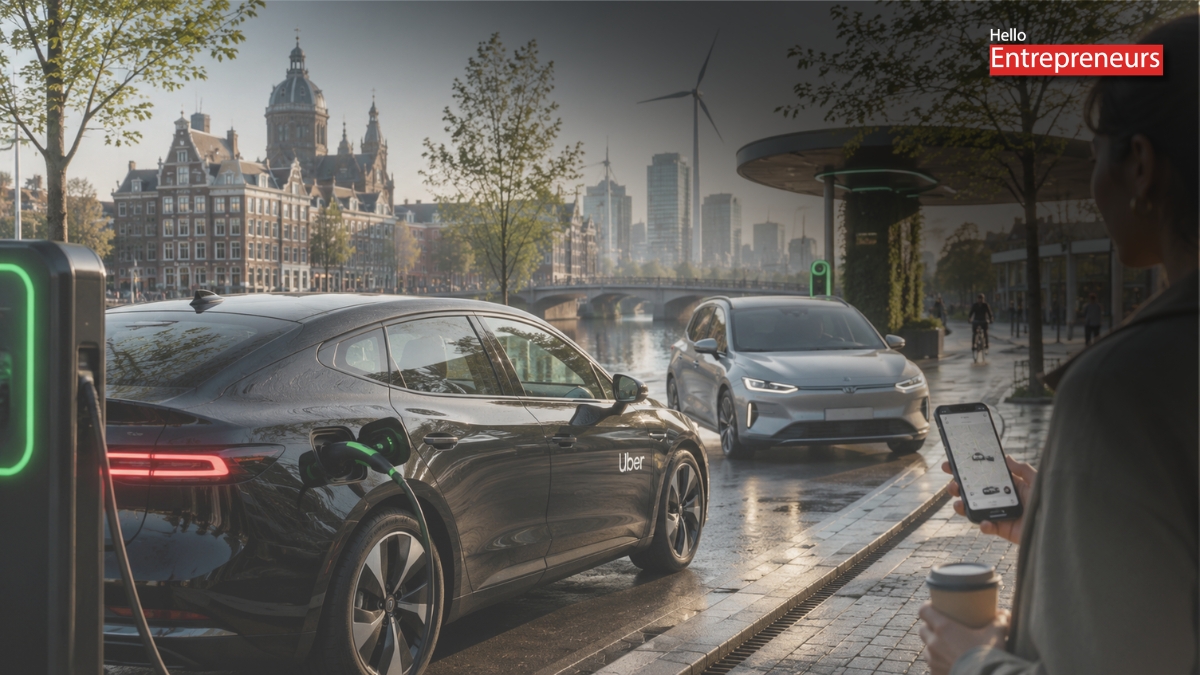
Uber’s EV push shows something pretty simple: good intentions aren’t enough if you want sustainability to stick. You’ve got to make it part of the business, not just slap it on as a feel-good label.
Take Uber’s story. It started out as a regulatory headache in London—new clean-air rules and stricter congestion charges meant drivers faced higher operating costs. Uber could’ve treated this as a regulatory issue and called it a day. But they saw an opportunity and ran with it.
In 2019, Uber came up with the Clean Air Fee for London rides. Drivers got help buying or leasing electric vehicles thanks to this surcharge. That’s actually smart—it tackled the biggest hurdle for most drivers: paying up front to swap their gas cars for EVs. By 2022, Uber had pooled £145 million for this, working with car makers like Nissan, Kia, Hyundai, plus charging providers and city councils to make EV charging easier. By late 2025, Uber’s London rides were 40 percent electric, which is a pretty big shift.
Along the way, Uber learned something unexpected. Passengers didn’t really care enough to shell out extra cash for a green ride—they were happy to wait longer for an EV, but only if the price stayed about the same. That changed the game. Sustainability wouldn’t catch on just because riders wanted it; drivers had to see a benefit, too. Uber started focusing on ways to make EVs more appealing for drivers. That meant thinking bigger—charging station maps, a dedicated EV Hub in the app, smarter trip matching so EV drivers wouldn’t end up stranded with a dead battery.
And they didn’t stop with just driver tools. Uber Green launched, giving riders a way to pick EVs and see their CO2 savings per trip. A Go Get Zero event rallied product teams to show real progress and commit to deadlines, not just vague targets.
Here’s the tough part: announcing climate goals is easy. Changing behavior? That’s the real challenge. It needs decent incentives, infrastructure, good design, partnerships, and clear measurement. Uber’s experience reminds us that sustainability looks different depending on where you are—London and Amsterdam moved fast because local regulations, infrastructure, and economics lined up. Other places, not so much; some face subsidy cuts, others struggle with charging access. One-size-fits-all just doesn’t work.
What Uber really did was turn outside pressure into an internal shift. They’re not done yet. Adoption isn’t equal everywhere—and drivers still worry about cost, charging time, and whether plugs are around. But Uber’s approach lays out a practical playbook: make the green option make sense financially, make it easy to use, and make it obvious in the product.
For any business leader, it’s a clear takeaway: climate action grows not because companies say they care, but because they make the cleaner option genuinely better for the people choosing it every day.
So, what’s the big lesson? Sustainability takes off when it’s grounded in smart economics, solid infrastructure, thoughtful design, and public accountability—not just wishful thinking or empty pledges.
FAQ
Uber’s zero-emission goal?
They’re aiming for a zero-emission mobility platform by 2040—fully electric rides in the U.S., Canada, and Europe as soon as 2030.
Why was London a turning point?
New air quality rules pushed Uber to create the Clean Air Fee, helping drivers afford the switch to EVs.
What made Uber’s EV strategy stand out?
They focused on driver economics, charging access, app tools, and features for riders—building a system where EV adoption feeds on itself.