



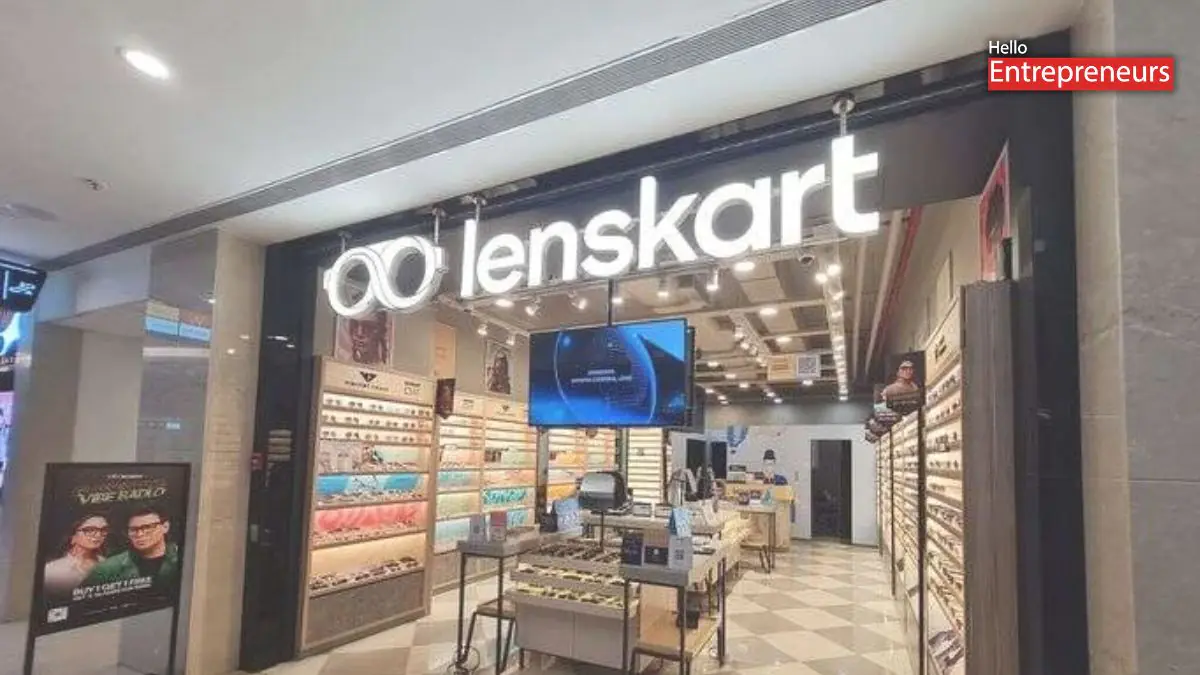
Rajesh Singh (name changed), an engineering student in Ahmedabad, urgently needed a new pair of prescription glasses, on a budget. He searched online, and only one familiar name could be trusted-Lenskart.
An IIM alumnus and a sharp-eyed, business-minded Marwari, Peyush Bansal has succeeded in eliminating the competition —and getting ahead of it. The eyewear market has been growing consistently in double digits over the years, partly due to a rise in vision correction prescription glasses and a rise in fashion trends.
Now worth upwards of $6.24 billion, the market has seen many established brands over the years- Tata Eye Plus, Himalaya Opticals, Ray Ban- but Lenskart’s massive omnichannel reach has outdone them all. Peyush’s Shark Tank appearance has acted like a lynchpin here.
No wonder students like Rajesh prefer it over other neighbourhood optician shops.” I got 2 glasses for under 2000, all inclusive. Others quote separate prices for the frame and lenses and the costs easily reach 3000. I loved the design, and the frame seems durable too,” he adds.
The road to success
Over the years, Lenskart has become one of the largest eyewear brands in India, opening more than 2500 stores across India and abroad. The company has come a long way since its establishment in 2008. Back then, Peyush and his two co-founders invested in developing the Lenskart website, initially to sell contact lenses and then eventually to sell frames and sunglasses.
A decade after launch, Lenskart saw a flurry of investments from leading equity firms- Softbank, IDG, Kedaara Capital, Aventus and others- eventually amounting to $1 billion. During this time, Bansal faced many challenges- a failed expansion into accessories, a lack of initial control on overheads, wrong hiring practices, excessive focus on clients needs and most importantly, the challenge of selling a product that places a larger emphasis on in-person interaction over discounts.
The ‘Aha!’ moment
Peyush and his team realised that, and have addressed most of the challenges faced. The result? The company eventually became profitable in 2020 after years of losses. The company pioneered the omnichannel approach, where customers can choose a frame online through its virtual try-on facility, significantly reducing returns.
Besides, Lenskart didn’t have to depend on e-commerce platforms to drive sales- they decided to create their own infrastructure for their brand- with their own manufacturing facilities, real-time stocking and forecasting based on customer insights.
The company hasn’t stopped there- they’ve put their venture capital to good use- with a responsible inorganic growth strategy. In June 2022, the company acquired a majority stake in Japanese eyewear brand Owndays for almost $400 million. Peyush and his team followed this up with another majority stake ownership in the Spanish brand Meller for €40 million.
Future Plans
Although other consumer-facing startups like Zepto, Oyo and Ola have made a mark in their respective niches, Lenskart is perhaps the real hero of India’s startups. It may have taken more than a decade to eke out a profit, but the company has clearly played it smart with the money it has received, and for good reason.
The company is soon planning for its IPO to raise Rs.2,150 crore to further expand its reach deeper across Tier II and III cities in India, besides funding future expansions and acquisitions. Recent IPOs of Ola, Ather and Swiggy lost steam after their initial euphoria, but this has actually achieved something other startups haven’t- global reach.
Almost 40% of its $760 million revenue comes from its international business across 14 countries, unlike other listed Indian startups, whose offerings are primarily focused on the Indian customer.
Lenskart has shown how e-commerce can work even for highly personalised services like prescription eyewear, where in-person consultations are crucial. This startup has become a force to reckon with, growing, learning and adapting to change- something many other startups have failed to do on time,

