



Just when the e-commerce boom started, majorly in the early 2010s, leading courier companies were suddenly given an opportunity they couldn’t refuse, of the growing demand to deliver e-commerce orders from the source to the destination anywhere in the country. Till then, the government-run India Post, along with other private courier companies like DTDC, Blue Dart and Gati, had established themselves in the market, but they were unprepared for the unique demands that e-commerce brought to them- live tracking, cash on delivery(COD) management, and the resultant infrastructure needed to make all of it possible.
The leading e-commerce players in the market- Flipkart and Amazon- had decided to set up their own logistics infrastructure across the country, mostly dedicated for their own use or for other paying users. But the e-commerce market in the 2010s was growing at a frenetic pace, with Amazon just entering the fray in 2013 and internet penetration growing quickly with the widespread adoption of mobile phones.
The unfulfilled opportunity
In the 2010s, the conventional retail channels were still going strong- neighbourhood shops and retail stores still had a sway in the market. Shopping online was still a novelty, but it wouldn’t remain so.
Though products sold online could be cheaper than the ones sold over the counter, e-commerce platforms still had to overcome the barrier of trust that prevented customers from placing their first order.
That’s why Cash On Delivery (COD) has been the primary driver of widespread goodwill and trust in e-commerce delivery. But this in itself was a challenge- that meant a fundamental shift from the pre-paid B2B deliveries courier companies were used to. They also didn’t have the necessary digital infrastructure to process returns, another customer trust feature that platforms depended upon.
While the existing players were sleeping over the opportunity, Sahil Barua and Suraj Saharan, then consultants at Bain, understood the untapped potential for the sector, and founded Delhivery, along with 3 others.
The approach, not the solution, that mattered
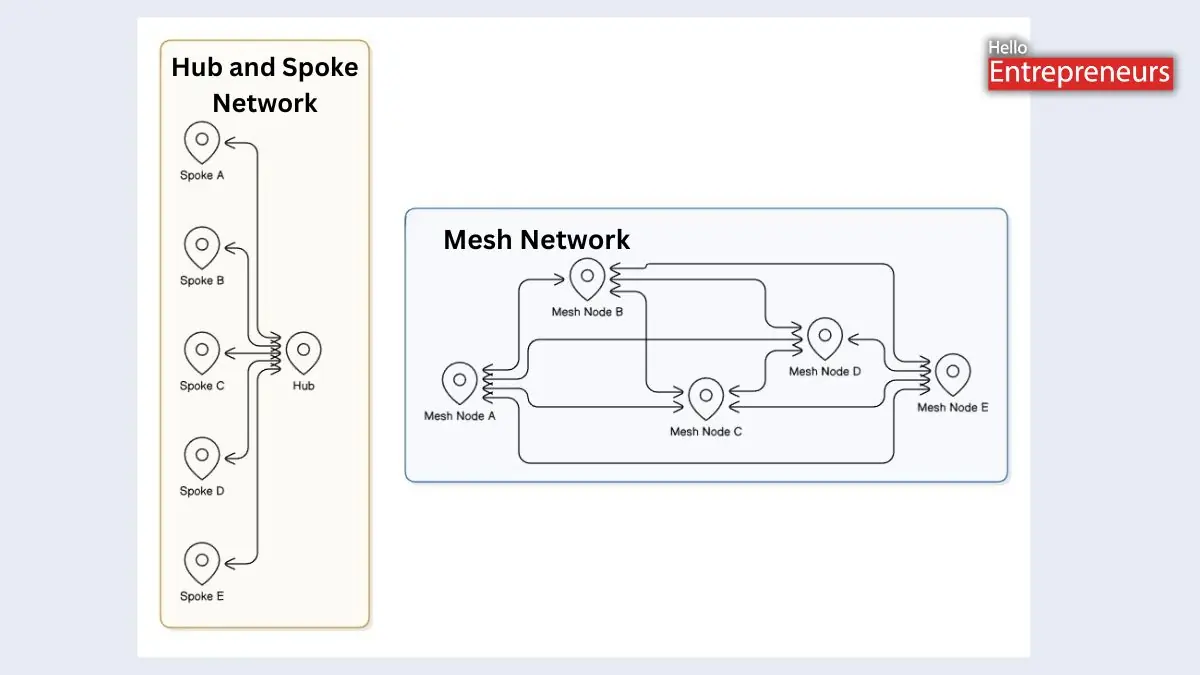
Delhivery got to work right away. First, they understood how the business worked- most couriers depended on the hub-and spoke model which was ideal for now redundant mailing of documents, but wasn’t built to replace paper with boxes, in all sizes and weights.
But Delhivery didn’t (and still doesn’t) consider itself a logistics company. The founders, having worked with the leading successful disruptive corporates back then, decided to position themselves as a solution-based service, rather than a service-based solution.
This meant three things.
- The Proprietary Logistics Operating System (OS1)

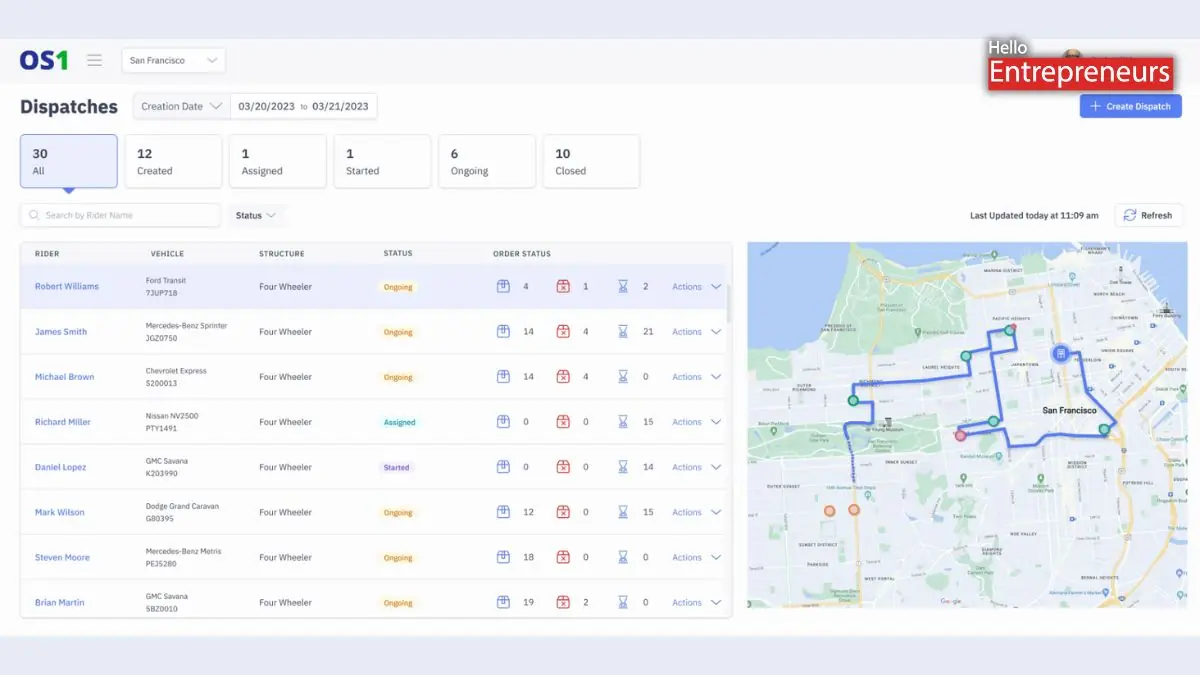
Delhivery’s OS1 platform has been a gamechanger for resource efficiency Instead of legacy, disjointed systems designed for warehousing, transport and last-mile connectivity, Delhivery was the first to use the Elastic Network Design framework. Through this, the software would decide truck travel routes between logistics hubs based on real-time demand. For example, if a hub at Bhiwandi, Thane, was overloaded with shipments, the software’s algorithms could reroute the parcels to a nearby hub, thus ensuring complete efficiency of work. To do this, Delhivery’s algorithm has been trained with over 118 million ‘intelligent decisions’ that help in routing shipments to ensure no time is needlessly wasted at any location.
- The highly efficient Mesh network
Solutions like the mesh network are only possible through algorithms, and Delhivery is one company that’s got it right Generally, most logistics providers use a hub and spoke system for shipments. If a parcel from Pune has to go to Nagpur, the parcel will first go to Mumbai, get sorted and then be sent to Nagpur through flight. But that usually increases cost, time and emissions.
Instead, Delhivery’s custom algorithms track all the shipments received, their delivery deadlines, and the type of nature of the shipments. This resulted in the highly advanced, technology-driven Point to Point (P2P) logistics model that reduced delivery times, shipment touchpoints and most importantly costs, especially in a highly fragmented market like India.
- Addressing addresses with ‘Addfix’
Though this solution reduced costs and time, there was, (and still is) a uniquely Indian problem of locating an address. Most houses, especially in rural and semi-urban areas, are landmark-based, where people depict the addresses based on the nearby landmark- turn right from the temple, the third house by the lake, etc. as Indian addresses aren’t generally identified with a uniform number structure as the West.To address this, Delhivery invested in a property address portal, Addfix. This uses machine learning and Natural Language Processing (NLP) to pin a location based on its GPS coordinates. The system then stores the location which helps the delivery agents the next time. The company has extensively used Addfix to create a whole map of delivery addresses in India, much better than the government’s outdated PIN system could ever do.
The money that flowed in, and the smart investments nurturing it
Unlike peers in the industry who used technology as a tool rather than an assistant, Delhivery has had to priortize investments in technology- both digital and physical to become what it is today. The company has consistently posted losses for years, achieving its first full year of profitability only in FY25.
To develop its capital intensive infrastructure, Delhivery has raised money from leading institutional investors like SoftBank Vision Fund, Fosun International and Carlyle Group and much more. By 2019, it achieved unicorn status and has been using the money raised to expand its reach aggressively across the country, especially in Tier 2 and 3 cities.
Initially,it focused on accessible pincodes across Tier 1 and 2 cities, eventually reaching 1,000 pincodes by 2015. Back then, the focus was solely on e-commerce, with smaller parcel deliveries.
In 2021, the company acquired Spoton Logistics, a company deeply involved in industrial assignments, a segment that Delhivery hadn’t tapped yet. This brought Delhivery deeper into the logistics ecosystem, allowing it to expand its massive Part Truck Load (PTL) network, while helping it reach almost 97% of India’s pincodes.
Following that, in 2023, the company acquired a stake in Noida-based omnichannel retail facilitator Viniculum to offer D2C brands a deeper integration into its logistics management ecosystem. That same year, the company also acquired Pune-based Algorhythm Tech Pvt. Ltd to strengthen the company’s supply chain capabilities.
The last feather in its cap was its 2025 acquisition of Ecom Express, the broke competitor that complemented its footprint in Tier 2 and 3 cities. This merger helped Delhivery dominate the market, and it may do so even further, considering its almost zero debt.
The challenges ahead
Over the years, Delhivery has created a moat around itself, mostly on the back of its patented technology. It covers almost the entire country despite many infrastructure bottlenecks. Post the Ecom acquisition, Delhivery now dominates the logistics market with an almost 30% market share, and remains one of India’s lesser-known, technology-driven startup success stories. The only threat could come from existing players enhancing their offerings to beat the company, most of which seems highly unlikely.

