



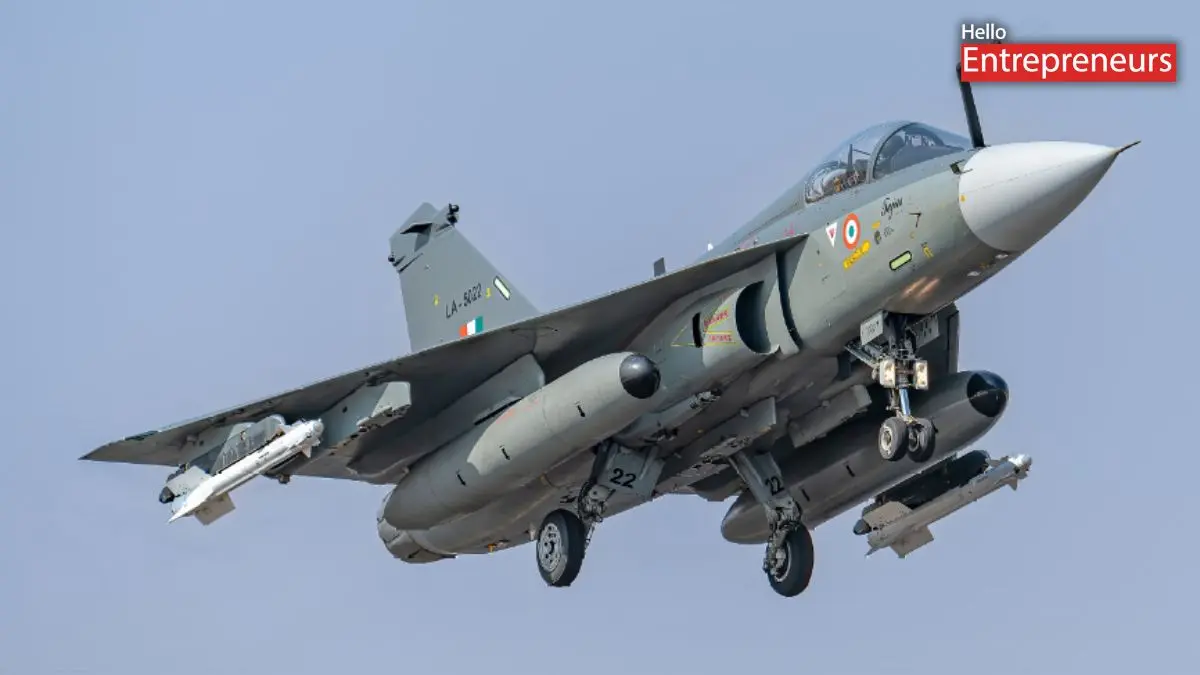
Though many economists have chided India for its slow adoption of technology investments, they cannot deny that India does have the capacity to shine, although it takes time. Hindustan Aeronautics Limited (HAL) has shown that India has what it takes to develop an indigenous aviation ecosystem.
From contract production to Made in India manufacturing
Founded in Bengaluru in 1940 as Hindustan Aircraft Limited, the company initially focused on servicing and manufacturing American trainer aircraft for the Indian Air Force. For a few years after the Government of India took over the company, the primary focus was on maintenance of Indian Air Force aircraft.
HAL first developed the HF-24 Marut in the 1960s and 70s. The turning point came in the 1980s, when it developed the HAL Tejas Light Combat Aircraft (LCA) and the HAL Dhruv multipurpose helicopter. Though both these aircraft were significantly delayed- the Tejas was inducted only in 2001 while the Dhruv was inducted in 1992, this provided the company an impetus to innovate and develop indigenous technologies.
Simultaneously, HAL developed an advanced version of the MiG-21, nicknamed the ‘Bison’, which increased the aircraft’s lifespan by 20 years. The company also inked contracts with leading aerospace firms like Honeywell, Boeing and Airbus to manufacture aircraft spares and engines. These long-standing partnerships have been cemented with multi-million dollar repeat orders over the years. Almost 40% of HAL’s revenues today come from such agreements to manufacture aircraft spare parts, engines and other materials.
In April 2025, HAL has an order book of Rs. 2.5 lakh crore, with no signs of stopping. The company has already delivered orders to foreign clients like Guyana, Malaysia, Mauritius and Namibia for its indigenous and overhauled aircraft.
Besides this, HAL also works with other Government institutions like ISRO, DRDO and Bharat Electronics to develop highly advanced weapons and spare parts for India’s space and defence programmes.
Overcoming Challenges and Delays
Though delays plagued HAL’s initial indigenous aircraft, the company has managed to bounce back with advanced helicopters like the HAL Dhruv and advanced versions of the Tejas LCA aircraft. It is also developing drones in collaboration with Israel Aerospace Industries.
To ensure enhanced safety, HAL’s manufacturing and R&D facilities have been certified by global regulators like the FAA, EASA and DGCA. All these certifications require meeting stringent quality control criteria. This has helped the company integrate deeper into global supply chains and has helped it bag contracts to manufacture critical aircraft components for civilian and military use.
Boosting value
HAL has seen stable revenue generation for quite some time now. The company has reported a 15% rise in revenue from last year, and a strong order pipeline from the Ministry of Defence and contract manufacturing has made the stock a multibagger.
HAL is not like other PSUs whose valuations are linked to commodities. The company has invested almost Rs. 2,500 crore in R&D in recent years, helping it create real value for the government and other investors.
At a press conference at the Aero India 2025 show at Bengaluru, HAL’s Chairman and Managing Director, DK Sunil, explained how the company aims to become a leading player in the next few years:
“The company has received orders worth Rs 55,000 crore in the first nine months of the fiscal year and is expecting to close orders worth another Rs 1.2 lakh crore in the next five to six months. Including the present orders, the total orders will be worth Rs 2.5 lakh crore and the production will continue for the next 5-6 years,” he said.
“We are actively pursuing two major contracts. One is for 97 light combat aircraft (Tejas) and 156 light combat helicopters (Prachanda). Both are in the advanced stages of negotiations. We are hoping to close them in the next 5-6 months,” he added.
Despite all of these achievements, India’s share in the aeronautical industry’s supply chain remains below 1% as per recent estimates, HAL and its deep partnerships with leading aircraft manufacturers will help India meet its target of 10% market share in the aeronautical supply chain industry by 2033, an achievable target considering the current geopolitical tensions between the US and China and Western companies’ diversification of ther manufacturing away from China.