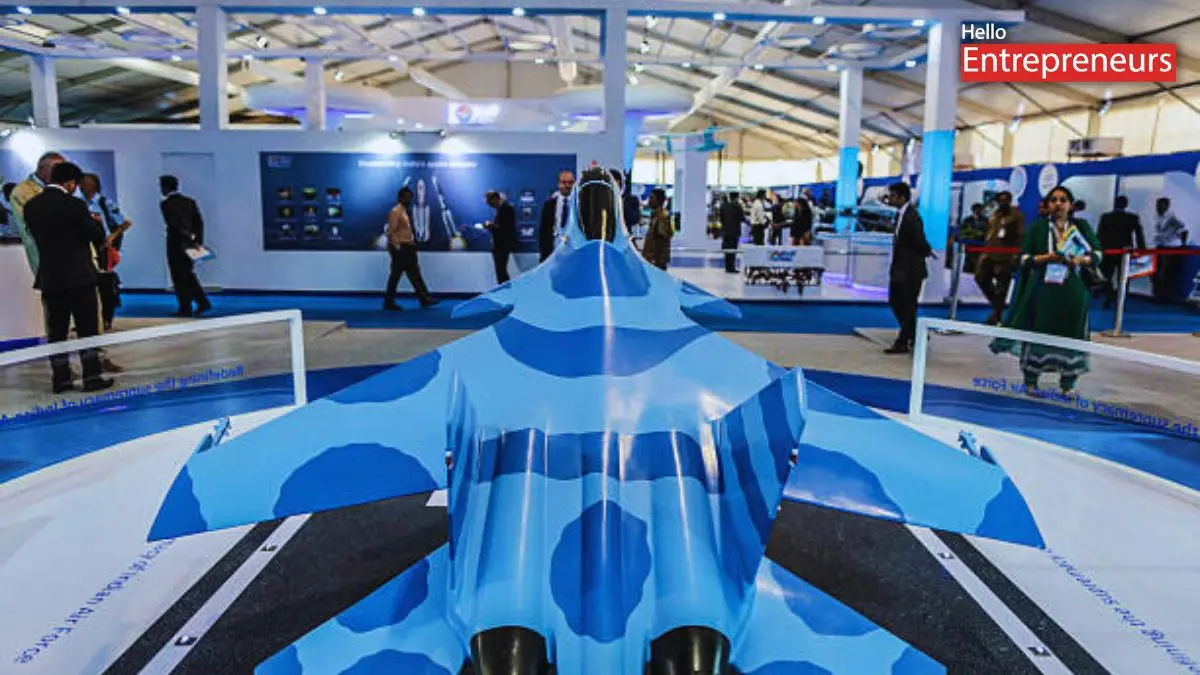








India’s armed forces are the second largest in the world, just behind China. Yet, India still has a lot of catching up to do with China, the US and other militaries. These days, the strength of the armed forces are more about technological superiority than sheer manpower size.
India has traditionally relied on foreign arm imports or licensed arm manufacturing to equip its 1.4 million actively serving military personnel. Traditionally, most of the arms came from the Soviet Union, and later, Israel, US and other countries. Though the we developed arms and ammunition independently, they have traditionally not been enough for our needs.
The Defence Research and Development Organisation (DRDO), established in 1958, has been the umbrella organization for the indigenous development of defence technologies. It has, over the years, set up a network of 50 labs where thousands of scientists, engineers and support staff work toward creating technologies for domestic use.
Major Achievements
The DRDO has, in recent years, demonstrated India’s capabilities in developing highly advanced technology in-house. Its most notable achievements include:
- Indigenous Ballistic Missile System: Sanctioned in 2000, the DRDO has played an instrumental role in developing rocket-powered ballistic missiles that can strike deep within China and Pakistan, even with nuclear warheads. India is only the fourth country after the United States, Israel and Russia to develop its own ballistic missile system- the latest being the Agni V which can strike anywhere within a 5,000 to 8,000 km radius.
- Hypersonic missiles development: Though not much is known about this, India has tested its first hypersonic missile with speeds of 3km per second in 2024. Though developing such missiles is highly complex, scientists at DRDO are working towards making this dream a reality. Currently, only the US, China and Russia have developed such missiles successfully.
- Development of Fuel-Cell Technology: The DRDO has developed Fuel-Cell technology used for submarines. Currently, only a few countries have developed such technologies.
- Aakash Missile System: The DRDO has developed an anti-aircraft, surface-to-air missile (SAM) Aakash missiles that can neutralise any target aircraft 45 km away. Developed in partnership with private players, the Aakash Missile system has been inducted in the Army and Air Force. During the May 2025 Indo-Pak skirmish, the Aakash missiles successfully countered waves of missiles and drones fired from Pakistan.
Controversies associated with DRDO
Though the DRDO has proved that India is capable of developing cutting-edge technologies, there have been cases where some projects haven’t been able to keep pace with the ever-updating technological landscape.
The government’s auditor CAG has repeatedly criticised DRDO for heavy cost- and time- overruns in critical research projects. Almost two-thirds of the 175 projects examined by the DRDO had failed to reach their deadlines. Sometimes, the DRDO has been criticised of declaring a project successful even though it hasn’t met the stated objectives or parameters. The DRDO’s monopoly as the country’s only defence research organization has given rise to excessive dependance, bureaucratic red tape and inordinate delays.
There are calls for a strict dose of reform, even as many DRDO staffers are resisting the need for change.
Looking Ahead
DRDO marked its 67th Foundation Day in January 2025, and its role is increasingly critical for national security. With new-age technologies like AI, quantum mechanics, cyber warfare, and hypersonic weapons reshaping the very existence of warfare, the DRDO has to work even harder to meet the urgent need for indigenous development of intellectual properties for deterrence requirements.