







New Delhi, September 30: The Cabinet Committee on Economic Affairs (CCEA), chaired by the Prime Minister Shri Narendra Modi, has approved implementation of the ITMS Project by Delhi Police at an estimated cost of Rs.1,789.52 crore, inclusive of taxes. The project will cover 42 identified traffic corridors and will be implemented in three phases over 24 months, followed by five years of operation and maintenance.
As part of the wider efforts of the Central Government and the Government of NCT of Delhi to improve traffic management, transport infrastructure and urban mobility in the National Capital, a major technology-led initiative will now be taken up through the Intelligent Traffic Management System (ITMS). The project will enable Delhi’s existing road network to be managed more intelligently through real-time traffic data, adaptive traffic signals, automated enforcement and integrated command-and-control systems.
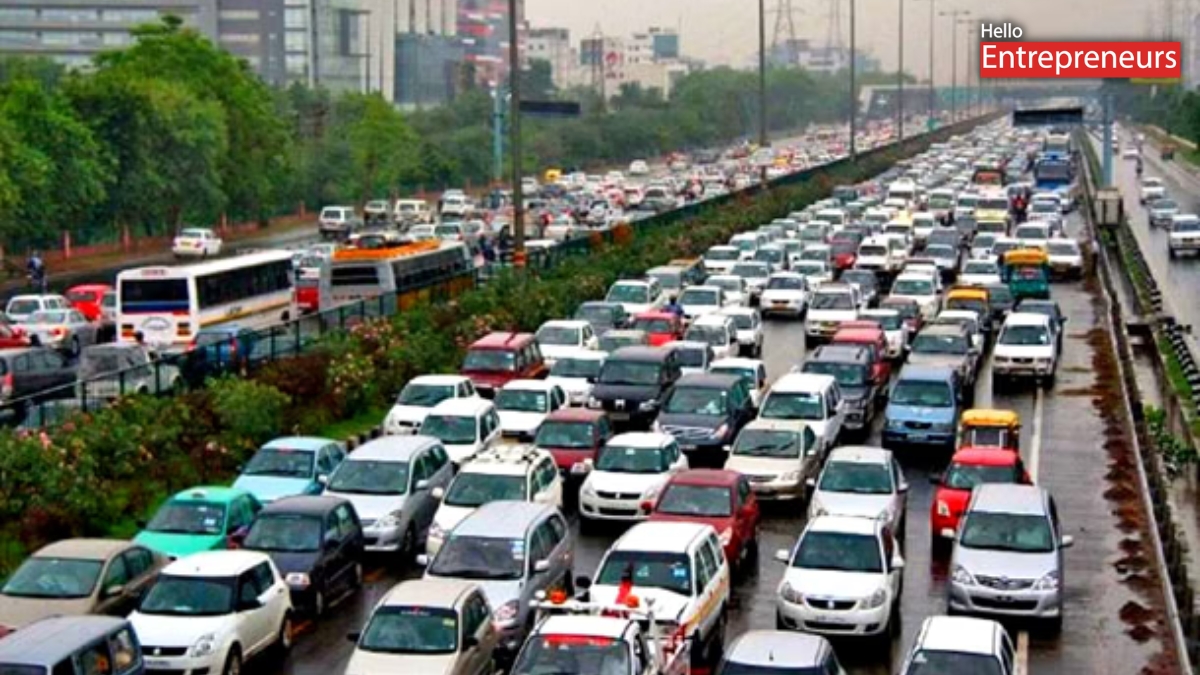
Delhi has around 71 lakh active registered vehicles. Vehicular growth has substantially outpaced expansion of road infrastructure, while traffic regulation continues to depend significantly on fixed signal timings and manual intervention. The ITMS seeks to make better use of the available road capacity by enabling traffic management to respond dynamically to actual conditions on the road.
Benefits:
- Smarter traffic signals and smoother movement: Adaptive Traffic Control Systems will dynamically adjust signal timings according to prevailing traffic conditions and coordinate signals along identified corridors, helping reduce avoidable stoppages and delays.
- Priority for ambulances and emergency vehicles: The system will facilitate green corridors and priority movement for emergency vehicles, enabling faster passage through congested stretches.
- Faster response to congestion and accidents: Real-time detection of congestion, slow-moving traffic and road incidents will enable quicker diversions and operational response by Delhi Police.
- Timely information for commuters: Variable Message Sign boards and digital platforms will provide information on congestion, diversions, parking availability and traffic conditions. Information may also be shared with navigation service providers, helping commuters make better travel choices.
- More consistent and technology-based enforcement: The system will strengthen automated detection of violations such as red-light and stop-line violations, speeding, wrong-way driving, non-use of helmets and seat belts, illegal parking and use of mobile phones while driving. AI-based analytics will also assist in identifying stolen, hot-listed and blacklisted vehicles, repeat violators and vehicles connected with hit-and-run incidents.
Integrated city-wide traffic management:
Traffic regulation, enforcement and information dissemination will be brought together on a common platform through Traffic Command and Control Centres, supported by secure Data Centre and Disaster Recovery infrastructure. The system will follow open standards and APIs to enable future integration and scalability.
The project will cover 1,092 Adaptive Traffic Control System and 1,029 enforcement locations. Implementation will be performance-driven, with each subsequent phase to be taken up after evaluation of the preceding phase against prescribed testing, commissioning, acceptance and performance parameters.
Delhi Police will implement the project through a Master System Integrator selected through competitive bidding. C-DAC will provide technical support as Project Management Consultant, including technical scrutiny, monitoring, validation and acceptance during implementation and operation and maintenance.
The ITMS will complement ongoing efforts to improve Delhi’s road and transport infrastructure by providing the technology and real-time intelligence required to use the existing road network more efficiently. The project is expected to contribute to smoother traffic movement, safer roads, quicker incident response, more effective enforcement and a more predictable travel experience for citizens.