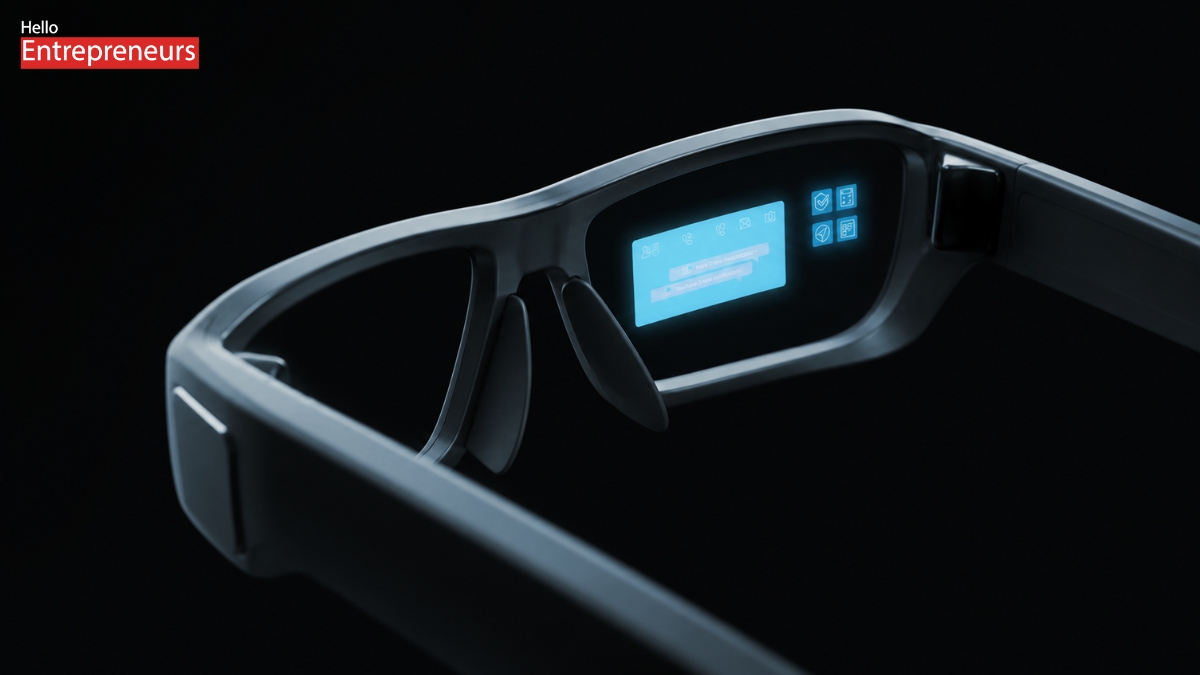







Mumbai: The strangest thing about AI glasses is not that they can see. It is that they can see without looking like they are seeing.
A smartphone announces its intentions rather clearly. You lift it, point it, tap the screen and take the picture. Smart glasses remove much of that theatre. The device sits on your face while cameras, microphones and artificial intelligence quietly turn parts of everyday life into information.
That is where the next privacy debate is likely to become less about the person wearing the device and more about everyone standing around them.
Meta is now reportedly preparing a camera-free pair of smart glasses, internally called “Luna”, potentially for an October 2026 launch. The reported device would replace the camera with six microphones, speakers and access to Meta Artificial Intelligence and its Muse AI agent. The move comes as camera-equipped smart glasses face increasing scrutiny over recording and harassment concerns.
Ironically, removing the camera may solve only one chapter of the problem.
When The Camera Disappears, The Microphone Remains
A camera-free wearable is obviously less intrusive in one important respect. Someone nearby cannot accidentally become the subject of a photograph or video simply because the wearer looked in their direction.
But conversations are another matter.
Voice-enabled glasses still need microphones. Meta’s existing smart-glasses documentation explains that certain voice features can keep the microphone active for a short period after a request, while a notification LED indicates audio processing. That creates a subtler privacy question: how much of a conversation belongs to the person speaking, and how much belongs to the person wearing the device?
It is a particularly awkward question because consent has traditionally been visible. A camera pointed at you is obvious. A microphone hidden inside a fashionable pair of spectacles is considerably less dramatic. Technology, as usual, has found a way to make the uncomfortable part look stylish.
The Useful Side Is Hard To Ignore
Writing off Artificial Intelligence wearables as surveillance gadgets would also miss why people are buying them.
The strongest argument for Artificial Intelligence glasses may actually be accessibility. Meta says its glasses are being used to describe surroundings, read information, translate speech and provide hands-free assistance. In 2026, the company also announced programmes involving people with visual impairments and memory-related disabilities.
There is a practical difference between an Artificial Intelligence assistant sitting inside a phone and one that can respond while the user’s hands are occupied.
Some applications already being explored include:
- Hands-free assistance for people with visual impairments.
- Reading signs, labels and documents.
- Real-time translation and navigation support.
- Workplace assistance where using a phone is inconvenient.
- Recording evidence or documenting accessibility problems without constantly holding a camera.
Meta has also announced almost $2 million in AI Glasses Impact Grants for 30 organisations working across accessibility, education, workforce safety and economic opportunity.
So the technology is not merely a Silicon Valley parlor trick. For some users, it can translate into genuine independence.
The Money Behind The Experiment
There is no credible public figure showing exactly how much Meta has spent specifically developing its AI glasses.
The broader financial commitment, however, is substantial. Meta’s Reality Labs division, which includes its virtual and augmented reality hardware, software and content, recorded an $8.65 billion operating loss in the first half of 2026. In full-year 2025, the division reported an operating loss of $19.19 billion. Those figures should not be described as money spent solely on Artificial Intelligence glasses, because Reality Labs covers a much wider portfolio.
Meta also reported $31.08 billion in company-wide capital expenditure in Q2 2026, much of it tied to infrastructure and AI. Again, that is a corporate-wide figure, not a glasses budget.
In other words, the bill for the wearable future is real. The accounting just refuses to put a neat little label on it.
Privacy Is Becoming A Product Feature
The latest developments suggest that privacy can no longer be treated as paperwork that appears somewhere beneath the “Accept” button.
Meta says its camera-equipped AI glasses use a capture LED to indicate when photos or videos are being captured, and newer generations are designed to disable the camera when tampering with that indicator is detected.
Regulators are nevertheless watching the category closely. The UK’s Information Commissioner’s Office said this month that reports of people being recorded without their knowledge raise serious questions around surveillance, safety and trust, while also stressing that smart glasses can deliver meaningful benefits, particularly for people with disabilities.
French authorities have also intensified scrutiny following allegations involving the misuse of smart glasses, while businesses have begun considering whether such devices should be restricted in certain environments.
That tension is likely to define the next stage of Artificial Intelligence wearables.
The Real Question Is Not Whether We Can Wear AI
It is whether everyone around us gets a reasonable say in how that Artificial Intelligence interacts with them.
India already has a broader privacy framework in the Digital Personal Data Protection Act, which establishes principles around consent and processing of personal data. The challenge for emerging wearables is that traditional privacy rules were not designed around devices that can continuously accompany a person through physical spaces.
AI glasses could become one of the most useful forms of ambient computing yet developed. They could also make privacy increasingly ambient — something people lose without noticing.
The technology does not necessarily need to disappear.
It simply needs to become much better at answering an old-fashioned question before it starts interpreting the world around us:
Who gave it permission?
Read More: Why The US And China Suddenly Need To Talk