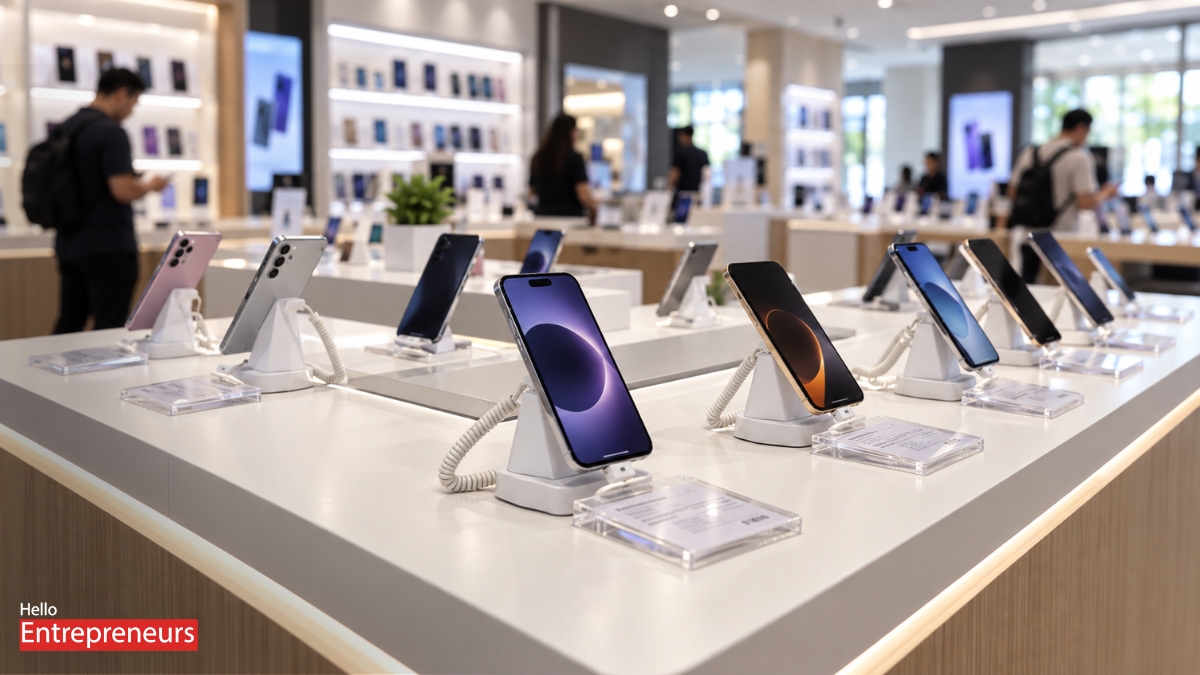








Mumbai: The smartphone market has spent years training consumers to expect more for less: brighter screens, better cameras, faster processors and, naturally, another discount during the festive season. That bargain is becoming harder to maintain.
India’s smartphone market is now caught in an unusual squeeze. The same memory components needed in phones are increasingly being pulled toward AI servers and data centres, where demand — and the money attached to it — is considerably stronger. The result is beginning to reach the shop floor, with higher component costs, tighter supplies and fewer reasons for manufacturers to keep cutting prices.
The irony is rather elegant: the AI boom promising to make everything smarter may make the next phone considerably more expensive.
The Memory Inside Your Phone Has Become Valuable Real Estate
DRAM and NAND are hardly glamorous components for the average buyer. They simply sit inside the device and make things work.
But AI infrastructure has changed their economics. High-bandwidth memory (HBM), server DRAM and enterprise SSDs are being prioritised as cloud providers expand AI computing capacity. TrendForce expects conventional DRAM contract prices to rise another 13–18% quarter-on-quarter in Q3 2026, while NAND Flash prices are forecast to increase 10–15%. It also says suppliers are reallocating capacity towards server and AI applications, keeping mobile memory under pressure.
The pressure is already visible in India.
IDC says India’s smartphone shipments fell 4.1% year-on-year to 31 million units in Q1 2026, while the average selling price climbed 10.4% to a record $302. Rising memory costs were among the factors behind the increase.
The Festive Season Has A Problem
India’s festive quarter is usually when smartphone brands bring out their strongest discounts and retailers wait for consumers to upgrade.
This year, the arithmetic is less forgiving.
Recent market estimates put India’s July-September smartphone shipments at around 36 million units, down from 48 million a year earlier. Some phones from major Android brands have reportedly become almost 40% more expensive, while buyers are increasingly delaying upgrades or considering refurbished devices.
That could hit the lower end of the market particularly hard. IDC says the sub-₹15,000 segment remains highly price-sensitive, while premium demand has proved comparatively resilient.
So the market could develop an odd split: people who can afford expensive phones keep buying them, while everyone else decides that their current phone suddenly looks perfectly adequate.
AI Is Not The Villain, Exactly
There is another side to this story.
The enormous investment going into AI memory is also encouraging semiconductor manufacturers to expand production and develop denser, faster technologies. SK hynix, for instance, announced 54 trillion won of investment in new DRAM and NAND facilities at Yongin and Cheongju, with clean-room openings planned for 2029 and 2028, respectively.
Micron has also increased its planned U.S. semiconductor investment to more than $250 billion through 2035, citing growing memory demand from the AI era. Its third-quarter 2026 capital expenditure alone was $7.1 billion.
That spending should eventually expand supply. The inconvenient part is timing. New fabs do not materialise because consumers would like cheaper phones before Diwali.
The Cost Is Moving Beyond The Price Tag
The immediate problem is obvious:
- Higher memory costs can push smartphone prices upward.
- Brands have less room for discounts and promotions.
- Entry-level and mid-range models face greater margin pressure.
- Consumers may extend replacement cycles or move towards refurbished devices.
But manufacturers also have alternatives. They can optimise memory configurations, redesign products, negotiate longer-term supply contracts and concentrate higher memory capacities on premium devices. IDC expects brands to increasingly rely on financing, differentiation and premiumisation rather than aggressive price cuts.
That could quietly change what “value for money” means in smartphones.
The Bigger Story Is About Who Gets The Memory First
The smartphone shortage is really a symptom of a much larger industrial reshuffling.
Memory manufacturers are following the money, and AI infrastructure currently offers plenty of it. Samsung says its memory business expects robust server demand in the second half of 2026, with HBM, server DRAM and enterprise SSD demand continuing to grow even as mobile and PC demand moderates.
For consumers, that creates a peculiar technological bargain. AI may bring better assistants, smarter applications and increasingly capable devices — while simultaneously making the basic hardware underneath them more expensive.
And perhaps that is the real lesson of the memory crunch: in technology, even the smallest component can become the biggest problem when everyone suddenly wants it at once.
Read More: India’s 2026 Chip Story