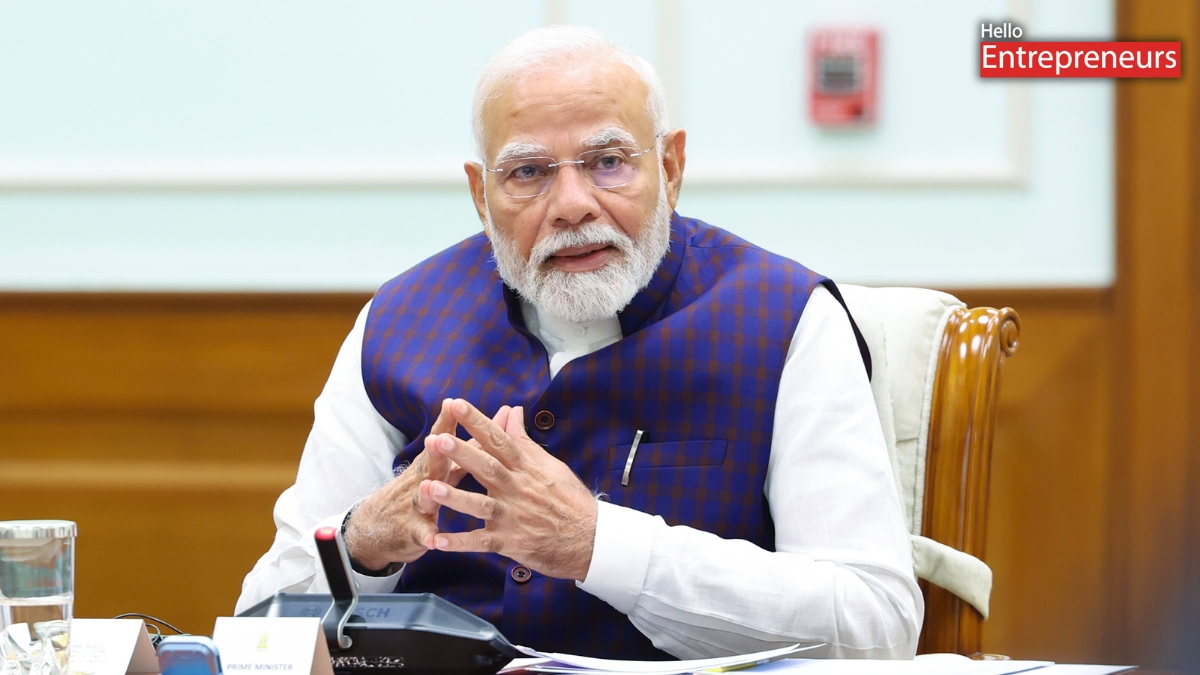








New Delhi: On September 17, Prime Minister Narendra Modi inaugurated SEMICON India 2026 in New Delhi attended by an audience. On 17 September, SEMICON India 2026 was opened in New Delhi by Prime Minister Narendra Modi. The world of semiconductors is expanding rapidly and offering numerous opportunities for investments in the nation, he said.
It is taking place at the large convention centre in Yashobhoomi, Delhi. It will be held for three days September 17-19. It is the fifth consecutive year it has been held. It is co-organized by the India Semiconductor Mission, the Ministry of Electronics and Information Technology and SEMI a worldwide association for the chip industry.
More than 600 companies have set up stalls at the event. About 300 of them are from other countries. People have come from more than 40 nations to attend. More than 150 speakers will discuss various facets of the chip industry, including chip manufacturing, chip design and training human resources for the industry.
This year’s focus is on “Silicon to Systems: Building the Ecosystem”. It exhibits India’s ambition to manufacture all components of the chip production raw material to actual electronics product – locally.
Nearly 90 percent of the chips imported by India are purchased from abroad and the nation incurs an annual expenditure of nearly $30 billion of such chips. This is what the government wants to change as it has decided to establish factories and packaging units within India. Three chip projects that were approved earlier have already begun the process of producing the chips commercially.
In addition, the government has announced a new plan to be called Semicon 2.0. It’s about six key things: designing chips; making machines and materials; adding more factories; expanding the packaging sector; increasing research and training more workers.
There are also dedicated sections for country stalls, state government stalls and start-ups. The new and exciting exhibit, the “Sand to Silicon to Systems” experience, demonstrates how a chip is fabricated, step-by-step with the viewer, from raw material to a functioning device.
The world’s demand for chips for phones, cars, computer, etc. makes India’s chip market worth of around USD 200 billion in the coming years, officials say.