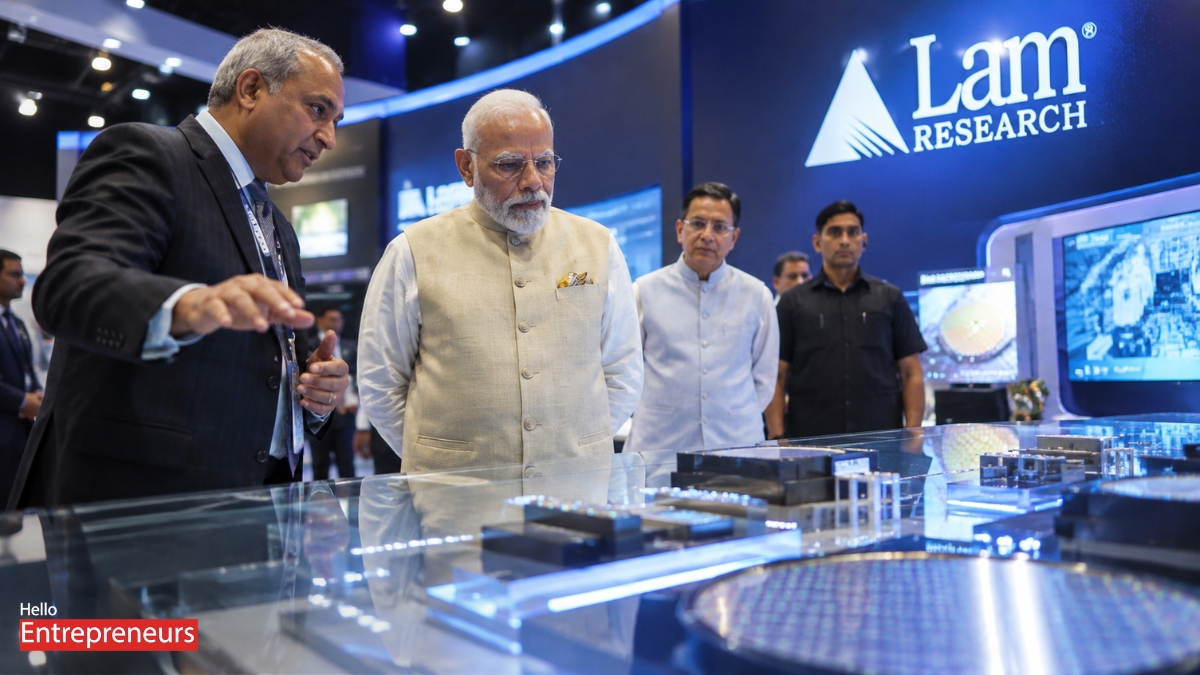








Mumbai: India’s semiconductor story has spent years living in the future tense. Promises of fabs, supply-chain resilience and chip manufacturing have often sounded impressive on paper, while the actual work quietly happened behind construction fences and clean-room doors. SEMICON India 2026, which begins today in New Delhi and runs through September 19, is arriving at a more consequential moment: India is beginning to move from announcing semiconductor ambitions to building pieces of the industry itself.
The fifth edition, themed “Silicon to Systems: Building the Ecosystem,” brings together the semiconductor value chain at Yashobhoomi, including manufacturers, equipment companies, researchers, startups and policymakers. The event is being jointly organised by the India Semiconductor Mission and SEMI.
The Question Is No Longer Just About Chips
The interesting part of SEMICON India 2026 is what sits around the silicon.
India already has considerable chip-design expertise. The harder challenge is connecting that strength with fabrication, packaging, testing, equipment, materials, research and skilled manpower. The event’s programme reflects that shift, with sessions covering advanced packaging, equipment manufacturing, supply chains, R&D, electronic systems, AI and workforce development.
That is a more mature way of looking at the semiconductor business. A fab cannot operate because someone designed a clever processor. It needs specialised chemicals, gases, equipment, utilities, logistics, engineers and customers. Semiconductor manufacturing is less a single industry than a rather complicated family reunion where everyone has to show up.
The Numbers Have Started To Look Different
There is now tangible capital behind India’s semiconductor push.
As of July 2026, 12 semiconductor manufacturing projects had been approved with investments exceeding ₹1.64 lakh crore, spanning fabs, compound semiconductors, display-related manufacturing and packaging facilities. Three — involving Micron, Kaynes Semicon and CG Semi — had already begun commercial production.
The government has also committed another ₹1,27,500 crore under Semicon 2.0, approved in July, to broaden support beyond manufacturing into design, equipment and materials, additional fabs, advanced packaging, R&D and talent development.
The scale is therefore no longer theoretical. But neither is the unfinished business.
From Assembly Lines To A Wider Ecosystem
One of the clearest examples is Tata Electronics’ planned semiconductor fab in Dholera, Gujarat, being developed with Taiwan’s PSMC. The project carries an investment of roughly ₹91,000 crore and is designed for around 50,000 wafer starts per month. Meanwhile, Micron’s Gujarat facility represents a ₹22,516-crore investment in assembly and test operations for DRAM and NAND products.
The geography is expanding too. Approved projects now stretch across Gujarat, Assam, Uttar Pradesh, Odisha, Punjab and Andhra Pradesh rather than concentrating the entire ecosystem in one industrial pocket.
That dispersion could eventually create regional clusters of suppliers, technicians and specialised businesses. It could also make the supply chain more resilient. The less attractive truth is that building these clusters takes years, not one three-day exhibition.
Talent May Become The Quiet Bottleneck
India’s semiconductor ambitions will ultimately require people who can operate and design this infrastructure.
The government says India has developed 85,000 semiconductor engineers in four years, against an original ten-year target, and has set a new target of another one lakh engineers. It also says students from Tier-II and Tier-III cities have already designed more than 250 chips.
Those numbers are encouraging, but semiconductor manufacturing demands highly specialised expertise. Training someone to understand electronics is not the same as preparing them for advanced process engineering, fabrication equipment, yield management or packaging technology.
The Real Test Begins After The Applause
SEMICON India 2026 is therefore less interesting as a technology exhibition than as a checkpoint. The country has moved from ₹76,000 crore Semicon India 1.0 to a ₹1.275 lakh crore Semicon 2.0, while approved project commitments have crossed ₹1.64 lakh crore.
The positive case is straightforward: manufacturing capacity is emerging, commercial production has begun, global companies are participating, and policy support now covers considerably more of the value chain.
The caveat is equally straightforward: announcements are not the same as sustained semiconductor competitiveness. India still has to demonstrate consistent yields, competitive costs, reliable supply chains, deep equipment and materials capabilities, and enough customers to keep these expensive facilities busy.
That is why this year’s event matters. The ambition is no longer merely to put “Made in India” on a chip.
It is to make sure there is an entire ecosystem behind those three words.
Read More: Huawei’s 2026 AI Bet