



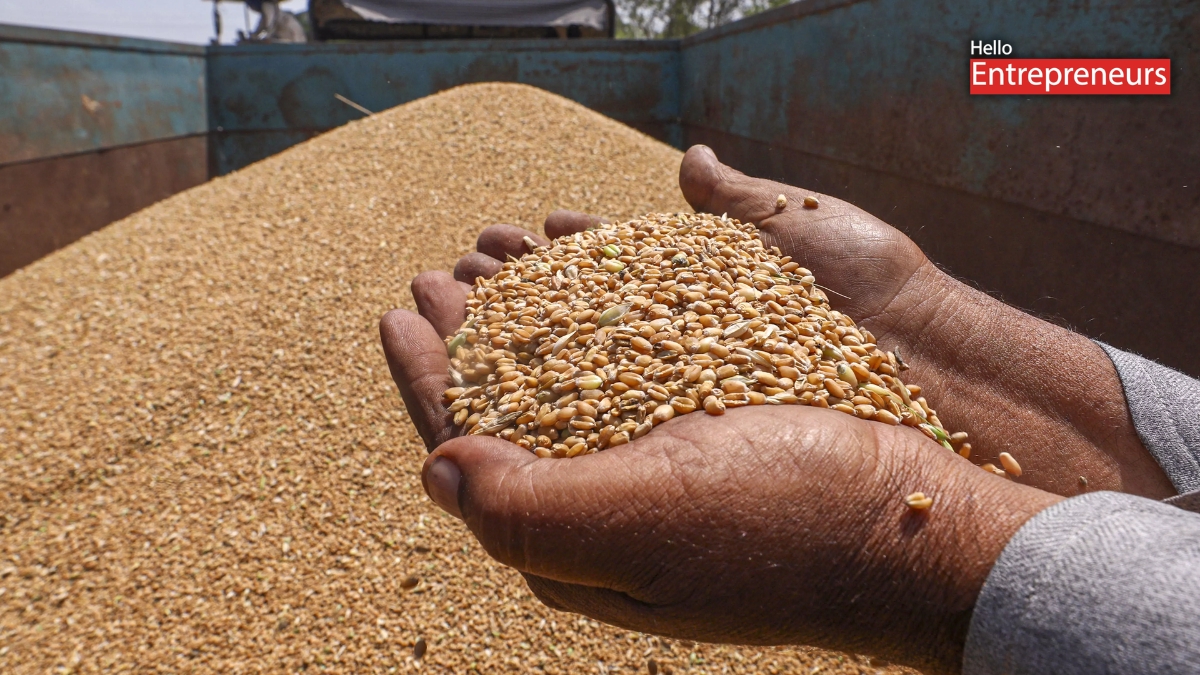
New Delhi: The government of India has also removed export restrictions on wheat and some wheat-based items such as atta, maida and suji, providing the opportunity for export of these items from India. The move will signify a fundamental shift in wheat export policy in India, and will help boost the nation’s agricultural trade.
The decision has been communicated by the government agency that implements the foreign trade policy of India, called Directorate General of Foreign Trade (DGFT). DGFT is the authority that is tasked with regulating export policies and helps in facilitating international trade in India.
The revised policy has taken exports of wheat specified products out of restricted or prohibited category resulting in exporters being able to move forward with exports without previous restrictions. The changes apply to wheat and its processed forms like wheat flour (atta), maida and semolina (suji/rava).
It will be a game-changer as India had earlier set stringent limits on wheat exports in the year 2022, due to its fear of shortages in the country, food security and rising prices. They later were expanded to some wheat-based products.
The new policy offers more choices to wheat traders, flour millers and exporters. It could also enable wheat handers to expand their outreach in the markets abroad and enhance exports of wheat value-added products in India.
However, the effect on consumers could be related to the domestic price of wheat and the availability of wheat. It has long been the policy of the government to restrict exports to insure supply for domestic consumption. But the impact of shifts in foreign demand and domestic supply will be crucial issues to monitor, as exports are now again being more easily allowed.
This also follows India’s efforts to boost trade overall and streamline the process for companies. According to the DGFT, its functions are to facilitate and promote foreign trade and put in place a country’s Foreign Trade Policy.
The move by the policy eliminates a big hurdle that had been constraining wheat and wheat-related exports for exporters. But businesses will still have to meet export customs, food safety, quality, etc., requirements that apply.
Overall, the government’s decision to lift the restrictions is expected to give a boost to India’s wheat export sector. It may be especially useful for flour mills and food industrialists who are interested in exporting their atta, maida, suji, etc. to overseas markets.
The move will now be closely watched for its impact on wheat prices, domestic availability, flour millers and India’s agricultural exports in the coming months.

