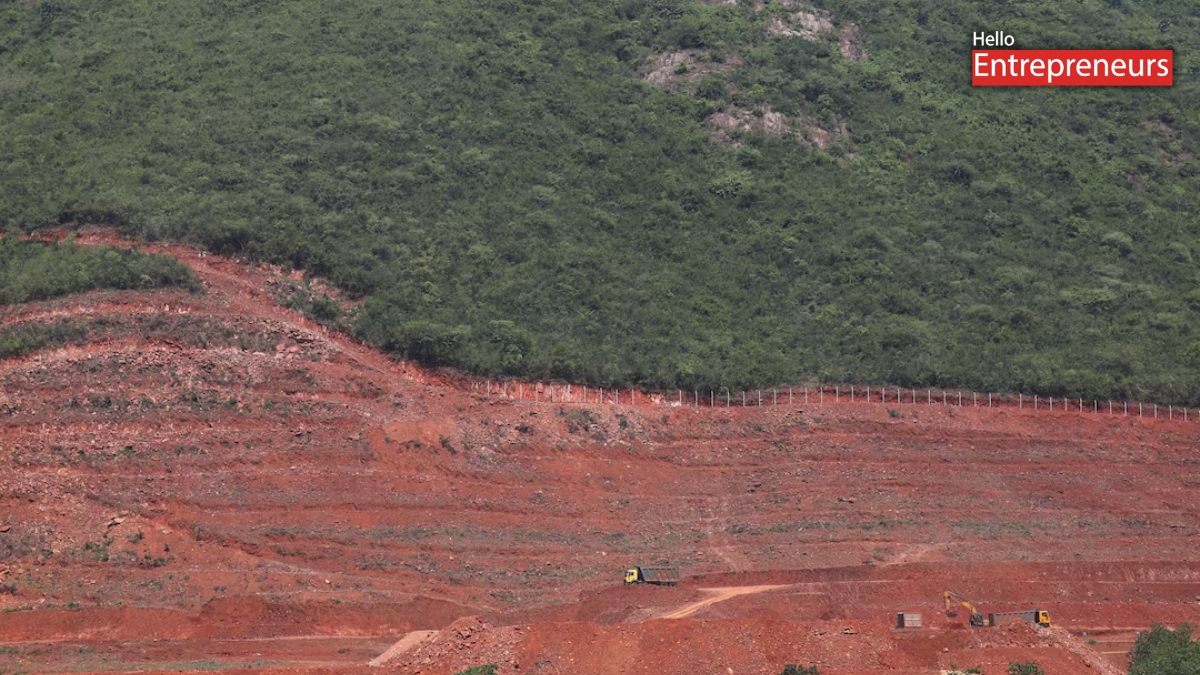








New Delhi: An Indian $15-billion data center project led by Google is under scrutiny for the potential effects it has on water resources and local flora and fauna in its construction process in Vishakaghatlam, Andhra Pradesh. It is a project being co-developed by the Adani Group which will likely turn out to be Google’s largest investment in data centres in India and generate out a huge amount of jobs.
But environmental groups warn that the project could exacerbate already scarce water supplies. A Reuters report says the city of Visakhapatnam faces a shortage of water of about 70m liters a day. Activists also aren’t happy about the adjoining Kambalakonda Wildlife Sanctuary, which tells home leopards and pangolins.
What Is Google Doing About the Water Concern?
The big question is how much water can be used for cooling in a big data center. The data centers house thousands of highly computational devices and AI systems which generate lots of heat. Maintaining their temperature is therefore a critical component to the operation of the facility.
At the project, Google has announced that it will be making use of some advanced air-cooling technology. This is significant because if cooling systems rely heavily on water, they consume more water than air-based cooling systems.
It’ll also employ sound-dampening technology that would quell any noises and other potential issues from the facility, the company said. This is especially pertinent as the project is situated fairly near to a wildlife area.
But Google hasn’t yet given up on a complete solution that would eliminate all the concerns about water use. Therefore, water usage should continue to be a significant issue in the expansion of construction and operations.
Government Says Rural Water Will Not Be Used
So, the Andhra Pradesh government has denied claims that the water will be diverted away from local people. The state has stated that there will be no siphoning for rural and domestic purposes for water intended for the data center.
Also, it stated that a nearby reservoir won’t be utilized for the project. No new contract has been signed by the government, but it has indicated it will provide water to the data center for 20 years.
The government thinks the project will not have a significant impact on the supplies of drinking water to local communities.
Why Are Activists Still Worried?
Environmental activists are not convinced. They are not only concerned about where water will be sourced from today, but also what might occur once the data centre is at capacity.
The activists say it would be difficult to guarantee water for such huge work for 20 years, if there was no water in the town of Visakhapatnam. They have also raised concerns regarding potential effects of construction, noise and other activities on adjacent Kambalakonda Wildlife sanctuary, and state government has agreed to constrict the activities there.They have also expressed concern about any possible impact on the nearby Kambalakonda Wildlife sanctuary by construction, noise and other activities, and agreed by the state government to limit activities there.
Already, there are legal challenges filed and the Andhra Pradesh High Court will be hearing the case again on August 24.
Google’s Challenge Ahead
Google’s big hurdle is to show that the data center is going to do more than just strain local communities or harm the environment.
The adoption of air cooling and sound control measures is one way of mitigating the environmental effects of the project. However, the company and the Government will also have to reveal in a transparent manner, where the water will come from, how much water will be consumed and how local water resources will be safeguarded.
Though jobs and investments are paramount for the success of the $15 billion project in the long term, it has immense economic potential for Andhra Pradesh. It will also be determined by whether Google and the government are able to convince local communities and environmental groups that the project will not endanger the security of water supplies and wildlife.
So far, Google’s largest solution is in the form of sophisticated air-conditioning and policies to prevent competition for residential and rural water sources. Those measures will only become clear as the project proceeds as to whether they will be sufficient to meet critics.