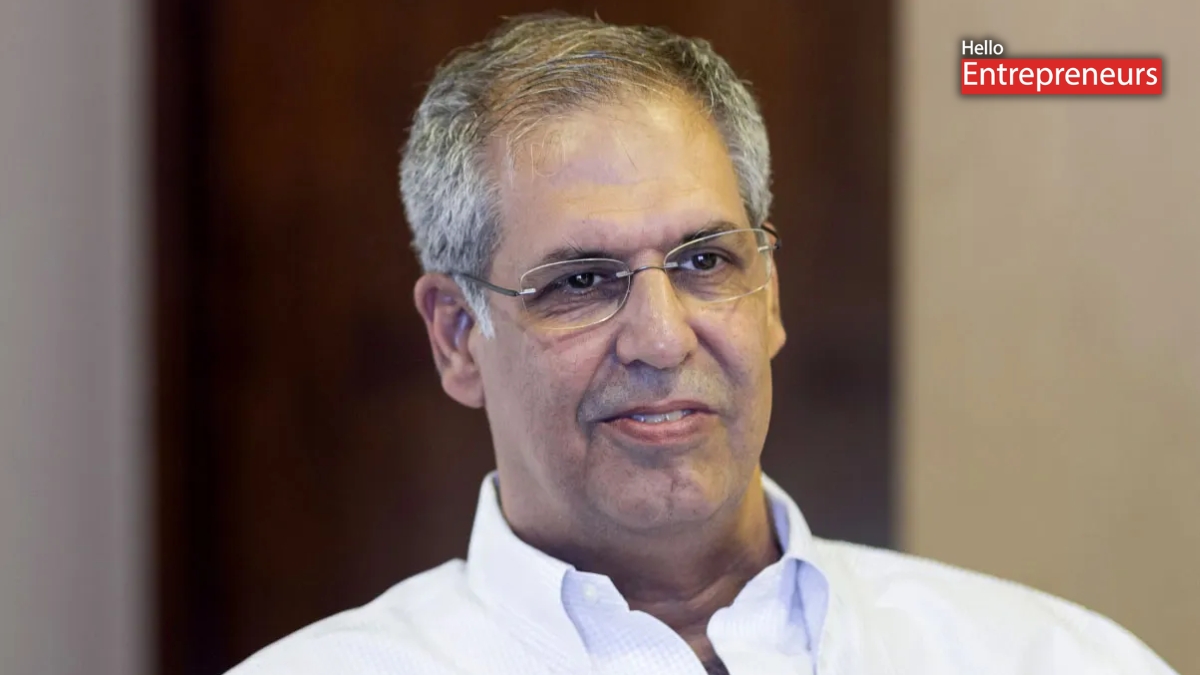








New Delhi: Tata Trusts Chairman Noel Tata has announced an plans to transform the India’s biggest philanthropic body, from funding projects to establishing a roadmap for building institutions which can have “long lasting” effect on society at the national level. Tata said the Trusts will operate based on the philosophy, “Do what India needs”, which has been followed by the Tata Group for more than 100 years at the IIMBues Leadership Conclave 2026 at Bengaluru.
Stating his vision, Noel Tata said that the areas that would be given priority by the Trusts would be building institutions in critical areas like healthcare and education and projecting results from philanthropic work. He pointed out that the founders of the Tata Group had considered wealth creation as a way of creating an improved society and not as an objective by itself.
The founders’ bequest to the Trusts was their shares in the companies but with the sole proviso that the Trusts do good for India not necessarily be the largest company. The companies are meant for serving India, impacting the standard of living, Tata said during his address.
One of the Trusts’ next important plays is to be looking at healthcare. The plans by Noel Tata to set up a chain of 40 to 50 not-for-profit general hospitals in India were unveiled. The planned hospitals will see financing through cross-subsidy, which would see the financially weaker part of society be able to get the best health treatment with funds raised from paying patients. The initiative is a part of the TATA Trusts’ work with the Assam Government to set up 17 cancer care hospitals in the Assam region.
The other expected focus area will be education. Tata pointed out there is a lack of world-class educational institutes in India for which talented students are required to go overseas for quality higher education. Addressing a new institution of higher learning being developed by the Trusts and Indian Institute of Management Bangalore, India has the academic gifts to create globally competitive universities, he said, but they need more institutional capabilities to do so.
The value of accountability in philanthropy was also stressed by Noel Tata. He said that the amount of money spent should not be the measure of social spending, saying that public investments in social programs should be assessed based on measured results. From being a corporate leader to now being a philanthropist, he said it was a choice that had involved changing from building wealth to making sure resources were harnessed to benefit people’s lives.
Talking about the legacy of the Tatas, Tata said that the organization is intent on continuing the legacy of its pioneers, including Jamsetji Tata, Sir Dorab Tata, JRD Tata and Ratan Tata, who had established institutions such as the Indian Institute of Science, Tata Memorial Hospital, the Tata Institute of Fundamental Research and the Tata Institute of Social Sciences. He added that these institutions are “serving generations since their foundation.
The roadmap is one of Noel Tata’s biggest official documents yet since he took over the leadership of Tata Trusts. In adjusting its service commitments to focus on institution building, an increase in affordable healthcare services, and strengthening higher education, along with continuously measuring social impact, Tata Trusts, despite its strong founding principles of a commitment to the needs of the nation, seeks to take a greater role in the future development of India.