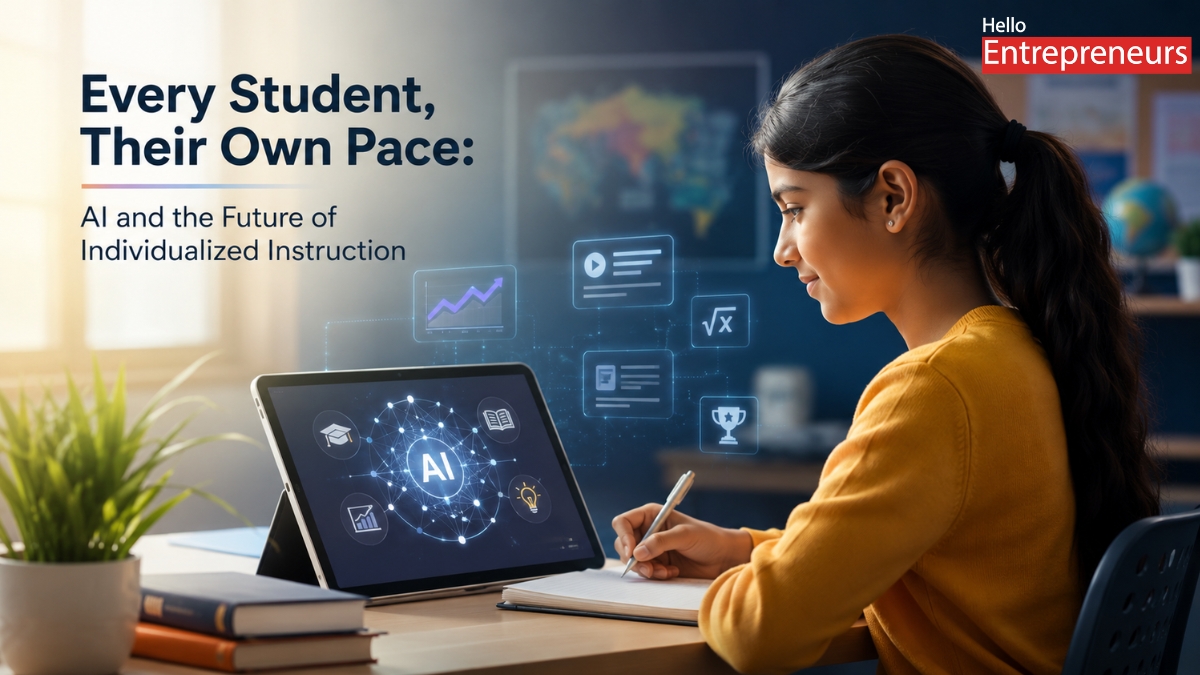








New Delhi: Walk into any classroom and you’ll spot it right away, even if no one spells it out. One kid breezes through the worksheet in a flash and starts doodling, while another is still stuck on question three when the bell rings. Everyone’s in the same room, with the same lesson and the same amount of time, but their experiences couldn’t be more different. For more than a century, schools have stuck with this factory-style system—kids grouped by age, everyone plowing through the same material at the same speed, just hoping most students keep up. Truth is, this pace really works for almost no one.
That’s where AI-powered tools come in. And honestly, they’re already starting to make a dent.
The Old Problem: One Teacher, Thirty Kids, Thirty Needs
Trying to teach every kid differently isn’t some wild new idea. Montessori classrooms have thrived on it for ages, and any good tutor knows how to adapt on the fly. The problem? One teacher dealing with thirty kids just doesn’t have the time to juggle that many custom lesson plans, grade everything, and adjust for what each child actually needs. Something has to give. Usually, it’s the kids at the extremes—the fastest and the slowest—who fall through the cracks.
AI changes things. No, it won’t replace the judgment or warmth of a real teacher, but it can quickly handle the repetitive, diagnostic stuff—figuring out exactly where a student loses track—fast enough to be useful.
What It Looks Like in the Real World
Take Khan Academy’s Khanmigo. Instead of just flagging a wrong answer, it talks the student through their thinking. It listens for the exact spot the confusion pops up and offers hints that fit that kid, not just some cookie-cutter advice. Some school districts, like Newark, New Jersey, have tried it out as a kind of digital tutor alongside regular teachers—never as a replacement.
Then there’s Squirrel AI in China. It splits math into thousands of bite-sized “knowledge points” and figures out a learning path that fits each student based on what they’ve already grasped. Researchers found that even a short stint with Squirrel AI let kids catch up to—or even pass—peers who’d spent more time in traditional classes. Not because the AI “teaches” better, but because the software doesn’t waste time on what students already know, or rush them ahead before they’re ready.
You see something similar with Carnegie Learning’s MATHia, which is in thousands of middle and high schools across the U.S. MATHia tracks every step in how kids solve problems—not just the final answer—and adapts the difficulty as they go. Teachers get dashboards showing exactly where each student is stuck, so parent meetings and group time become honest conversations instead of giving tired advice like “try harder.”
Teachers Aren’t Going Anywhere—They’re Just Shifting Gears
Some people worry all this adaptive tech means teachers fade into the background. That’s not really what’s happening where these tools work best. When AI handles the repetitive stuff—grading, finding skill gaps, building practice sets—teachers get to do the human work. They spot when a usually chatty kid goes silent. They build trust so students feel okay asking “dumb” questions. They come up with new ways to explain things that aren’t clicking.
The schools that see the best results use this tech as an extra pair of hands, not a substitute. Look at Zearn for early math: the software takes care of practice and pacing, while the teacher brings the encouragement, real-world context, and those quick-on-the-spot decisions no computer can make.
Where Things Get Bumpy
It’s not all upside. These platforms need a constant stream of student data, which comes with big privacy questions—like who actually owns all that info. There’s an equity problem too: these tools really shine when schools have solid devices, fast internet, and teachers who know how to use them. Not every school has those things. If only well-funded places get the full package while everyone else gets the bare minimum, these gaps could widen, not shrink.
There’s another catch—if you make lessons too targeted to a student’s current level, you can accidentally shield them from the good kind of struggle that builds real grit. Software that keeps everything comfy might boost scores, but it won’t teach kids how to push through actual confusion and frustration. The best tools leave room for teachers to nudge students past what’s easy when it counts.
A Real Future—Not a Hype Dream
Here’s the truth: AI isn’t going to overhaul education overnight. Progress looks pretty ordinary—software quietly takes over the busywork, freeing up teachers for the stuff only people can do. The classrooms that really benefit aren’t the flashiest ones; they’re the rooms where AI keeps the pace in the background, and teachers stay front and center, in the loop, always adjusting.
That’s what it really means for “every student, their own pace”: patient, behind-the-scenes software, and a teacher who still knows each kid by name.