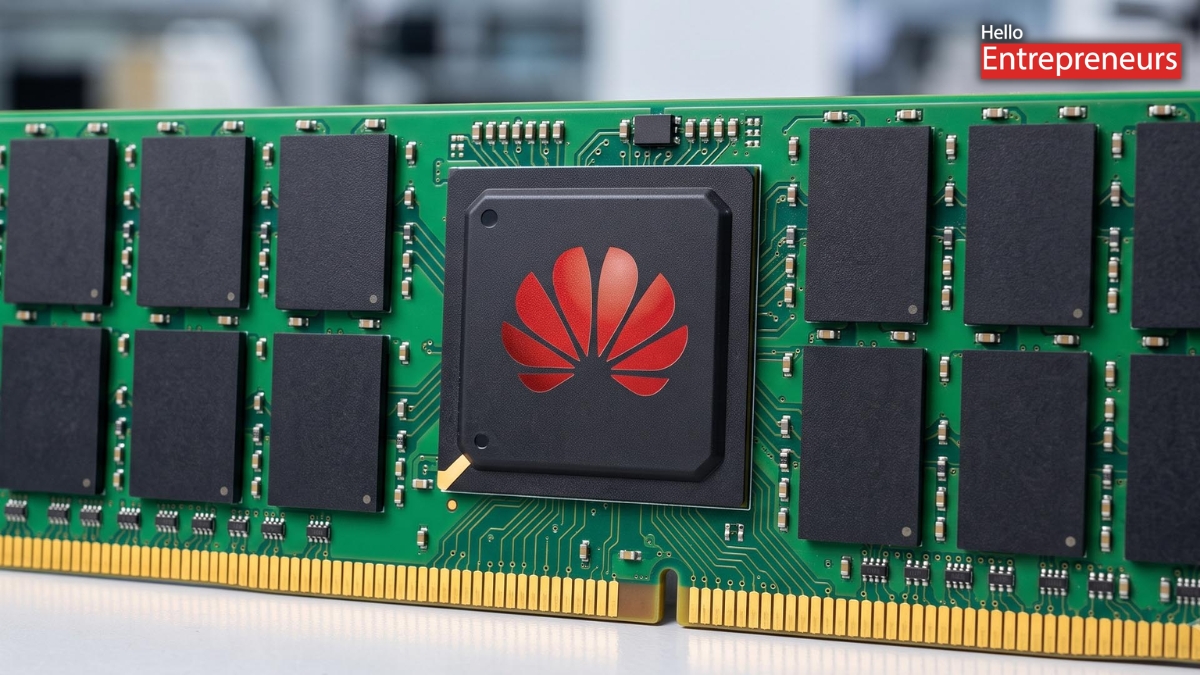








New Delhi: Huawei has recently reported they are now moving beyond chips and is currently investing in manufacturing DRAM (Dynamic Random Access Memory) via its latest semiconductor fabrication facility in Shenzhen, China. This project is stated to be backed by the Chinese government and developed with local semiconductor partners such as SwaySure. This fab is reported to be specially designed to produce around 140,000 12-inch wafers per month, initially aiming for 28nm DRAM before advancing to more sophisticated nodes.
US sanctions have limited Huawei’s access to memory chips from companies such as Samsung, Micron, and SK hynix. AI servers and flagship devices require increasing amounts of high-speed DRAM. China wants to reduce its reliance on foreign semiconductor suppliers and strengthen its domestic chip ecosystem. Building an in-house supply chain would give Huawei greater control over costs and availability. Huawei is gradually building one of the most vertically integrated technology ecosystems in China.
However, Huawei’s roadmap now includes:
- Kirin smartphone chips
- Ascend AI chips
- SSD controllers and storage
- NAND flash technologies
- DRAM production
- HDM (High Bandwidth Memory) research for AI chips
And if it goes successfully, Huawei could join Samsung as one of the few companies capable of designing processors while also producing major memory components. While several reports indicate Huawei’s expansion could eventually reshape RAM pricing, the short-term outlook is different. AI infrastructure is consuming a large share of DRAM production and contributing to continued global DRAM shortages.
Contract DRAM prices are expected to remain elevated throughout 2026. Industry executives predict supply constraints could persist for years. Huawei’s fab would take years of ramp production, which means that consumers are expected to see cheaper RAM in the near future.
Advanced DRAM manufacturing it will going to require cutting-edge lithography equipment. US export restrictions continue to limit China’s access to the most advanced chipmaking tools. DRAM manufacturing has a steep learning curve with low initial yields. Established manufacturers like Samsung, SK hynix, and Micron have decades of experience and remain the technology leaders.