



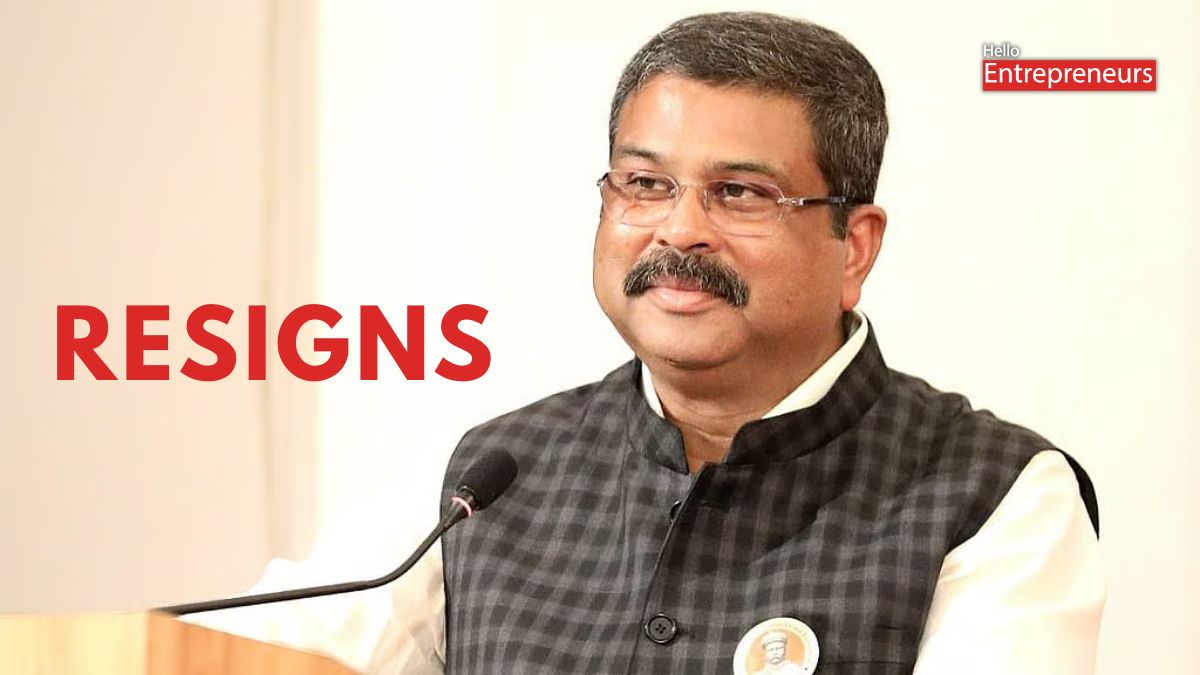
New Delhi, July 25: Union Education Minister Dharmendra Pradhan on Saturday quit the Union Cabinet in a big political move after days of widespread nationwide protests by students and youth groups against alleged examination malpractices and demand for changes in the education system in India.
Following the demands of the public, large demonstrations were organised in Jantar Mantar in Delhi and some cities elsewhere in the country and Pradhan had to resign from the post of Prime Minister, Narendra Modi. The resignation is one of the largest political developments of the week, during which the young population has dominated news coverage in the country.
The protests were primarily in response to the allegation of the NEET-UG examination paper leak controversy which brought into the open the issue of lack of trust in the competitive examination system in India. Students and aspirants were calling for stringent measures against the culprits of the irregularities in the examination process, restructuring the National Testing Agency (NTA) and accountability of the minister.
The protests were led by the youth movement Cockroach Janata Party (CJP), which had become a strong voice of students demanding transparency and accountability in the education system. Thousands of protesters marched in New Delhi even as the police deployed a massive security force, and some solidarity marches were reported in Mumbai, Bengaluru, Kolkata, Surat and other cities. The protest leaders made clear at every instance that Pradhan’s resignation was an intransigent demand.
Pradhan in his resignation letter stated that he had taken the decision to resign it in the ‘interests of the students’ and to ‘prevent the further disruption of academic activity’. He also thanked Prime Minister Narendra Modi for providing him an opportunity to serve as an Education Minister and repeated his pledge towards reforms in the education system and welfare of the students.
The Centre has tried to settle the deadlock through several rounds of talks with the protest movement representatives earlier today. Senior ministers, such as Health Minister J.P. Nadda and Minister of State Jitendra Singh, engaged in discussions with the protest leaders and the government requested more time for further deliberation on their demands. But no significant progress was made out of the talks as protesters reiterated demands for the resignation of the minister.
In the midst of the protests, activist Sonam Wangchuk went on a 26 day fast, calling for accountability and sweeping reforms in the Indian examination system. He broke his fast when he was assured that the problems concerning exams reforms would be debated in parliament; the bigger demonstration went on until the resignation was announced.
The debate also resulted in substantial official measures. The National Testing Agency (NET) is said to have taken steps to overhaul its internal systems, ousted some officials and declared steps to restore trust in the examination cycle. The Union government also gave its nod to tougher anti-paper-leak provisions and pledged to take stiffer action against persons who indulge in examination fraud.
Numerous political responses came in shortly after the resignation. The opposition parties termed it a success for students and called for further reforms of the institutions so that there was transparency in the exams conducted at the national level. Meanwhile, government officials stressed that the resignation shouldn’t divert attention from the work being done to modernise India’s education system and improve measures to combat examination malpractice.
Previously the Union Education Minister, Dharmendra Pradhan served in several key ministries such as Petroleum & Natural Gas, Steel, and Skill Development before taking on the role. Now his resignation has turned focus on the Centre’s next moves to pave the way for a new head for the Education Ministry and to rebuild trust in the examination system.