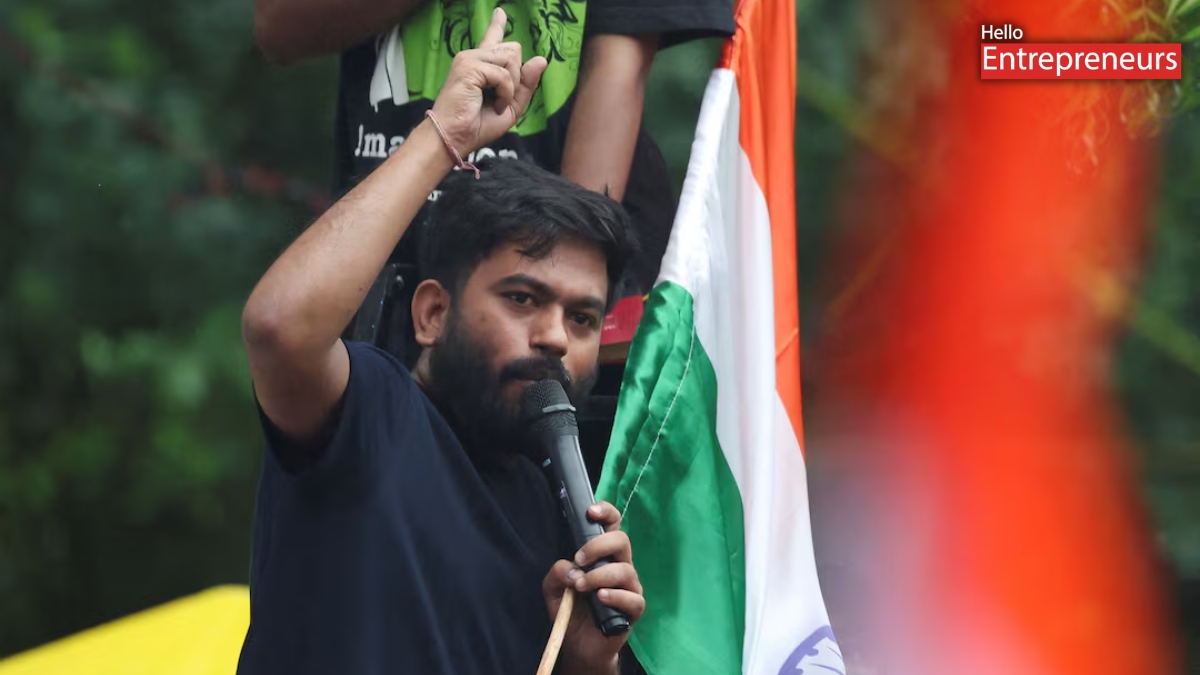







New Delhi: Abhijeet Dipke, an Indian 30-year-old political communications strategist from Maharashtra, is the face of what is termed India’s first large-scale protest movement of Gen Z’s. The original social media post has expanded to a nationwide movement that has united thousands of youth in calling for better accountability from the government, exam paper leaks, and to combat unemployment.
The protest started after a High Court Judge made some remarks on social media comparing the youth who are not in a job to “cockroaches.” So Dipke put a simple but powerful question out on social media: “What if all cockroaches gather together?” The message was quickly shared among the masses and changed the lives of millions of youths who were already dismayed with problems affecting their future.
Dipke then started the satirical Cockroach Janta Party (CJP) that aimed to expose the issues of the young people of India through humor, memes, and social media. This campaign grew from web-based to street-based, starting in New Delhi, although notably not in Kolkata, and other cities, at first in peaceful fashion.
The protests have largely come at a time when there has been a succession of leaks in examination papers, high unemployment rates, and complaints about education. Numerous students have been asking the Union Minister of Education, Dharmendra Pradhan, to resign, as the practice of exam leakage is said to have lost the students’ trust in competitive examinations.
The movement’s public face is Dipke, who recently returned from Boston after studying public relations, and has become the public face of the movement. Hailing from the Dalit community in Maharashtra, he has spoken at numerous platforms throughout the country about how the thoughts of social reformer Dr. B. R. Ambedkar influenced him on the issues of equality and justice. He has advocated peaceful protest, democratic participation, and not violence.
The movement has become popular, although Dipke has had disputes over the right to his protest. He has said he has been threatened, and at one protest, his back was broken by angry people throwing ink at him. He was also reported to have been briefly detained by police officers during the recent protests, but the movement later clarified that he did not even get arrested or detained.
While the protests have increased, support from students and the younger demographic, the younger professionals, has been the strongest. Mass rallies are being organized in New Delhi, and solidarity rallies were organized in cities like Mumbai, Chennai and Hyderabad. Also, there have been some opposition leaders moving in behind the movement, although Dipke has said that it is youth-led and not party-led.
Recently, as the Indian Prime Minister, Narendra Modi, responded to these flags by announcing faster action against the people involved in the examination paper leak, including special courts. But many protesters feel these policies are insufficient and want more reforms and accountability in the education system.
The orientation of the movement is also a distinctive feature. It has run short videos, memes, and social media discussions instead of the traditional political campaign to reach millions of young Indians. This digital-first strategy has allowed the campaign to quickly expand its reach and engage various audiences and geographies.
The protesters could mark a new chapter for India’s public protests, according to political commentators. This campaign has been predominantly driven by Gen Z, unlike many other campaigns in the past where questions were directly related to education, jobs, and opportunities for youth. Its impact on policy alterations is still an open question, yet it has begun to reveal the influence of India’s youth on the national debate and push for accountability of the decision-makers.