


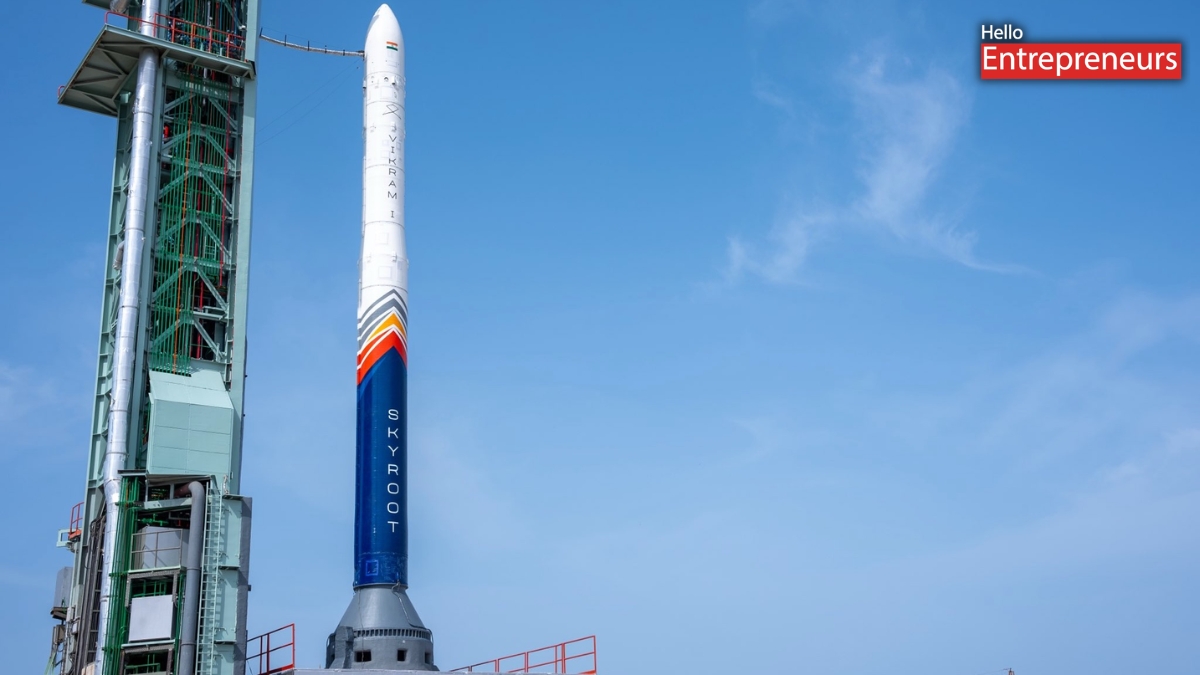
New Delhi: The space agency Skyroot Aerospace has achieved another significant success on the flight path of India’s ambitious space mission on Saturday with the successful launch of its Vikram-1 rocket in Low Earth Orbit. Skyroot became the first private Indian company to launch a rocket into orbit by making this achievement.
The first launch occurred at the Indian Space Research Organisation (ISRO) launch facility at Sriharikota at 11:30 AM IST on the mission ‘Aagaman’ which translates to ‘arrival’ in Sanskrit. The mission, which would run for about 16 minutes each, had successfully put all six payloads in orbit, demonstrating India’s fast-emerging private space industry.
The small satellite launch vehicle Vikram-1, named after Dr. Vikram Sarabhai, the father of the Indian space program, is capable of lofting a payload of up to 350kg into Low Earth Orbit (LEO), at an altitude of about 450km above the Earth’s surface. The rocket has been designed to offer satellite operators a dedicated launch service, alleviating time constraints that are experienced by satellite operators on a frequent basis.
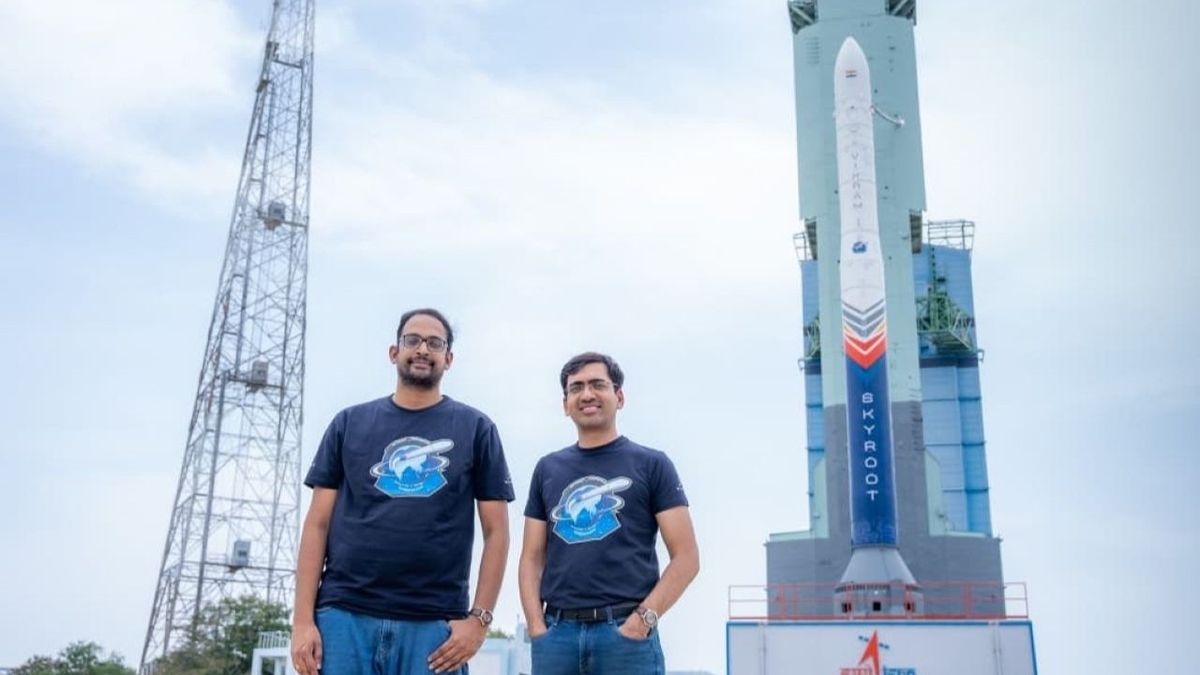
Post the successful mission, Pawan Kumar Chandana, founder and CEO of Skyroot Aerospace, said the company aims to make satellite launches like booking a taxi. Average satellite operators can reserve their own dedicated mission to their satellite for months or years instead of waiting for it to be scheduled to fly aboard one of a handful of big rockets to a place it needs. Chandana spoke about this as a “cab service to space” where the passengers will decide on the type of launch they need according to their mission requirements. If the launch is successful, the company will also become one of the few companies in the world that have proven their orbital launch capability, following in the footsteps of U.S. and Chinese companies.
Mission Aagaman had six payloads – all of which were scientific instruments and satellites from other countries. Of these, a robot arm to retrieve space junk, an Earth observation camera, and a satellite from the German firm were among them.
The mission featured two symbolic payloads that garnered a wide amount of media interest. One of these was a lotus rendered out of diamonds made in the lab by Cosmos Diamonds, called Cosmic Bloom. The second was a miniature replica rocket on which were three mini-sculptures representing three great Indian scientists, Dr Vikram Sarabhai, Dr A.P.J Abdul Kalam, and Nobel Prize-winning physicist Sir C.V Raman, in recognition of their contributions towards the scientific and space achievements of India.
The company was established by the two former ISRO scientists, Pawan Kumar Chandana and Naga Bharath Daka, in 2018. It’s the first Indian space-tech unicorn, having reached the milestone of a valuation of $1.1 billion. It had earlier made history in 2022 with the skyrocketing of India’s first privately made suborbital rocket. India opened space to private companies in 2020, which has helped the company grow further. Now there are over 400 space start-ups across the country, with Skyroot emerging among the best companies in the field.
The firm will carry out another test mission this year before it launches commercially in 2027, Chandana said. With its manufacturing plant located in Hyderabad, Skyroot can produce a rocket every month, enabling it to cater to the increasing demand of customers across the globe. The firm is looking forward to assisting in ISRO’s future missions, but will mainly cater to international customers. Small satellite applications, like communication, navigation, Agriculture, disaster management, weather forecasting, and national security, have grown to include more and more small satellite types. Vikram- 1’s success suggests a new era in India’s private sector space sector, solidifying its role in the space economy and fostering innovation, investment, and commercial space ventures.