



New Delhi: Diplomacy discussions have largely been focused on trade, defense ties, and strategic cooperation for decades. However, today cultural heritage plays a significant role in international relations as well. Governments and museums are under increasing pressure to repatriate artifacts seized during colonialism or in dubious circumstances all over the globe. In recent years, too, India has begun anew to restore to itself historical artifacts of profound cultural and civilizational significance.
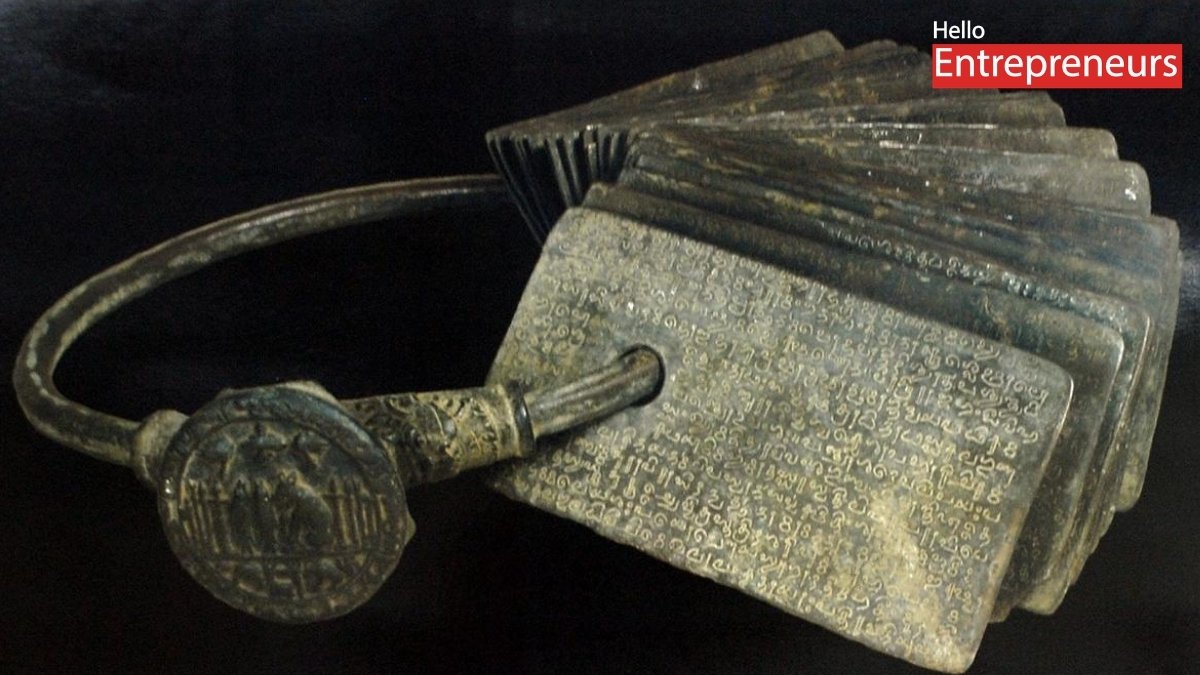
It was seen during Prime Minister Narendra Modi’s recent visit to the Netherlands, when the Dutch government returned a rare collection of 11th-century copper plates belonging to the Chola rulers. The handover was not only a diplomatic move but also a major step in the global discussion on restitution and cultural ownership.
The objects, popularly referred to as the “Leiden Plates,” are considered one of the most historically important surviving documents of the Chola dynasty and are known worldwide. It is believed that the inscriptions were placed on the plates during the reign of Rajaraja Chola I (985–1014 CE), and the collection comprises 21 large copper plates and 3 smaller plates, all bound together in a bronze ring bearing the royal seal of Rajendra Chola I.
The plates are not only the oldest but also the most detailed. The inscriptions, written in Tamil and Sanskrit, are records of grants to the Chudamani Vihara, a Buddhist monastery in Nagapattinam, modern-day Tamil Nadu. The records shed light on the activities of governance, taxation, religious patronage, and maritime diplomacy in the zenith of the Chola empire.
The plates also, in many aspects, embody the Cholas’ broader world connections. The inscriptions allude to relations between the Chola state and the Srivijaya empire of Southeast Asia, as well as to the extent of India’s sea power thousands of years ago. These are not just ceremonial items, but primary historical documents that can help shed light on one of the most impactful eras in South Indian history.
The artifacts were stored for many centuries at Leiden University in Leiden, the Netherlands. The Indians had reportedly been seeking their return since 2012. This momentum was created following the investigations into the provenance of the plates carried out by Leiden University and the Dutch Colonial Collections Committee, including their departure from India.
The committee, in the end, decided that the copper plates had been removed from India without the permission of those to whom they belonged, and could be returned without any restrictions. PM Modi’s visit was the occasion for the formal handover, as recommended.
Modi, in his speech after the ceremony, said it was a “joyous moment for every Indian”. Additionally, he recognized the contribution of the Dutch government and Leiden University to the repatriation. The diplomatic visit covered various aspects of trade, technology, and strategic cooperation, but one of its most significant moments was the return of the Chola artifacts.
The emotional aspect of returning the items makes sense. The meanings of cultural artifacts can extend beyond museums and archives. They become a symbol of identity, continuity, and historical memory. The restitution of these artifacts is increasingly becoming a process of heritage recovery and of recovering the disrupted narrative of colonization for India.
Meanwhile, the Netherlands’ choice is part of a larger trend that is unfolding in Europe. A number of institutions and governments are rethinking all collections made during the colonial era and particularly when issues of ownership and consent arise. Such discussions have arisen regarding African sculptures, Asian manuscripts, and native artifacts in Western museums.
One of the striking features of the Chola plates case is its collaborative nature. The repatriation does not seem to have been a lengthy legal battle but has been influenced by academic review, diplomatic negotiation and institutional cooperation. That is a way that could be replicated in future restitution initiatives worldwide.
The return is also in keeping with a broader cultural diplomacy initiative in India. The country has, in recent years, recovered hundreds of artifacts from abroad, including the United States, Australia, and the United Kingdom. These initiatives are often linked with larger ones to conserve the heritage and enhance the presence of Indian culture in the international sphere.
The Chola copper plates are of special significance, as they date to one of the most important periods in India’s history. In addition to being a powerful army, the Chola empire was noted for its well-developed administrative systems, architectural feats, maritime trade, and art. Artifacts associated with this time period are of great historic and scholarly significance.
The plates’ return to India after centuries away has highlighted the growing significance of cultural heritage in contemporary diplomacy. Such moments provide a contrast to the many that are consumed by economic negotiation and geopolitical conflict, and represent another kind of international engagement, one in which ownership of the culture is slowly restored and a memory is created.

