







When we speak of education in the 21st century, the conversation almost always begins with literacy. But literacy today is no longer limited to the ability to read and write. In fact, educationists and policymakers across the world now identify multiple literacies that a child must acquire to thrive in the modern world.
Digital literacy, media literacy, financial literacy, ecological literacy, emotional literacy, and health literacy are just a few examples of this growing list. Schools are rightly investing resources in helping children become digitally fluent, emotionally intelligent, environmentally aware, and financially savvy. This is essential because today’s learners are tomorrow’s global citizens.
Yet, while we have been building competencies across this wide spectrum, there is one important dimension that has been quietly neglected, cultural literacy.
Why Cultural Literacy Matters
Cultural literacy is the ability to understand, appreciate, and participate in the traditions, practices, and values of one’s own community as well as those of others. A culturally literate child does not just know about the festivals or customs of their family, but also develops respect and curiosity for the diverse traditions around them.
The benefits of cultural literacy are immense:
Rooted identity: Children who know their heritage grow up with a stronger sense of who they are.
Empathy and tolerance: Exposure to other cultures teaches respect, reduces prejudice, and builds bridges across communities.
Critical thinking: Learning why traditions exist encourages questioning, interpretation, and deeper understanding instead of rote following.
Confidence and pride: A child who can explain their own cultural practices to others gains self-assurance and pride in their roots.
Global readiness: Ironically, the more rooted one is in their own culture, the better one can engage with the global community—because they represent something authentic.
India’s Heritage: Rich, but Under-explored
India is blessed with one of the richest cultural heritages in the world—our music, dance, festivals, languages, crafts, cuisines, and rituals are unparalleled in diversity. But unfortunately, for most children this knowledge remains bookish. They may memorize that Diwali is the festival of lights or that Dussehra marks the victory of good over evil, but very few understand the stories, philosophies, and values behind these practices.
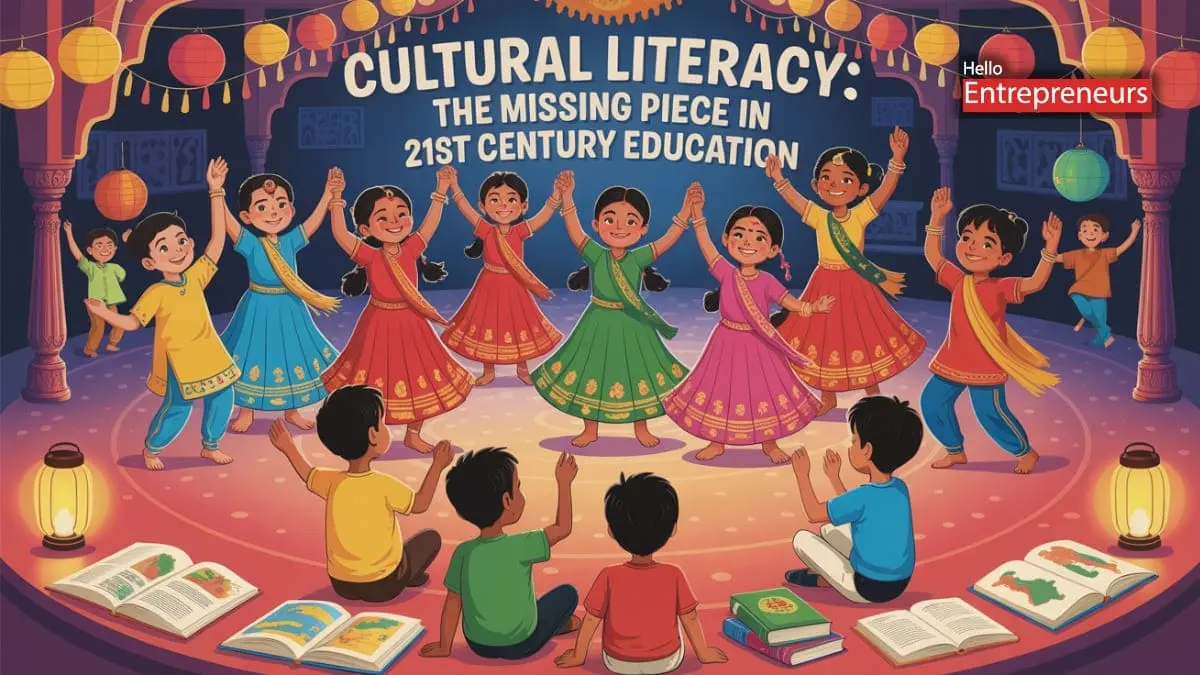
The classic example is Navratri Garba. Gujarat hosts the world’s longest dance festival, nine nights of devotion, rhythm, and joy. The colorful dresses, the energy of the circular dances, and the festive atmosphere are celebrated globally. And yet, when asked, my research shows that nearly 95% of parents are unable to properly explain to their children why we celebrate Navratri. The story of Goddess Durga’s nine-day battle with the demon Mahishasura is often left out, leaving children with only the surface experience of music and dance, not the deeper cultural meaning.
Udgamverse’s Commitment to Cultural Literacy
At Udgamverse, we have decided to change this. We believe that schools must not only prepare students for exams and careers, but also help them grow into culturally literate individuals—aware, proud, and connected to their heritage.
This Navratri, Udgam Na Garba is not just going to be about music, dance, and festivity. It is going to be about storytelling, learning, and pride.
The Drone Show: Storytelling in the Sky
For the first time, we are introducing a drone show that will narrate the story of Navratri—the nine-day fight between Goddess Durga and Mahishasura. Using cutting-edge technology, the sky will come alive with visuals of the demon king’s rise, his tyranny, and the eventual triumph of Durga. The narration will explain how each day of Navratri symbolizes a stage in this epic battle, ending with the victory of good over evil.
This is more than entertainment; it is education woven into wonder. Children will not just dance to the beats of Garba—they will understand why they are dancing, and what story they are celebrating.
51 Shaktipeeths: Decor with a Message
In addition, the entire venue will be adorned with representations of the 51 Shaktipeeths—the sacred places of worship dedicated to the Goddess across India. Each Shaktipeeth will be marked on a large map to show its geographical location, along with details of its significance.
Imagine the impact on children as they walk through the venue, seeing not just decorations but a living cultural atlas. They will be able to connect the dots—literally—between what they hear in stories, what they see in rituals, and where these places exist in real life.
Towards a Culturally Literate Generation
We hope that through these initiatives, curiosity will spark in young minds. Children will begin asking questions: Why was Mahishasura considered undefeatable? How did the Trimurti create Durga? What values does this story teach us today? Where exactly are these Shaktipeeths, and why are they important?
Every question answered is a step towards cultural literacy. And every culturally literate child grows up to be a balanced human being—rooted yet open-minded, proud yet respectful, traditional yet forward-looking.
As the world moves faster and globalization blurs boundaries, cultural literacy will be the anchor that keeps our children steady. It will give them not just knowledge of festivals, but wisdom from centuries. Not just pride in rituals, but values that shape character.
Conclusion
The 21st century demands many literacies, from digital to ecological, from financial to emotional. But without cultural literacy, education remains incomplete. It is the missing piece that ties together identity, values, and belonging.
India already has the treasure. What is needed is a way to make that treasure accessible, engaging, and meaningful to children. At Udgamverse, we are committed to doing exactly that—through innovation, creativity, and a passion for heritage.
This Navratri, as the sky lights up with drones and the ground glows with the energy of Garba, may our children not only dance but also understand why they dance. May they not only enjoy their culture but also become proud storytellers of it. That, in the truest sense, is cultural literacy.