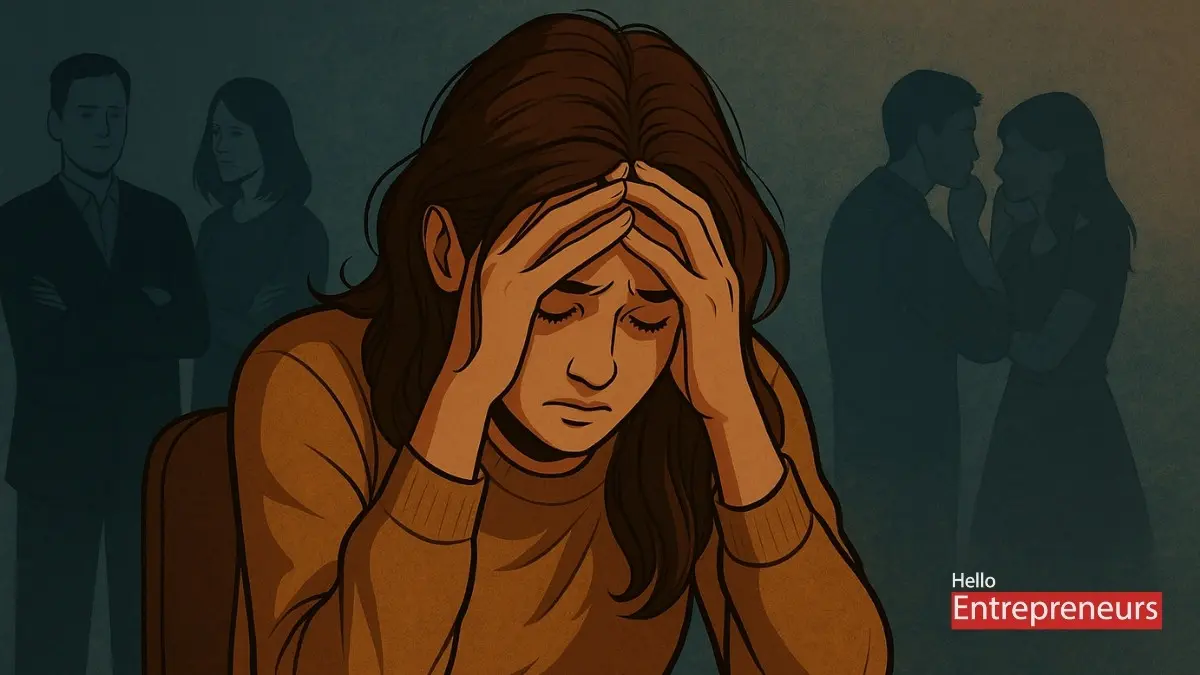








Surat: There’s a strange irony to life that tends to ignite fiery dinner table arguments and infinite tear-stained journal pages: why do bad things happen to good people? It reads like spiritual jargon or the whine of a weary empath. But as it happens, neuroscience has a few receipts—and they’re not as kind as the good-natured among us might like.
Behind this enigma is a dark misperception between the brain and the self. Selflessness, kindness, and obdurate people-pleasing are usually confused with virtue. But the brain? It does not perceive halos or gold stars. It perceives patterns.
The Reticular Activating System (RAS)—the gatekeeper of your brain’s sensory input—is like a hyper-efficient but slightly paranoid assistant. It filters through billions of data points and only allows in what it believes you want to see. Not what you should see. What you feel you deserve to see.
Now picture you as someone who’s been spending years keeping your own needs at the bottom of the stack, apologizing for taking up space a little too much, and responding yes when your entire nervous system is yelling no. The brain tracks that. And it doesn’t flag it as a selfless sacrifice—it documents it as a hierarchy.
You, my friend, come last.
This unconscious priority system drives the way the brain processes opportunity. If your mental dialogue sounds like “life doesn’t work for me,” then the RAS will be working double time to make that true. Your promotions will go unnoticed, green flags in relationships will be mistaken as beige, and little victories will be deleted like spam emails. Not because they didn’t happen, but because your neural software didn’t flag them as important.
In the meantime, your default mode network—the region of your brain that hums along during downtime and controls self-awareness—begins crafting a martyrdom narrative. You’re not merely one who gives; you’re one who receives nothing. And that persona? It’s sticky. It becomes familiar. Safe, even.
Add to that the prefrontal cortex, responsible for planning and decision-making, and you’ve got the perfect storm. When that system is marinated in guilt and approval-seeking behavior, decisions are made not based on values, but on fear. Fear of rejection, of not being “enough,” of disappointing someone—anyone.
But let’s be real. Whatever you do, someone’s going to be let down. The internet is offended by oat milk. Your family may judge your career choices even if you’re saving the world from cancer. So why not let others down in the name of not letting yourself down?
The antidote is not coldness or narcissistic detachment. It’s radical self-respect.
Picking your truth instead of performative peace. Respecting your boundaries like they’re heirloom china. Discovering that ‘no’ is a full sentence, not an impolite interruption. Because self-abandonment is not something to aspire to, and a life spent for the claps of others will always be like a rehearsal.
If your mind’s been programmed to be the supporting character in everyone else’s movie, it’s time to rewrite the script. Get into your protagonist’s power. Even the RAS can learn a new trick with enough repetition and clear vision.
As it is said in neuroscience (okay, perhaps only in poetic neuroscience): neurons that fire together, wire together. So if you want your life to transform, transform the way your brain is hearing you out. It’s already making a note. The question is—are you saying what you truly mean?
Also Read: 5 Hard Truths Redefining Feminism