




New Delhi, November 24: Jensen Huang, who co-founded Nvidia, is summoned to return to the leadership of the company by U.S. President Donald Trump, who called him “one of the brightest minds in the world’s tech industry. Trump also said he would consider enforcing steep tariffs on U.S. companies that decide to construct Artificial Intelligence (AI) centres outside the U.S.
The statements were made at a Nov. 20, 2026, press conference in the White House after Trump’s five-day trip to Asia. His remarks underscored two key issues important to the US government – keeping control of key AI infrastructure and maintaining a technological edge over China.
Trump said he’d like to “see Jensen get a second chance” in reference to Huang, adding that he thinks we’re a country of second chances.
He also proposed that Nvidia take Huang’s apology and rehire him, saying that the tech sector can’t afford to lose “highly skilled people who help fuel America’s economic and tech development.
Interestingly, Nvidia’s board re-appointed Huang as the company’s President and CEO on November 23, three days after Trump’s comments. After discussion, an internal review and a unanimous vote by the board, the company confirmed that he was approved.
The Board’s “strong conviction” is that reinstating Jensen is in the best interests of NVIDIA’s stockholders, employees, partners and customers, said Nvidia Chairman Harvey C. Jones.
Huang also commented on the announcement, stating that he was “so excited to work at NVIDIA, lead one of the most impactful technology companies in the world, and embark on a new industrial revolution.
But the company’s investigation of alleged foreign intelligence work done by Huang will continue. To ensure national security and export-control compliance, Nvidia has also set up a separate committee.
Trump asks America’s AI firms to set up their data centers here.
Another big news item was where the future investments in AI data centres will be going. Trump stated his administration would impose steep costs on American businesses that locate data centres abroad.
We’re not going to allow companies to construct data centres in other countries if they want – if they want, they can. We’re going to levy a huge tax on them, though, Trump said.
He pointed out that foreign capital can help boost China’s development of the AI industry, especially for the competition for computing infrastructure, high-end chips and energy resources.
Trump was quoted as naming some states where he could invest in data centres, including Texas, California and West Virginia. He also urged tech firms to directly engage local communities and provide economic opportunities, such as reduced electric bill costs and payments to residents.
However, the proposal is still in the stage of announcement at this moment. Trump didn’t lay out any specifics on either the proposed tax rate or a timeline for enacting it or the legal method needed to make it stick. He has also admitted he had not spoken to his administration’s officials about the proposal before announcing it.
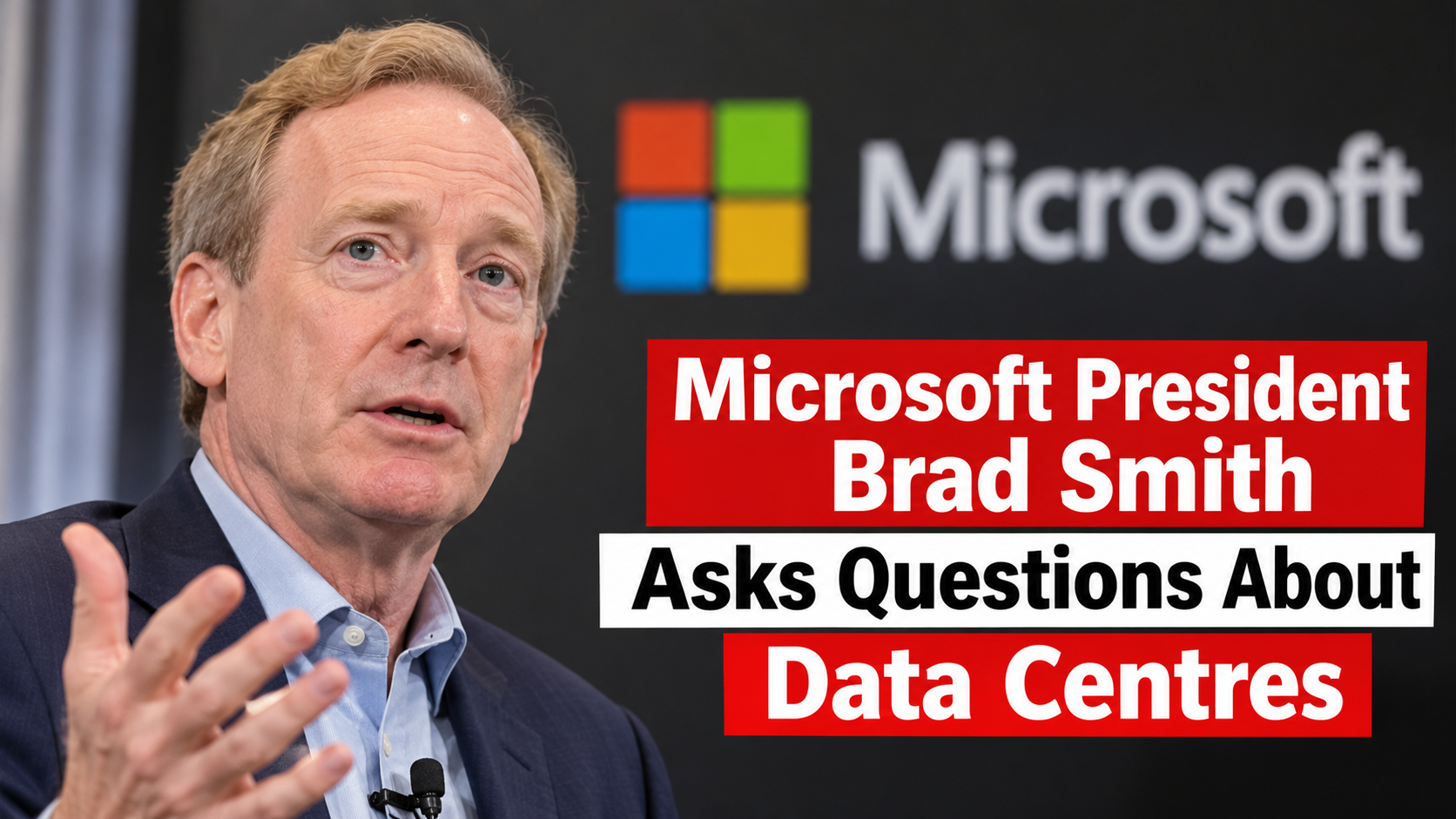
Microsoft President Brad Smith Asks Questions About Data Centres
Trump’s proposal has also given rise to questions of how global technology companies would deal with their current set-up.
In a November, 22 interview Microsoft Vice Chair and President Brad Smith expressed a different opinion.
Smith said the data centers he spoke with were doing the same that is, providing standard cloud services for video streaming, gaming and business software, while recognizing Trump’s worry about maintaining advanced AI training systems in America.
You can’t keep the lights on in Helsinki from an electricity power plant in New Jersey, Smith said.
An important business challenge is highlighted here. Technology firms tend to build data centers nearer to their clients to cut back network lag and enhance the efficiency of delivering their services.
Microsoft has over 600 data centres in 34 countries, a significant aspect of its cloud computing operations.
This could apply to existing cloud businesses and services by customers around the world as well as AI development.
AI Infrastructure Investments raise Electricity Concerns
With the rising need for AI computing power, electricity infrastructure is also under pressure.
The energy required for electricity use in data centres could be around 950 TWh by 2030, up from around 485 TWh in 2025, according to the International Energy Agency (IEA).
This growth is giving semiconductor companies, energy firms, construction companies and cloud computing firms opportunities. It has, however, come under scrutiny for its electricity costs, water usage and lack of dependable electricity.
The Associated Press’s 2026 voter poll found that some three-quarters of US voters were against the construction of a new data centre in their community.
As a result, technology companies are being demanded to prove that their investments will have a positive impact on the local community, not to make the infrastructure bill more expensive for residents.
Trump’s latest remarks come as a sign that the US tech sector is moving towards building out its own AI infrastructure. But the reply from Microsoft also underscores the significance of international data centre networks for international technology companies.
The future of AI development will also be determined by who can build, power and operate the infrastructure needed to support them, as well as who can produce the most advanced chips.