



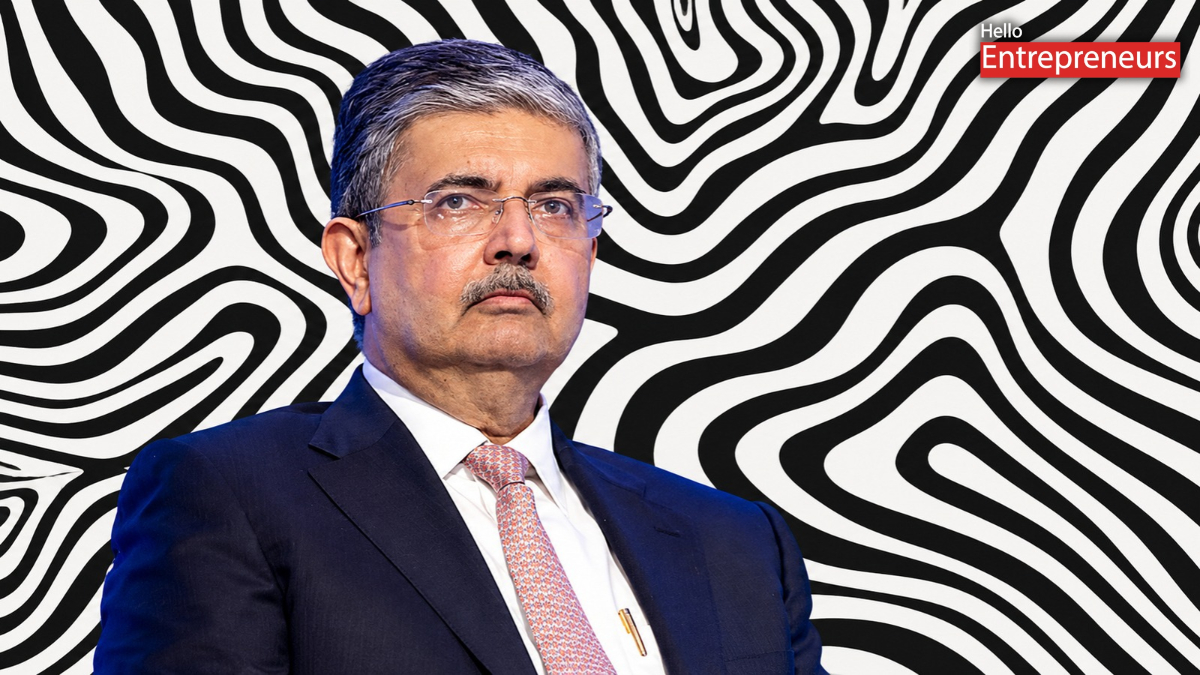
New Delhi: Uday Kotak has challenged the markets. In his post on X on Tuesday, he described Jensen Huang’s appointment as NVIDIA’s next CEO as “one of the most consequential decisions in the history of world markets.
It was a rapid turnaround. Huang, who resigned on November 12 following allegations of extramarital affairs, was reinstated by the board Monday, November 23. The board unanimously decided to re-instate him, expressing its satisfaction with his candor and leadership. Directors had reached out to U.S. officials and decided he poses no national security threat when he returns.
What the elephants are doing
The part of Kotak’s post that has captured the Internet’s attention is his elephant line. He reads that if the very powerful and the very large company moves around, then the smaller economy is forced to react. The incident was a message, “right or wrong,” that rules are pliable in the global power game,” he said.
Kotak also added a number approximately $1 trillion in the value of NVIDIA stock and $4 trillion in the US market which were recovered. He gave no source and these are his figures. The direction is what is confirmed by the reporting. The stock price of NVIDIA jumped on the announcement, raising the price of a market already hit by the tech sector sell-off of Friday which had fueled concerns of a bubble around the AI space. Shares opened 30% higher.
Ambition vs governance
The questions of governance are not so easily waved aside. On the day, interim CEO Colette Kress said the board did not have its eye on the replacement of Huang and so did newly installed chairman Harvey Jones. Whether America’s hopes for AI were worth the giveaway of normal corporate governance issues is the question raised by Kotak’s post, which was reversed in less than two weeks.
The board does not seem oblivious of the problem, as evidenced by NVIDIA’s own statement. It is recruiting national security-experienced counsel, is looking to hire a new Chief Compliance Officer and will continue to assist the government investigations. One outlet noted the reinstatement came even as an investigation into the spy scandal continues.
One CEO, one national project
It provides an example of the level of executive attachment to a nation’s technology plans. President Donald Trump publicly welcomed the decision. Enacting a day when a chief executive’s job takes the stock market for a flight of joy is a fuzzy distinction between corporate competition and national strategy. That’s what Kotak said in his statement, “The clear political and economic agenda of the country is to remain ahead in the AI race in the United States. AI leadership is being seen as more of a matter of country’s survival than of quarterly competition in the markets.
The dependency is a two-way street. The stock price jump of $4 trillion following the single hire indicates the trust Americans now place in a few AI companies. It is at this concentration that bubble worries are believable.
Where India fits
The question for India is not theoretical but practical. Now, if, indeed, the AI race is as much about governments as it is about firms, then India must make a choice about how it will play its part. It has a massive engineering arm, a rapidly expanding data-center construction program and a market that is large enough to be of interest to most chip and cloud vendors. The opportunity is there it hinges on advanced chip availability, which depends on choices in Washington and Santa Clara, not in Delhi.
Here it is as Kotak puts it: “When elephants dance. India can aspire to be more than ground on which they dance. That includes investing in compute, people and their own models, and having multiple suppliers rather than a single supplier.
Rules that bend
The bigger exception in Kotak’s post is regarding precedent. When the stakes are that high and a board can approve one day, then reject the next, and approve days later after discussing with government officials, other boards and countries will make their own conclusions. It’s either practical or a cautionary tale, depending on who you interview.
The point is, AI is no longer a technology story; it’s a power story. The markets had a day of celebration on Monday. The investigations, and the questions that Kotak is asking, haven’t gone away.