



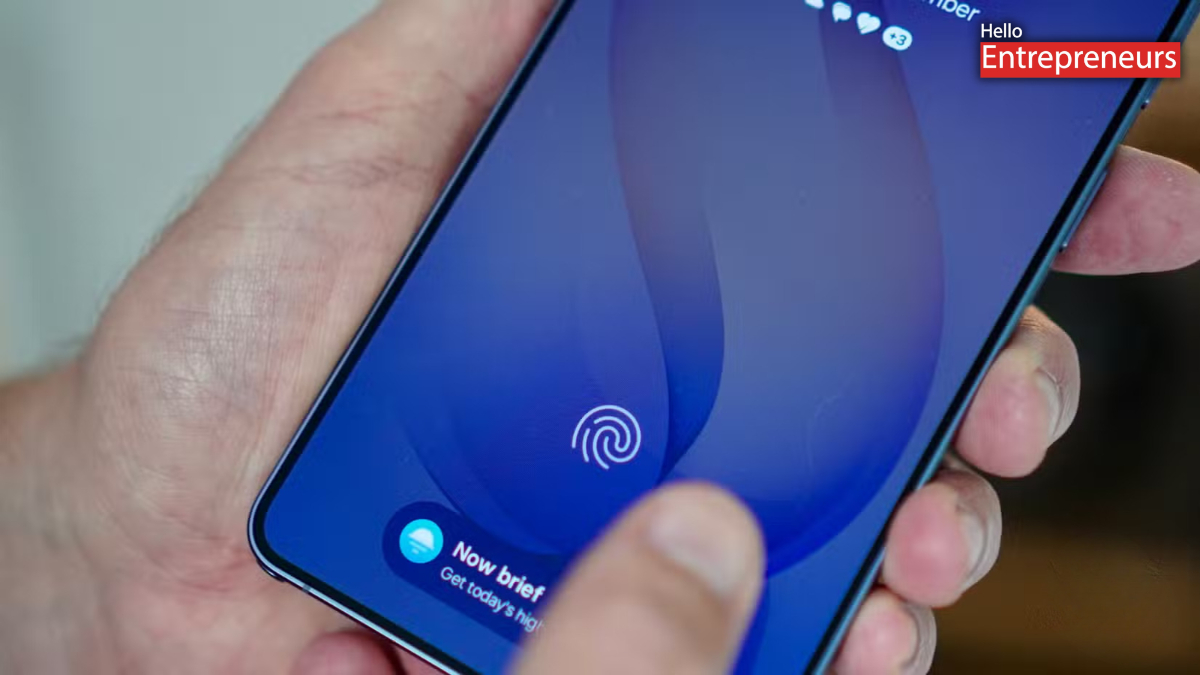
New Delhi: Face unlock has been around on smartphones for a while, but fingerprints are still the more reliable method of locking a phone. The difference is greatest on Android, where the majority of face unlock systems are purely based on the front camera.
That’s the real problem. A 2D face scan is a flat image, which means that sometimes a photo, video, or even a close look-alike can fool it. Fingerprint sensors are more difficult to fool, and the ultrasonic ones, such as the ones on Samsung’s flagship phones, are able to read the ridges of a finger in three dimensions. Many security experts consider basic face unlock to be a “weak” biometric, due to the risk of spoofing.
Fingerprints need to be deliberate as well. Face unlock will unlock the phone, even when the person is sleeping or pointing the phone toward their face. For a fingerprint, a conscious application is required. The twins and siblings who look alike can also open up a lot of face systems, and fingerprint is much more unique.
The distinction is most noticeable in apps. Apps like banking apps, wallets and UPI apps like Google Pay or PhonePe typically allow fingerprint as the authentication method, but most do not support 2D face unlock for payments. That’s a problem in India where millions of people use UPI every day. Like password managers and secure folders, they rely on fingerprints and are leery of simple face scans. The few phones that have the 3D face hardware right are in the “strong” class for Android.
Fingerprints are also favored in every day use. Face unlock with sunglasses, mask, darkness and at weird angles. The fingerprint sensor can be used under any light condition, but it may not be read if the finger is wet or dirty. Many users also find the in-display and side-mounted sensors on newer phones to be fast enough, so that sometimes they don’t even have to wait for a face scan.
This is reflected in brands. The one exception is Apple. Apple’s flagship iPhones have been built around a 3D infrared dot map, similar to a fingerprint, which is also as secure as a fingerprint. Nevertheless, the company did keep Touch ID on its iPhone SE models, and in the time of the pandemic, the mask issue pointed out a drawback of face-based systems.
Samsung’s iris scanner is the principal secure feature and fingerprints, which it keeps as the primary one, are marked as less secure. Google experimented with 3D face unlock on the Pixel 4, but now that’s back to fingerprint on the Pixel 5 onwards. Both options are provided by Xiaomi, Oppo, Vivo, OnePlus and Realme, but for the latter, fingerprint security is an integral part of their displays or sides as opposed to face unlock, which serves as a convenience.
Security scientists have long held that the most secure biometric is one that’s difficult to spoof, and the one that’s used all the time. Most phones have fingerprints which satisfy the first test. Face unlock only matches fingerprint security if the hardware can be used for depth sensing, but doesn’t meet the second because people don’t like touching anything.
The result is a split market. Unlike the 2D face system that is used on most Android phones, premium 3D face systems can be paired up with fingerprints. For now, fingerprint scanners will continue to be the payment and banking security standard, and so will any other thing that requires a more secure lock.

