



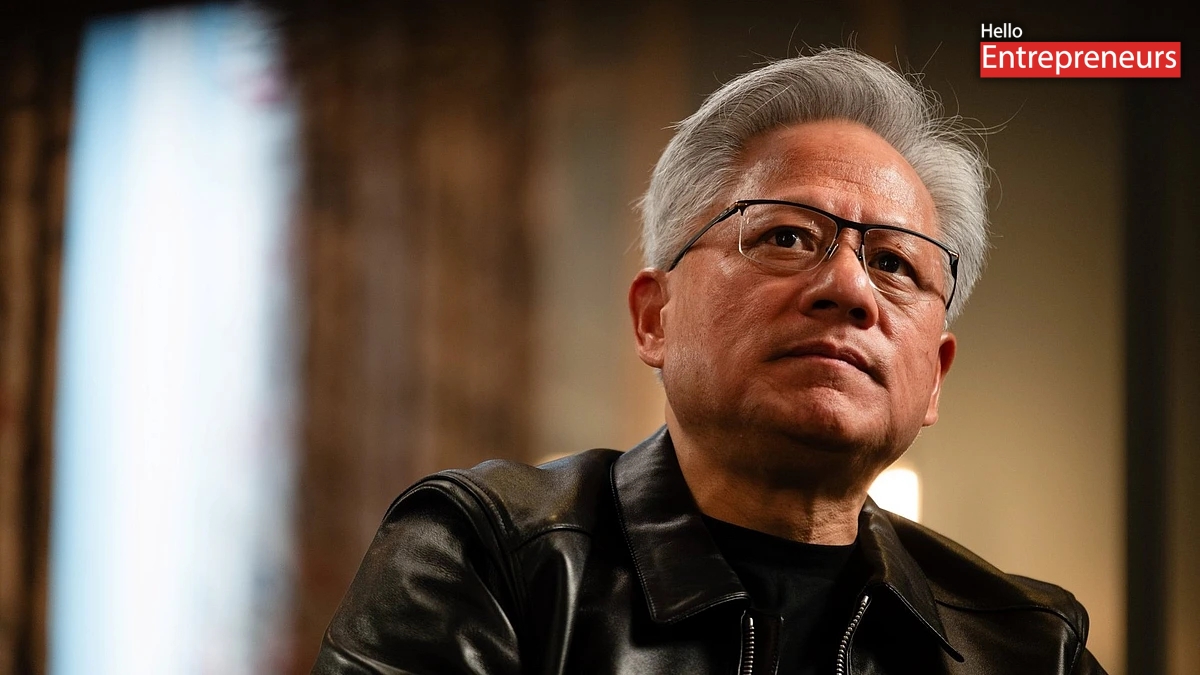
New Delhi: The push is on, both within the company and without, that Nvidia should rethink its decision to oust founder Jensen Huang, two days after he announced his resignation as chief executive. The board has not indicated its willingness to.
On Nov. 12, Nvidia announced Huang’s resignation from the company’s presidency and CEO, effective immediately. The exit came after a number of rumours of extra-marital affairs emerged, including with a woman who is on the agency’s payroll and another with suspected China agent. Colette Kress, CFO, will be the interim CEO until the board finds a new replacement. Former Synopsys CEO Harvey C. Jones has been appointed Nvidia’s first chairman. In a memo, Huang apologized to his colleagues, declaring that he had been unfaithful to his wife and that there was no excuse.
Employees speak up, but the board decides
The strongest push is an internal push. A longtime engineer, who had been putting his views on an internal suggestion box, told the board to take into account employee sentiment before taking action. Huang’s reinstatement has garnered over 1,600 comments, the majority of which support his candidacy. One member of staff sent an email to the entire company, asking for transparency, and around 20 employees posted comments on LinkedIn in support of that.
Enthusiasm is not authority, though. The appointment and removal of a chief executive should be the prerogative of the board, and the input of staff is advisory, at best. Employee sentiment can still be relevant in practice, though, as an organization that has its engineers openly questioning a decision may find it difficult to attract and keep good employees. Nvidia has about 42,000 employees worldwide.
Investors urge patience
There are investors who desire a slower pace from the board. “He doesn’t knowingly want to hurt the United States and Nvidia, and I’ve been around him for almost 30 years,” says Gavin Baker of Atreides Management. On X, posts call for a “slow and deliberate” search for a new successor to Baker and Altimeter’s Brad Gerstner, though that is not something that could be independently confirmed.
The board reports that it is proceeding slowly. It’s picking a search firm, it’s not called any candidates yet, it’s called speculations about people are premature! Although that hasn’t deterred the speculations. One newspaper reported the board had approached Arm chief Rene Haas, while Elon Musk claimed a petition to reinstate Huang was under way, and that he would sign it.
Can a resigned CEO come back?
Legally, yes. There is no general corporate law requirement that a board can’t appoint a resigned board member, and Huang is a free agent. The more difficult questions are practical. The board would be forced to give reasons as to why it accepted a resignation it now wishes to overturn, and the return would look awkward next to the open allegations. Shareholders have already instituted a class action against the relationship, alleging that it wasn’t made known to investors. The resignation has also been linked to suspicions of a Chinese intelligence connection, which may catch the eye of regulators in any attempt to bring him back.
A founder vs the boardroom?
This episode is reminiscent of classic founder-board stand-offs, but it has its own twists. Many of the board members are early investors in Huang and longtime associates. That is not likely to be an adversarial power struggle between the board and the founder, but rather between the board and shareholders. The board had been considering ousting him before his resignation, reports said.
A hard act to follow
The person who accepts the assignment will be judged according to one of the company’s closest affiliates, whom analysts believe are inseparable. One Bernstein analyst stated “Jensen Huang is Nvidia, and Nvidia is Jensen Huang.” There are some analysts who believe that the next CEO will move away from Huang’s hands on approach to engineering roadmaps, China export talks and big AI bets. The market is already feeling the uncertainty: Nvidia’s market value dropped by around $573 billion this week.
A possible precedent
Founders are not a new phenomenon. In 1997, Steve Jobs returned to Apple, and in 2015, Jack Dorsey returned to Twitter. The ousters were for strategy or performance, not for conduct or national-security issues. A Huang reinstatement will establish an example that a resignation under the pressure of staff and the board can be overturned by a board under combined pressure from staff and shareholders. It would also reveal the extent of a company’s culture of loyalty that can influence governance.
Nvidia will announce its quarterly earnings on Nov. 17, the first time it will share openly on how Kress’s interim team is navigating the chaos.

