



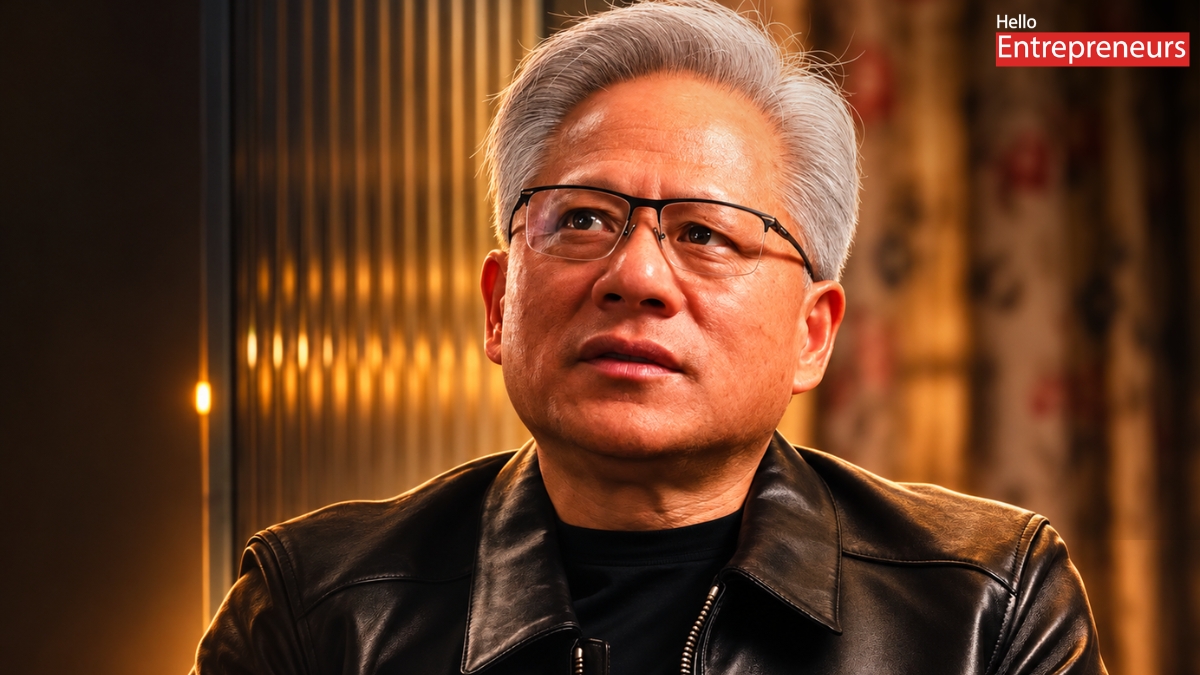
Nvidia’s crisis is no longer just one of its executives, the disgraced former chief executive Jensen Huang. It is a battle to see if the world’s most vital AI-chip maker can maintain investors’ confidence, national-security credibility and control of its supply chain in the aftermath of its founder’s abrupt departure on similar charges.
In the most recent close, Nvidia traded at $162.85, down 2.01 percent on the day, with a market cap of about $3.92 trillion. Over the course of the episode the chipmaker has seen hundreds of billions of dollars in market value disappear, showing how fast a governance risk can turn into a macro event if it hits the right company.
What happened
Jensen Huang’s stepping down as Nvidia CEO on Nov. 12, 2026, after revealing a number of extramarital affairs, including one with Alice Huang, a previous Nvidia executive at Megaspeed, a Singapore-based company and Nvidia customer and cloud partner. Nvidia’s CFO Colette Kress will serve as temporary CEO as the company looks for someone permanent.
It’s sparking backlash Reporting that U.S. authorities had probed whether Alice Huang was a Chinese spy and, if so, exploited her ties to Jensen Huang to learn about top-tier U.S. artificial intelligence chips was the immediate provocation. Reuters reports it couldn’t independently confirm the espionage claims, while Beijing has maintained Alice Huang is not a spy; the U.S. Justice Department says it hasn’t made a final call on the espionage claim.
On November 8, in a message to staff, Huang said he had been unfaithful and Nvidia’s board of directors said it launched an independent investigation to determine if the “allegations were the result of foreign intelligence or foreign espionage efforts.” The board added that it had “no reason to believe” that Nvidia security or the company’s secrets were compromised but added it would investigate “all available information.”
What the messages reveal
In a November 14 Reuters article, a Huang lied to multiple senior Nvidia executives such as General Counsel Tim Teter and Chief Marketing Officer Alison Wagonfeld about the relationship between himself and Alice Huang. In internal communications, he said their interactions were “just normal customer business” and that his interactions with Megaspeed were “very routine.”
That is important because the affair was not just about private behavior: Alice Huang was associated with Megaspeed, a supplier that, it has been reported, was involved with at least $7.5 billion in Nvidia chip shipments to China. The revelations have therefore conflated three risks-inappropriate executive behavior, disclosure failures and potential foreign-intelligence exposure-into a single corporate crisis.
Why Nvidia matters globally
Nvidia isn’t a typical gigantic firm. Its chips and networking hardware form the core of a great deal of the world’s AI infrastructure and, as a result, its shares are closely watched by makers of semiconductors, data-centre builders, power-equipment sellers and AI cloud providers.
The anxiety extended beyond Nvidia when Huang left. Bloomberg said chipmakers Micron and Marvell were down. So were the AI-cloud companies Core Weave and Nebius. And the power-equipment firms Vertiv and Bloom Energy. That, in essence, is the reality of Nvidia’s systemic significance: a governance blowup at its core can help reprice a whole investment theme.
Channel: Why the impact is broad
Equity markets: Nvidia is a key exposure for index investors seeking exposure to AI. Its decline has the potential to depress stocks in semiconductors, cloud, and power infrastructure.
Capital spending: Data center and AI infrastructure investment choices could be postponed if customers are concerned about export controls, supplier disruption, or heightened security reviews.
The case sharpens focus on advanced-chip exports, customer screening and national-security restrictions.
Corporate governance: Get tougher on how boards examine pressures on executive relationships, conflicts of interest and disclosure controls-not just on the bottom line.
The market damage
Nvidia’s market capitalization evaporated about $430 billion over two days of trading as the scandal intensified speculation about the CEO’s dealings with Alice Huang and China chip exports. As of Nov. 13, the reporting shaved the weekly loss to about $493 billion, though another estimate said it had fallen $600 billion.
This is the final blow that makes the loss so important: Nvidia’s market cap is roughly $3.92 trillion, even after the selloff, but the stock itself has declined from its 52-week high of $243.37 to $162.85. A company that large doesn’t have to be wiped out to influence portfolios, pension and index funds, and the capital costs of AI companies.
Legal and political pressure
A proposed shareholder class action complaint in a federal court in San Jose states that Nvidia and Huang defrauded investors by hiding the connection of Huang to a believed Chinese spy and the associated country security danger. A different grievance suggests that buyers who purchased Nvidia stock from October 9, 2025, by way of November 8, 2026, have been defrauded of their share of the Nvidia / Megaspeed connection.
The legislative response has been swift as well. Congressional leaders in the House asked for a private briefing from Huang on Nvidia’s security procedures and the threat to sensitive U.S. technology. The Senate Banking Committee has asked Huang to testify on December 3 and Commerce Secretary Howard Lutnick on December 10, indicating that the investigation is expected to go beyond corporate governance and into export controls and national security.
The board’s reaction
Further, the independent directors of Nvidia retained Joon H. Kim, the former acting U.S. attorney for the Southern District of New York, and the law firm of Wachtell, Lipton, Rosen & Katz to carry out a comprehensive independent review. That decision indicates that the board is viewing the incident as a potential legal, regulatory, and national-security concern.
Another key issue is whether Huang’s actions posed an actual security or disclosure concern. Nvidia said it has no evidence that the company’s business secrets were traded, but the probe will have to determine what the executives were aware of and when, and if investors received a prompt and complete disclosure.
History: affairs that became corporate crises
Personal misbehaviour becomes a market event where it interacts with power, mystique, conflict of interest, or investor confidence. Nvidia reveals a predictable pattern of questions about a CEO’s private activities, judgment and if the company’s disclosures are adequate.
Case: Core issue; Corporate consequence
- Enron, 2001: Accounting gimmickry, off-balance-sheet partnership, and CEO cover-up; bankruptcy; shareholder losses; criminal prosecutions; a permanent reform in auditing and disclosure rules.
- Volkswagen “Dieselgate”, 2015: Emissions-cheating software and deception of regulators and customers; >$30 billion in fines, penalties, settlements, and other related costs; toxic brand reputation.
- Boeing 737 MAX, 2018-19: Safety failures, regulatory probing, and production stopping; Two crashes, a worldwide grounding, billions in expenses, and permanent harm to the company’s reputation.
- Wirecard, 2020: Fake balances and poor supervision; Insolvenz, investors’ losses, criminal proceedings, and a big European audit-regulation reckoning.
- FTX, 2022: Commingling customer money, inadequate controls, and deceptive disclosures; Bankruptcy, felonies, and a crash of trust in crypto-market oversight.
The lesson remains the same: Markets can handle a single bad quarter, but they punish any sign of leadership hiding material risks, or undermining its controls. But Nvidia is different: it is a case of personal behaviour by a CEO plus a confluence of China risks, export-control concerns, and the company’s large role in AI.
What could happen next
The independent investigation will assess whether: Huang’s behaviour weakened sensitive company data, went against regulations or jeopardized Nvidia’s security or regulatory standing.
Securities litigation: Plaintiffs will attempt to show Nvidia’s disclosures were materially false and misleading and whether executives knew or should have known the risks.
Intensified export-control investigation: Officials and legislators will probably seek more robust customer vetting and tighter restrictions on sensitive chips.

