



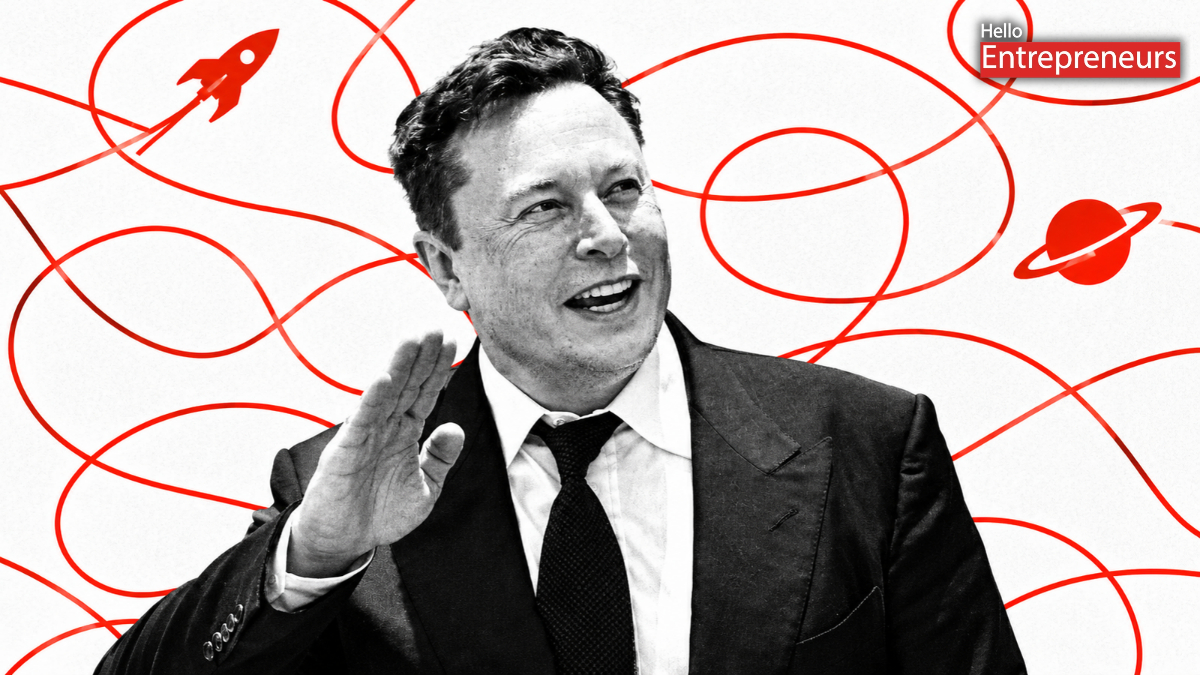
New Delhi, October 30, 2026: Elon Musk has brought once again the idea of saving up to the future into question. He responded to a user on X who was stating they were leaving financial stress on October 29. His reply was straightforward: It’s not worth saving for in the distant future anymore with the rise of super intelligent abundance.
It had approximately 2.7 million views in just one day. A second post from Musk, which quoted a biotech commentator, said breakthroughs in everything are accelerating exponentially, and that an exponential always starts off looking small. He cited pills that doubled survival rates in pancreatic cancer and gene editing to lower cholesterol rates, among other examples, in a Grok-generated summary on X. The same summary states that he made pronouncements in a September 2026 meeting with President Trump that he would guarantee everyone universal high income and excellent health care via robots and superintelligence. X itself cautions that there may be errors in Grok, so it seems to be prudent to check those details.
The reaction is divided into familiar paths. Supporters believe that low energy costs and low robot labour costs could lead to low prices for housing and food. Critics are concerned that the benefits will not be extended to all, and caution against putting savings at risk this time. Under the argument lie several questions.
What about people who have saved all their lives?
If a retired person has only the money deposited in bank and provident fund, “money won’t matter” is a very risky proposition. Bills have been coming in and none of the abundance has come yet. If prices actually dropped, there would still be something for savings to purchase. Otherwise, it leaves a person with no money to spend. Financial planners tend to regard any forecast as an impetus to remain flexible, rather than to cease saving.
Who will own the wealth?
Abundance is not who claims it; it’s how much is made. A handful of investors/businesses control the robots, data centres and AI models. Most of them would rely on the goodwill of those owners or on government re-distribution of those returns if those owners leave them. The answer to this is Musk’s “universal high income” concept, but he has not disclosed a plan for its financing or implementation.
Will land, electricity and resources become the new currency?
Possibly. While there is no end to copying software, land, water, minerals and power cannot be copied. With most products being cheap, the stuff that remains scarce may be the primary stores of value. Then, cities, farmland and energy infrastructure might become more significant, and ordinary cash less. That would do nothing to help the already-had and work against the un-had.
What does this mean for India’s middle class?
The saving culture in the middle-class household of India comprises money kept in gold, fixed deposits, mutual funds, flat, and money saved for the children’s education and for marriage. The lack of any safety net in retirement planning here rests on the assumption that there is none, because coverage is low; most of the medical risk is borne by families. It’s difficult to imagine a nation that is still developing its essential public services is offering a guarantee of free medical care and regular pay from robots. It is perfectly possible to do harm by telling an Indian family to stop saving, while there is no guarantee to them. No one is going to change his or her behavior based on a tweet.No one’s not going to do something differently based on the strength of a tweet, at least real estate investors and gold buyers won’t.
If work becomes optional, what gives life meaning?
Work gives routine, status, friendships and a purpose to get up for many. Research on long-term unemployment has revealed harm to even the continued receipt of income after losing these jobs. If AI does the work, societies will need to find alternate sources of purpose – caregiving, craft, community, learning or art – but Musk has said little about this, and may prove to be the tougher question.
The bottom line
Musk has a history of making bold deadlines, ones that can be off-target. But if his prediction does happen in reality in the long run, it may take decades and be irregular. So long as there is no sign of plenty in prices or wages or public services, most economists say that saving is the prudent default. Probably the debate he started will live long after the tweet.

