



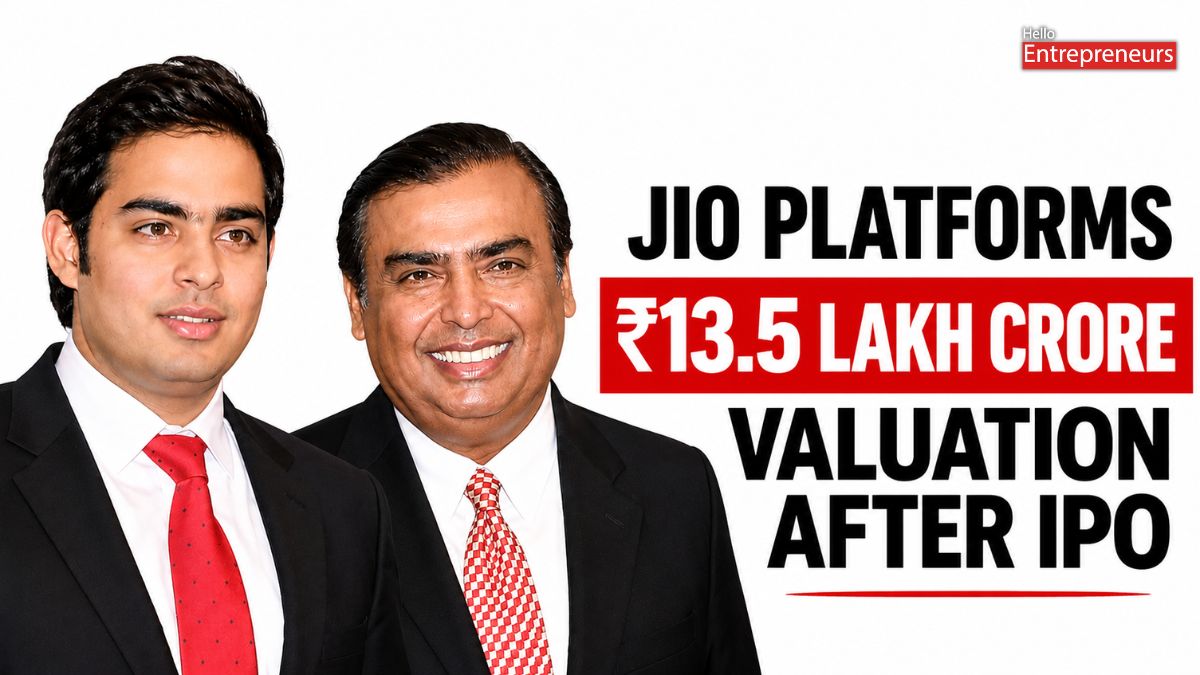
Mumbai, October 29, 2026: Reliance Jio Platforms, the telecom and digital services business led by Mukesh Ambani, has seen its market valuation rise to approximately ₹13.5 lakh crore following a strong stock market debut. The company’s shares continued to gain after listing on October 28, strengthening its position among India’s most valuable listed companies.
Jio Platforms raised ₹30,213 crore through its initial public offering (IPO), making it one of India’s largest public share offerings. The shares were issued at ₹1,119 apiece and listed at ₹1,358, a premium of 21.36%. On its first trading day, the stock closed at ₹1,417.50, delivering a gain of approximately 26.7% over the issue price. The IPO was subscribed 21.46 times, reflecting strong investor demand.
Jio Platforms Revenue and Profit Growth
Jio’s financial performance provides context for its rising market valuation.
The company’s revenue increased from ₹1,09,558 crore in FY24 to ₹1,28,218 crore in FY25 and ₹1,46,885 crore in FY26. This represents year-on-year growth of approximately 14.6% in FY26.
Profit also rose consistently, increasing from ₹21,434 crore in FY24 to ₹26,120 crore in FY25 and ₹30,053 crore in FY26. The latest figure represents annual profit growth of approximately 15%.
Meanwhile, total assets expanded from ₹5,39,580 crore in FY24 to ₹6,15,594 crore in FY26, reflecting the scale of Jio’s operations and investments.
More Than 530 million Telecom Customers
Jio has built a customer base of more than 530 million telecom subscribers, making it one of the world’s largest mobile operators by subscriber numbers. Its business extends beyond mobile connectivity into broadband, digital entertainment, enterprise technology and cloud services. The company is also exploring opportunities in artificial intelligence and other digital technologies.
Global technology companies Meta and Google invested in Jio Platforms in 2020, supporting its expansion into digital services.
Jio’s shares listed at ₹1,358 apiece, a premium of 21.36% over the issue price of ₹1,119. The stock subsequently closed at ₹1,417.50 on the National Stock Exchange, delivering a listing-day gain of approximately 26.7% over the IPO price. The offering attracted substantial investor demand, with bids exceeding the shares available by more than 22 times, according to market reports.
Jio Platforms Revenue and Profit Growth
Jio’s financial performance provides context for the valuation investors have assigned to the business.
According to the company’s financial figures, revenue increased from ₹1,09,558 crore in FY24 to ₹1,28,218 crore in FY25 and ₹1,46,885 crore in FY26. This represents growth of approximately 14.6% in FY26 compared with the previous financial year.
Profit also increased consistently, rising from ₹21,434 crore in FY24 to ₹26,120 crore in FY25 and ₹30,053 crore in FY26. The latest annual profit figure represents year-on-year growth of approximately 15%.
Meanwhile, total assets expanded from ₹5,39,580 crore in FY24 to ₹6,15,594 crore in FY26, reflecting the scale of the company’s operations and investments.
More Than 530 Million Telecom Customers
Jio’s business extends beyond mobile connectivity into broadband, entertainment, enterprise technology, cloud computing and artificial intelligence-related services. Its telecom network serves more than 530 million customers, providing a substantial base for expanding digital services and increasing revenue per user.
The company is backed by global technology giants Meta and Google, which invested in Jio Platforms in 2020. Its public listing also gives investors a direct opportunity to participate in the growth of Reliance’s digital business.
Akash Ambani Takes the Spotlight
The listing marks an important milestone in Reliance’s leadership transition. Akash Ambani, Mukesh Ambani’s eldest son and managing director of Jio Platforms, has emerged as a key leader in the company’s next phase of expansion.
Reliance Industries retains a majority stake in Jio Platforms following the IPO, keeping the business under the group’s control. The offering also supports Reliance’s broader strategy of expanding beyond its traditional oil and chemicals operations into consumer businesses and technology.

