



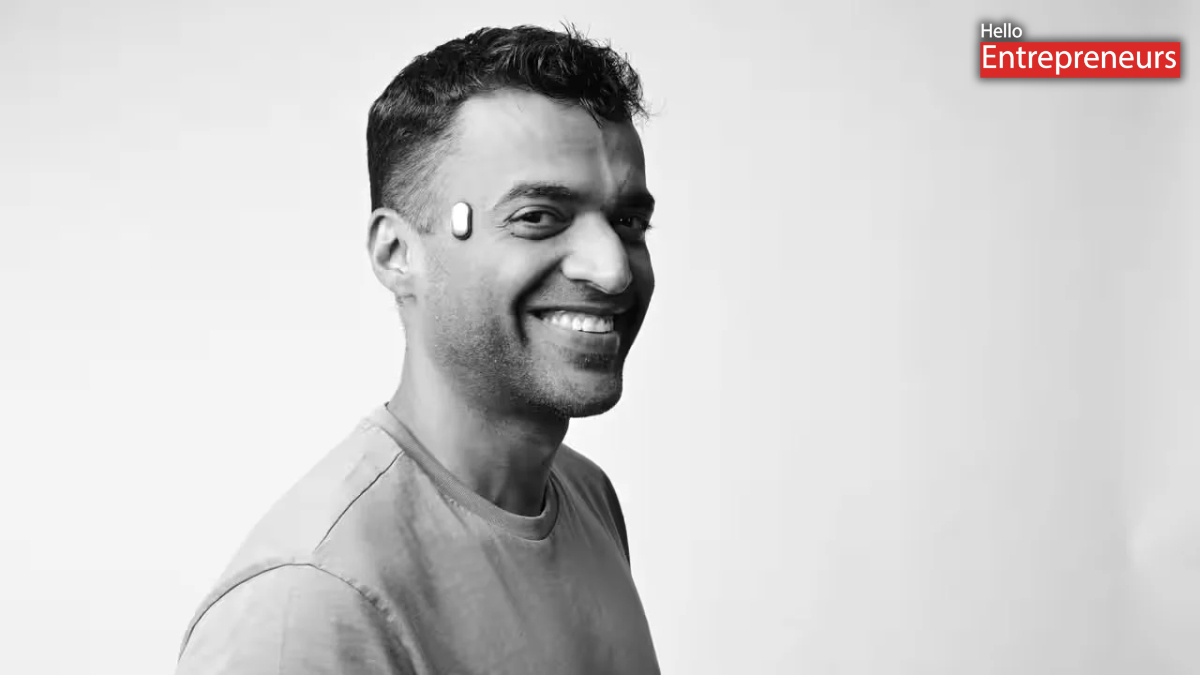
New Delhi: Deepinder Goyal’s Temple is a small sensor you stick near your eyebrow, and it is about to cost more than most Indians’ phones, laptops and, for plenty of households, a second-hand scooter. Pre-orders are opening for a limited launch edition. The price in the India Today report is ₹85,000.
That’s higher than earlier estimates. Reports before the launch put it anywhere from ₹72,000 to ₹80,000, and Goyal himself had hinted at something near $1,000, around ₹1 lakh. So ₹85,000 sits inside the range he’d been floating. It’s still a lot of money.
I couldn’t open the India Today piece itself, so I’m relying on the headline figure and on other coverage for the rest.
What do you get? Not a smartwatch replacement, whatever the sticker shock makes you think. Temple isn’t trying to count your steps. It’s meant to track cerebral blood flow and oxygenation in real time, and the team says it has found a biomarker readable only at the temple, which it calls “Entropy.” Goyal described it as a live number from 1 to 250 that updates every second. The brain uses roughly a fifth of the body’s blood supply, he’s argued, and nobody has measured that continuously on a wearable before. That’s his claim. I haven’t seen independent validation, and a number going up and down on a screen isn’t the same as a number that means something medically.
The pitch is aimed narrowly. Goyal talks about athletes, scientists, doctors, founders and creators, and has floated pilots and military readiness down the line. In May he said the first 100 devices were ready for select founding users. He’s also said the company will pick who gets in, which makes the “pre-order” feel more like an application.
The money behind it is serious. Temple reportedly raised $54 million from friends and family at about a $190 million valuation, and one outlet says Goyal put in around $25 million of his own. This isn’t a hobby.
So, will ordinary Indians spend ₹85,000? Almost certainly not, and I don’t think that’s the plan. A premium Apple Watch or a Whoop-style band costs a fraction of this, and those already cover heart rate, sleep and workouts. Temple is selling something they don’t: a measurement from the brain’s blood flow. If that proves useful, the buyers are people who treat training and recovery as a serious expense, plus a few gadget collectors who’ll buy anything with a founder’s name on it.
The real question is whether the data does anything for the wearer. A new metric is easy to launch. Telling someone what to do differently on Tuesday because of it is much harder, and the early users will be the ones to find out. I’d wait for results from those first hundred before calling this the future of wearables or an expensive curiosity.
Goyal says shipping starts before the end of 2026. That leaves about two months.

