



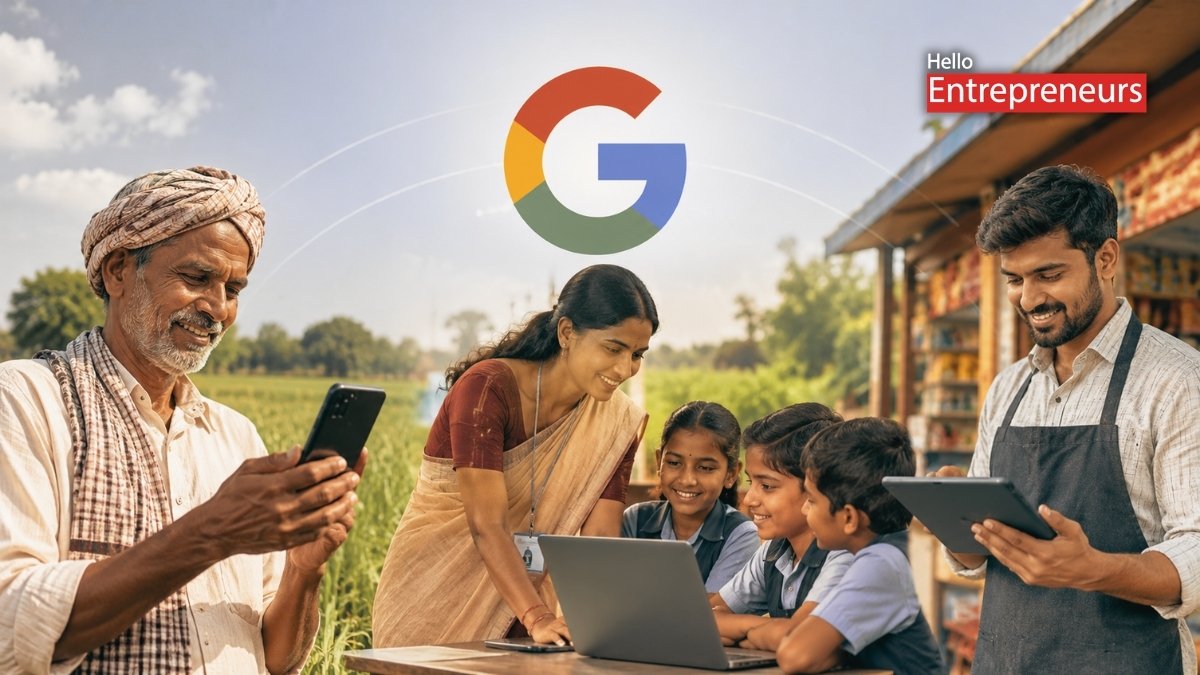
NEW DELHI: Google is ramping up its AI efforts in India with some big plans in agriculture, education, and small businesses. On October 15, 2026, they rolled out a bunch of new programs: research for hardier crops, wider access to farming tools powered by AI, teacher training sessions, and a $15 million boost for micro, small, and medium enterprises (MSMEs).
Instead of just building more chatbots, Google wants AI to tackle real-life problems. Farmers, for example, can get better info on crops and weather. Teachers get help with planning lessons. Small businesses can use AI to find new customers and get loans.
One standout project teams up Google DeepMind and Google.org with ICRISAT (International Crops Research Institute for the Semi-Arid Tropics) to map out a genetic atlas of sorghum (also called jowar). The hope is that researchers will pinpoint varieties of sorghum that grow better and survive tougher weather. Sorghum matters a lot in places where water is scarce and the climate is unpredictable.
Google’s sharing its Agricultural Understanding models through public APIs. This basically lets developers and researchers build apps for their local farming communities.
In Gujarat, Google’s AI models are already part of the Krushi Pragati platform from Amnex. Last year, it helped send out more than 900 million farming tips via text messages to over 600,000 farmers. These texts covered things like crops, pests, soil, and weather.
That’s a massive reach for digital farming advice. Whether this actually boosts crop yields and incomes, though, comes down to how farmers use these tips and how on-the-mark the advice is for local conditions.
On the education front, Google’s expanding its training for teachers. Since May 2026, over 80,000 teachers in India have already taken part in the Google AI Educator Series. Teachers are learning how to use tools like Gemini and NotebookLM to create lesson plans and organize materials. It should save them some time on prep and let them focus more on students.
This teacher program is growing through partnerships in Bihar, Madhya Pradesh, Sikkim, and with India’s Ministry of Skill Development and Entrepreneurship. Google’s also offering free online courses for teachers who can’t get away for in-person workshops, with more Indian-language options coming soon.
Then there’s the small business push. Google.org is putting $15 million into The/Nudge, a nonprofit supporting India’s MSMEs. India is home to more than 90 million micro, small, and medium businesses that’s jobs for over 345 million people. Still, a lot of these businesses struggle to get loans, find new customers, or navigate all the rules.
The money will go toward building AI-powered tools to tackle these issues. There’s going to be an open call for new ideas, plus a voice-driven platform in multiple languages to help people in smaller towns pick up job skills and connect with business contacts.
For small business owners, this should mean clearer info on regulations, better ways to find customers, and help pulling together what they need for a loan application. Of course, the big question is whether these tools will work as hoped and if business owners will actually use them.
So, what’s the big picture? Google’s plans show how AI can help different parts of India’s economy. Whether you’re a farmer, a teacher, or a shop owner, better info and useful tech can make a difference.
This also sets the stage for more Indian developers and startups to build practical AI-based products for local needs. More variety, more local know-how.
But, and it’s a big but just handing out new tech isn’t a magic fix. People need tools they can trust, understand, and afford, whether it’s a farmer needing local weather tips or a teacher looking to save time.
The real value here depends on how much these programs help people work better, reach more customers, or simply make daily life easier. For India, the next challenge is taking all this AI research and funding and turning it into tools people actually use. That’s where it gets real.

