



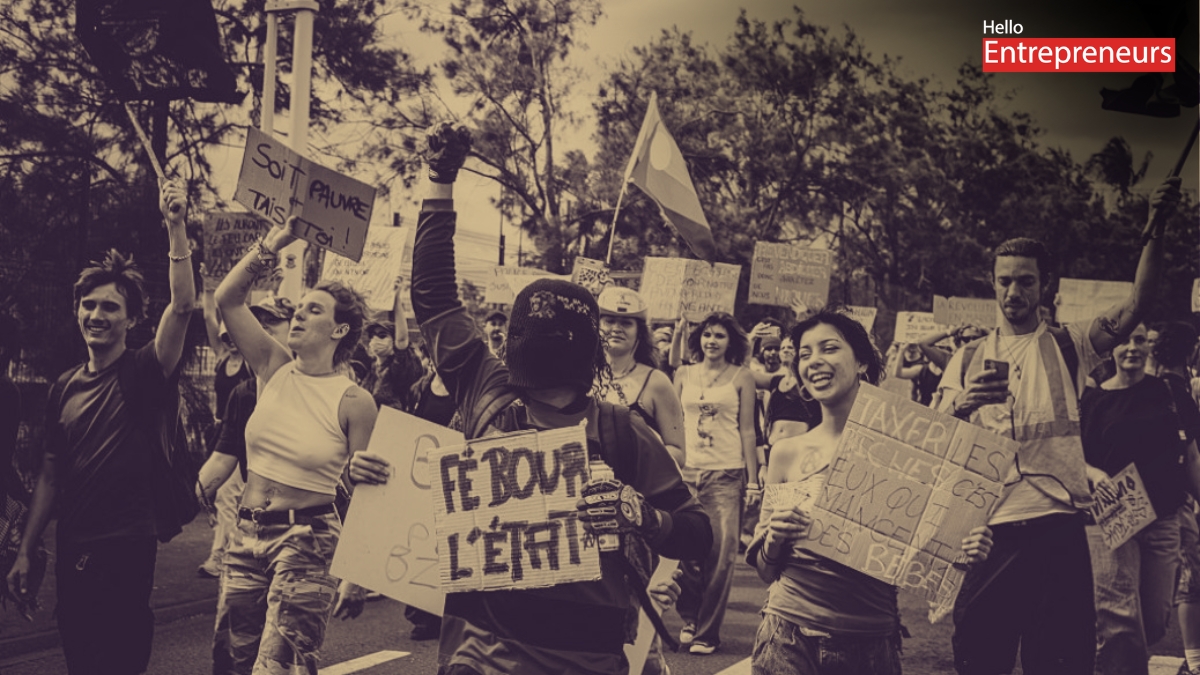
Prime Minister Sébastien Lecornu said France will enforce more targeted curfews, letting local leaders decide where they’re needed. This comes after one night of restrictions managed to keep cities quiet, following some of the worst rioting in years.
The government’s trying to regain control after a weekend that started with protests about the cost of living and poor schools—and ended in riots, looting, and attacks on public buildings across big cities.
After a chaotic weekend, Monday night felt like a break, but it’s fragile.
Lecornu credited the curfews for calming things down. He said local prefects would work with mayors to decide on new measures as issues pop up. In Paris, police set a curfew from 11 p.m. Monday to 6 a.m. Tuesday for two hotspots: Place de la République, hit by riots Saturday, and Les Halles, which was looted. Gatherings and protests in Paris got banned after 8 p.m.
Other cities rolled out their own restrictions. Lille and other northern towns barred anyone under 18 from being out between 8 p.m. and 6 a.m., at least for the next two days. Nice put minors on curfew starting at 9 p.m.
The trouble began with high-school student protests about lousy learning conditions, then spread. Now, anger’s focused on rising prices and what protesters call ignored needs in health, housing, and welfare.
Laurent Nuñez, the interior minister, admitted police “lost control” in some cities Saturday. Groups of hundreds clashed with police and attacked public buildings, city halls, and offices.
Authorities said they arrested around 2,400 people over the weekend. Justice Minister Gérald Darmanin said 123 of them were set to stand trial; about 2,500 stayed in custody for questioning.
The government’s tally: at least 3,000 businesses hit by damage or looting. In Limoges, flames tore through the 19th-century city hall, collapsed the roof, nearly destroyed the whole thing.
President Emmanuel Macron refused Nuñez’s resignation, insisting France needs steady leadership right now. He told the interior minister to come clean about what went wrong and to roll out new policing tactics fast.
Lecornu defended police, saying that while the violence and property damage were severe, nobody died. “I’m absolutely determined to restore order,” he said, admitting the government “screwed up” handling the unrest.
The chaos pumped up political tension ahead of next spring’s presidential vote. Jordan Bardella, leader of the far-right National Rally, accused the government of failing to protect the French people and called on voters to act.
Protest leaders have already announced more demonstrations for Saturday. The main student union, UNEF, said they’ll keep pushing Macron over what they see as an underfunded education system. “Yellow vests” groups called for scattered protests about fuel prices.
France’s main labor unions, like the CGT, aren’t joining Saturday’s actions.
Right now, the government’s biggest challenge is stopping another violent weekend without making things worse. Lecornu’s plan—localized curfews, closer work with mayors and prefects, new policing tactics—looks like an effort to restore order without diving into a full-blown state of emergency.
Still, Saturday’s protests are looming, and shopkeepers are counting their losses. Monday night’s calm feels more like a brief pause than a real fix.

