



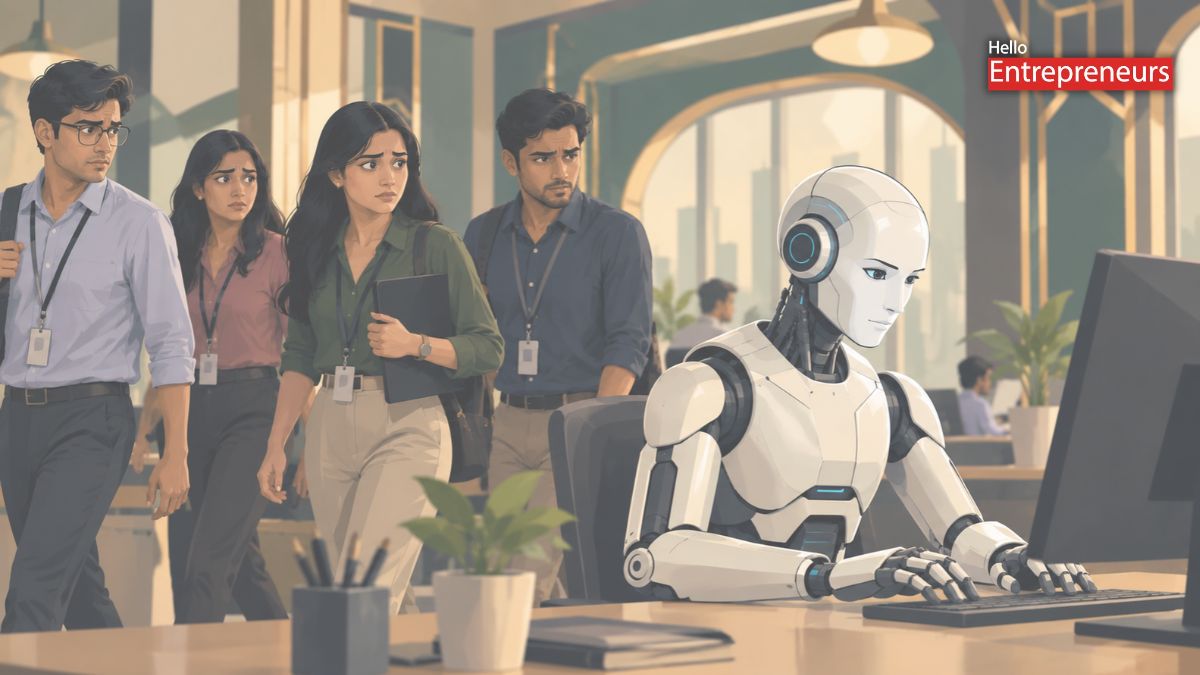
There is visible concern across India’s $315 Billion IT industry, with the industry now facing a double whammy of challenges that has made its reputation as a cheap IT outsourcing location obsolete. Across the board, TCS, Infosys, HCL and others have moved with global trends, laying off thousands while replacing them with AI bots as clients increasingly demand AI-enhanced solutions as against the conventional hourly billing model. And that’s how they are getting squeezed from both ends- AI implementation costs as well as rising digital infrastructure costs.
“AI improves productivity, but not always enough to offset rising inference, cloud and subscription costs.” an analyst tracking AI spending trends said on the condition of anonymity. ‘Companies may save 5-10% on workforce costs in the near term, but AI infrastructure and model consumption costs are growing 20-30% annually, while revenue growth remains in single digits,” he adds.
With AI infrastructure and implementation costs rising from both ends, some companies have had to walk away from projects that aren’t economically viable, even as most new contracts are now based on outcomes and KPIs.
“In principle, a firm that bills for hours has little to protect once the hours fall. Revenue holds when the provider is paid for results, shares in the productivity gain, and sells work that did not exist before, such as running and governing AI systems. Cutting the hourly rate and waiting for volume rarely works,” Rajesh Jain, Founder and MD of Netcore AI, says.
“Whatever share of engineering work AI automates, hours stop being a defensible unit of price once clients can see how few hours a task needs. In selected engagements where results can be measured credibly, 30% of our platform fee depends on the client’s own KPIs,” he further explains.
Beyond AI, and because of it, IT companies have had to spend through their noses on digital infrastructure- with server costs, cloud subscriptions and inference costs rising through the roof.
In many cases, AI infrastructure spending is now growing faster than payroll savings, with AI being deployed across coding, customer support, workflow automation and internal operations in Indian IT firms. Despite this, IT service revenue growth has slowed to reach just under 4%, according to a report by UnearthInsight.
Companies, including Sridhar Vembu-led Zoho, are now working to upskill their staff and cut expenses as they look to address these concerns, but how that works remains to be seen.
Though many companies have their own SaaS products as well, the industry as a whole requires to pivot in line with market demands.
“Indian IT firms can pivot, and it needs different habits: product thinking and patience with payback,” Rajesh adds, as IT companies will have to move beyond being ‘Technology execution partners’ to owning the infrastructure beneath the application.
“Indian product companies already sell globally even as foundation models keep coming from a few large labs, largely outside India, so the durable opportunity is the application layer,”