



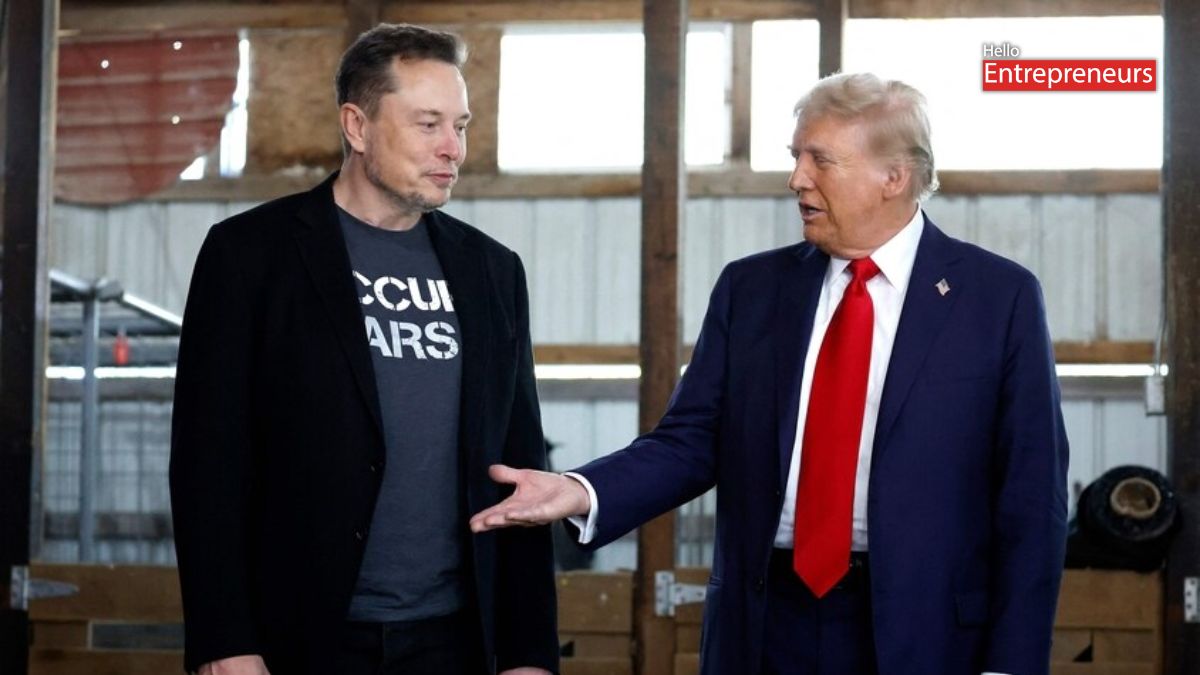
Elon Musk’s reported $288 million in political donations during the 2024 US election has sparked fresh debate on social media, with users questioning whether his support for Donald Trump was linked to Tesla’s business interests.
An X account, @ExSecular, shared a report on Musk’s donations with the caption, “Only to keep out BYD cars out of US market,” triggering reactions about the growing competition between American electric vehicle maker Tesla and Chinese rival BYD.
The discussion comes as BYD continues to strengthen its position in the global electric vehicle (EV) market. In 2025, BYD sold more than 2.25 million battery-electric vehicles, overtaking Tesla, which delivered around 1.64 million vehicles during the year. Tesla’s deliveries declined by 8.6% compared with 2024, while BYD expanded its lead in battery-electric vehicle sales. These figures have added to the debate over whether Tesla faces increasing pressure from Chinese manufacturers offering a wide range of electric cars at competitive prices.
Social media users linked this competition to Musk’s political donations. One user, Rajnish2025, claimed that BYD could outperform Tesla and alleged that Musk supported Trump to keep the Chinese company out of the American market. Mohana Ravivarma wrote, “You donated for your own benefit, and the world is suffering.” Another user, AbhishekDa34212, called Musk “Trump’s bootlicker,” while Nirav Chaudhary questioned his reported donations, writing, “Didn’t you donated $290 million to Trump.” Another user described the situation as a “Self Goal,” suggesting that the controversy could backfire on Musk.
The debate also highlights existing restrictions on Chinese electric vehicles in the United States. In May 2024, the administration of then-President Joe Biden announced an increase in tariffs on Chinese EVs from 25% to 100% under Section 301 trade measures. The move was presented as a step to protect American businesses and workers from what the US government described as unfair Chinese trade practices. These tariffs make it much more expensive for Chinese manufacturers to export electric cars to the American market.
However, the claim that Musk’s donations were specifically intended to keep BYD out of the US remains unproven. The tariff increase was announced in May 2024, before the November presidential election, and the social media posts do not provide direct evidence linking Musk’s political contributions to the decision. The restrictions also form part of a broader US trade policy towards China rather than a measure aimed only at BYD.