



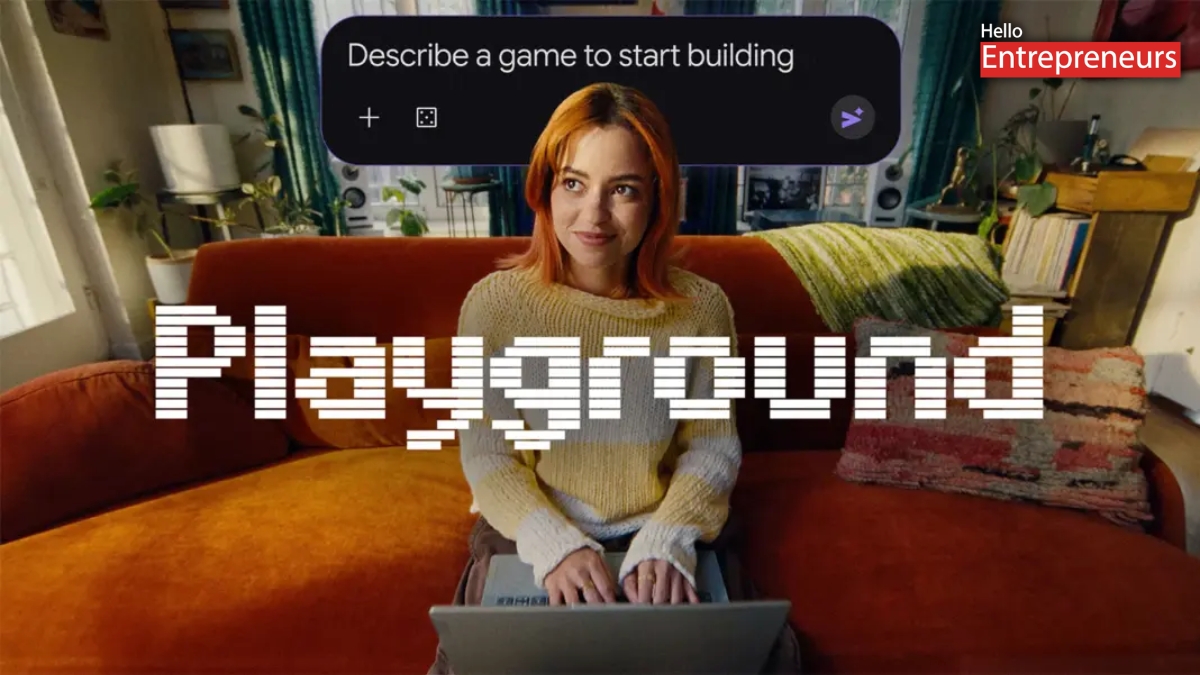
New Delhi: Google wants you to make a video game by typing what you’d like it to be. On Wednesday the company rolled out Playground, an experimental platform where you describe a game in plain text and the thing gets built, then you play it in your browser.
That’s the pitch, anyway. According to Google’s announcement, written by software engineer Maryam Karimzadehgan, you can start from a blank canvas, remix a starter prompt, or take some guided help shaping an idea. After that you keep talking to it. Change the physics, rewrite the rules, swap out the characters, rebuild the environment. Each tweak is just another request.
Sharing is where it gets a bit more social. Users and other tech enthusiasts can keep a game private, send a link to friends, or publish it to the Playground Explore gallery. Some genres support multiplayer, and there are leaderboards. If you set up a Play Games profile, you can pick a custom handle, like games, and follow creators. Everything runs in the browser, so phone or laptop, same deal.
The gallery ranks games using player ratings and play activity, which is the obvious way to do it and also the way that tends to favor whatever’s already popular. Google says every published game goes through safety screenings tied to its Community Guidelines, plus user reporting. It doesn’t say how those screenings work, and with anyone able to publish anything, that’s the part I’d watch.
There’s a second act coming. Google says Playground will soon integrate with Unity Spark, which it describes as bringing professional-level mechanics, high-fidelity 3D and the Unity runtime. The idea is that someone can begin with a text prompt and eventually grow into more serious work. Spark is still in testing, with a closed beta “coming soon,” and Google gave no firmer date.
Now the caveats, and there are several. Launch is U.S. only, and only for users 18 and older. Access to creation is tiered, rolling out according to your Google AI subscription, but the announcement doesn’t spell out what each tier gets or what any of it costs. Multiplayer is limited to “select genres,” which isn’t defined either. And Google itself calls this an “early experiment.”
The bigger question is the one the announcement can’t answer: how good are the games? “Describe it and play it” is easy to say. Whether the results are fun beyond the first five minutes is another matter, and nothing in Google’s post settles that. The company points readers to demo games at playground.google, which is probably the fairest test available right now.
Still, the framing is worth noting. Google opens by saying game creation has been limited to people with technical experience and knowledge of complex game engines. That’s true enough. If Playground even partly changes it, plenty of people with ideas but no programming background will be making games by the end of the year.

