



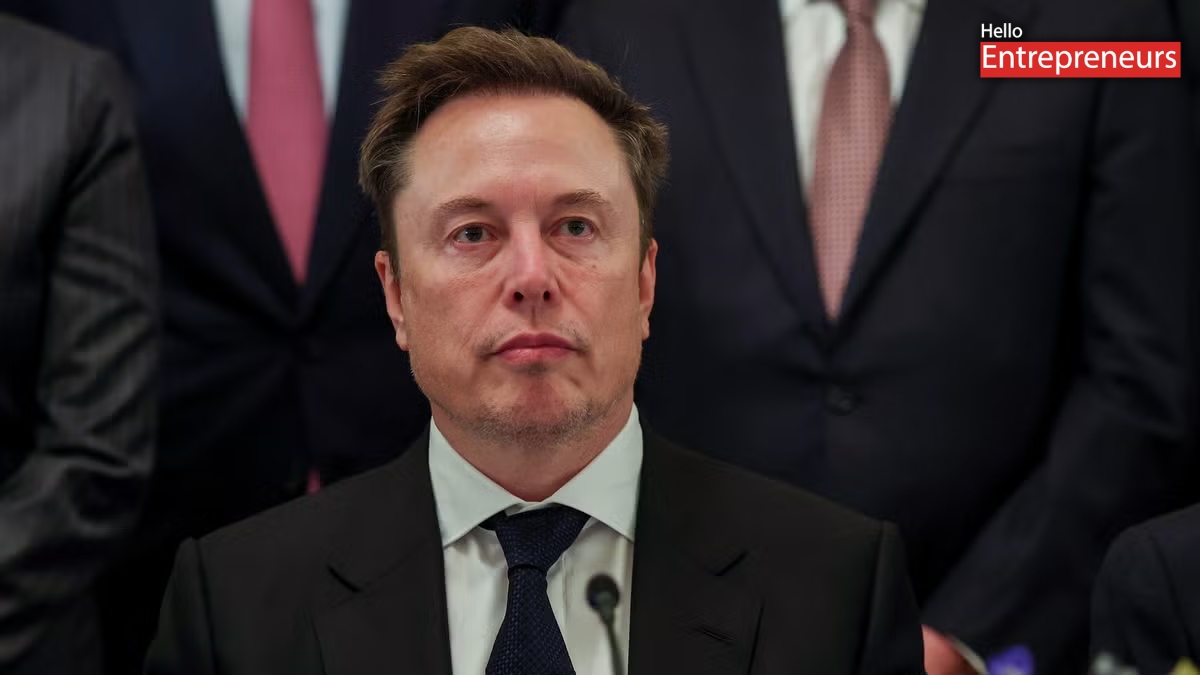
New Delhi: Elon Musk has accused unnamed Indian business interests of blocking entry of Starlink in the country and the government has responded within one day. The exchange has brought up a five-year-old issue that SpaceX has been dealing with in India: why’s the service not live?
On X, Musk stated that certain oligarchs were attempting to monopolize the market and blocking access to Starlink, and gave his followers a list of one or two names to guess, concluding his description by calling it a “crime against the Indian people.” He didn’t say who or what they were, nor did he provide any proof. Bloomberg called the post an “apparently dig at Mukesh Ambani of Reliance and Sunil Bharti Mittal of Bharti Airtel,” which run Indian telecom.
The India Communications Commission on Thursday categorically refused to believe the claim, without identifying Musk. It said the allegation was baseless and that, “the country’s authorisation framework for telecom services, including satellite, is fair and non-discriminatory.
That same post repeated a statistic from a different post that said there will be 11,256 villages without 4G coverage as of May 2026. This is an unverified figure.
A long wait
Starlink’s Indian push started in 2021 when the company started accepting pre-orders and was instructed to halt operations until it receives a licence. It acquired a satellite communications licence almost a year ago, allowing it to sign on agreements and plan for operations. It has established a local infrastructure since then. This included an estimated 10 gateways and a hub in Mumbai, and affidavits affirming that Starlink complies with local data-storage regulations, Bloomberg reported in June. According to a more recent report, there are 20 gateways.
Security is the sticking point, Bloomberg’s June report said. Home Ministry agencies have blocked final clearances, a source report says, citing apprehensions about “the use of Starlink terminals in the Iran war. The deadlock has also stunted the progress of a pricing framework, a spectrum, which any commercial satellite broadband service must implement. It has been finalised it by the Department of Telecommunications but not submitted to cabinet yet. Indian competitors are waiting waiting as well.
Rivals turned partners
There’s a long tradition behind the monopoly argument. Starlink lobbied against auctioning the satellite spectrum; and Reliance is a public advocate for an auction, to make things even. The relationship has changed ever since. Last year, SpaceX announced plans to roll out Starlink services in India with both operators, Airtel and Jio, which stated that they would consider selling the Starlink equipment in their retail and online stores. Meanwhile, Jio is developing its satellite plans to tussle with Starlink head-on.
That’s a balance of partnership and competition, and Musk’s charge is difficult to nail down. While this could be due to the influence of lobbyists to the government’s office, no public evidence can be found of this influencing the government’s decision on why it has not yet completed the spectrum policy.
What to watch
There will be two decisions that will resolve the issue. The first is whether the Home Ministry gives Starlink its final security clearance. The second is whether the cabinet approves the pricing of spectrum. Final security and spectrum clearances not yet received. While both don’t occur, there’s no resolution, simply a public debate.