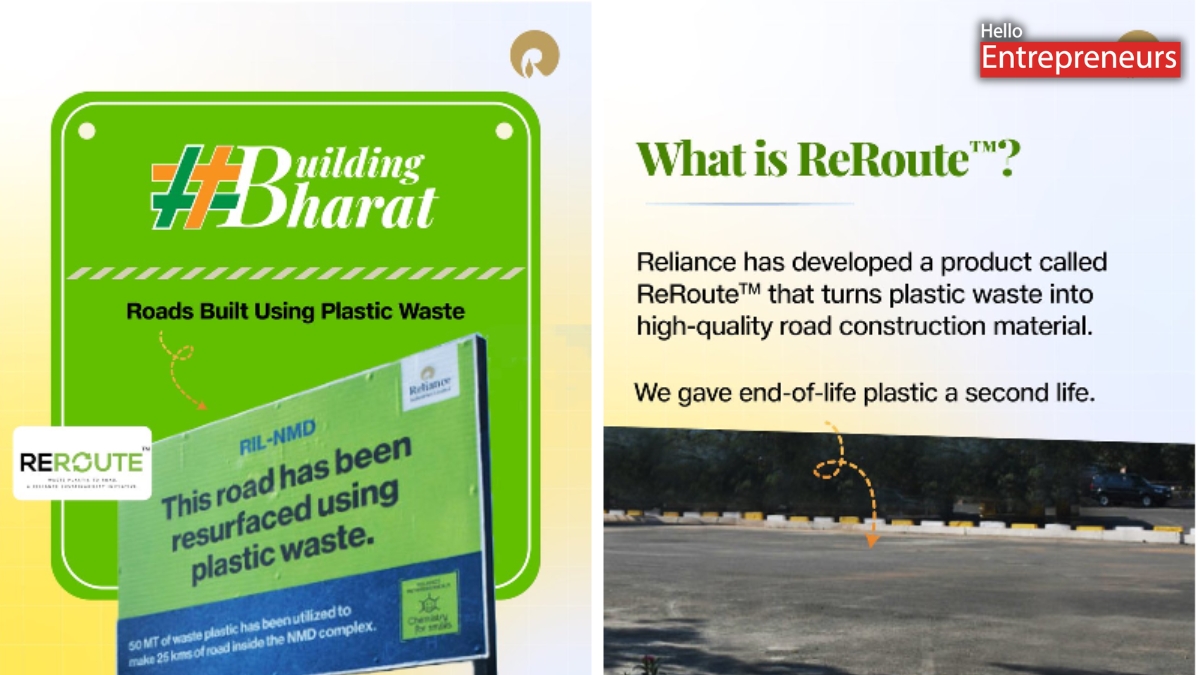








New Delhi: Reliance Industries Limited (RIL) is yet again making headlines for its ReRoute solution. The company has posted on X on October 4, explaining that at its Nagothane factory it is creating lengthier roads using end-of-life plastic.
How much is Reliance investing?
No investment figure comes out for the project from RIL’s announcement, nor does the post refer to any figure. There is no evidence of ReRoute being a significant capex programme, but rather a technology and service offering that requires low levels of capital investment. The company has laid almost 40 km of road by mixing 50 tonnes of end-of-life plastic with bitumen at Nagothane in Raigad district. Now its time for more adoption. RIL has contacted the National Highways Authority of India (NHAI) for the technology, pointing out that the primary challenge is to collect and segregate plastics and that that is a process know-how that RIL can provide. Thus any real spending will be determined by the contracts with the highway authorities and with state agencies and investors will have to wait until RIL confirms it.
What makes the roads different?
Shreds and blends nonrecyclable flexible plastic (snack wrappers, thin carry bags) into the road mix. This technique substitutes approximately 10% of the bitumen with waste plastic, thereby reducing the amount of bitumen needed and reducing construction cost due to the different costs of the materials. Such roads are more durable and less prone to deformation and water damage, the company claims. RIL claimed that the roads were finished in approximately two months and were still not eroded even after the monsoon rains. The performance data is also available: After four and a half years and four rainfall seasons, NIT Warangal compared the Nagothane roads and conventional roads.
Can it change Indian roads?
There is great potential. In 2020, the company executives estimated that the road projects planned by NHAI and state authorities could have the capacity to consume tens of thousands of tonnes of waste plastic. Policy is following suit. The plastic waste is now a mandatory component in the construction of highways and nearly 40,000 km of rural roads were built using plastic waste under Pradhan Mantri Gram Sadak Yojana in India.
We gave end-of-life plastic a second life… and it runs for 40 km.
We’re building with purpose at our Nagothane site, using our ReRoute solution to transform plastic waste into better, more durable roads.
#ReRoute #CircularThinking #Sustainablity #NagothaneManufacturingDivision #MakeInIndia #RelianceIndustriesLimited #BuildingBharat
— Reliance Industries Limited (@RIL_Updates) October 4, 2026
The need is real. Indian plastics production is approximately 15,000 tonnes per day and only around 9,000 tonnes of the plastics produced are recycled. This is the material road construction can use and that leaves a lot of packaging plastic for recycling processes that are not generally used for that kind of materials.
The challenges ahead
Collection and segregation have been cited by internal officials of Reliance as a major stumbling block. If clean shredded plastic is not available, there may be variations in quality from one project to the next. Testing on its own for a long time in various climates and traffic intensity will also determine the level of trust contractors put in the method. The Nagothane roadways are a good proof of concept, but a single industrial township is not like the national highway, which transports heavy goods.
In the meantime, ReRoute demonstrates how waste plastic can be a resource for the building of roads. How much it can reach will be determined by whether or not Reliance can develop sustainable supply chains and partnerships with governments based on its pilot success.