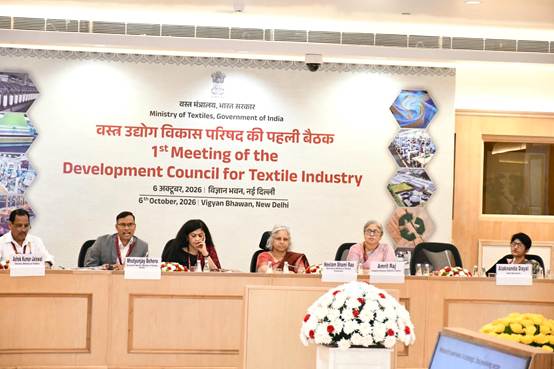






New Delhi, October 6: The first meeting of the Development Council for Textile Industry (DCTI) was held on 6th October, 2026 at Vigyan Bhawan, New Delhi, under the chairpersonship of Secretary, Ministry of Textiles, Smt. Neelam Shami Rao. The Council, constituted as the apex consultative platform of Government, industry and stakeholders, convened to deliberate upon its mandate of advising the Government on the orderly growth and development of the textile industry.
The meeting was attended by Senior Officers of the Ministry, representatives of Industry Associations, Export Promotion Councils, Research Associations, State Governments and Sector Experts.
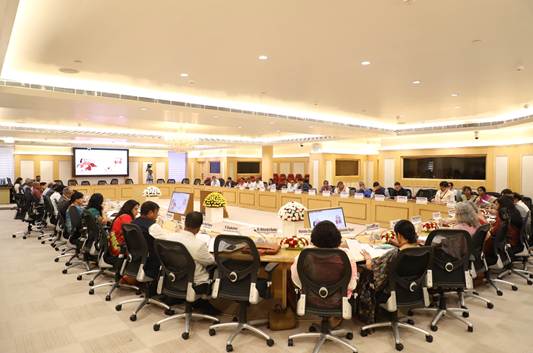
Addressing the Council, the Chair underscored that the textiles and apparel sector continues to be among the largest employment generators and export earners for the country and called for a coordinated, whole-of-value-chain approach towards production, innovation and global market access. The deliberations at the meeting focused on the following key areas:
- Production and Productivity: Capacity addition, modernisation, scale and cost competitiveness across the fibre, yarn, fabric, processing and apparel segments, with emphasis on addressing gaps across the value chain.
- Research and Development: Strengthening industry–research linkages, fostering innovation in new-age fibres and technical textiles, and facilitating faster commercialisation of R&D through Research Associations and institutions.
- Exports and Market Access: Diversification of products and markets, leveraging trade agreements, and addressing quality, compliance and logistics-related constraints faced by exporters.
- Raw Material and Input Availability: Ensuring stable and competitive availability of cotton, man-made fibres, yarn, dyes and chemicals, supported by effective market intelligence.
- Investment, Skilling and Sustainability: Promoting ease of doing business, strengthening support for MSMEs, workforce skilling, and adoption of sustainable and circular practices.
Members shared sector-specific suggestions on each of the above themes and welcomed the institutionalised industry – Government interface provided by the Council.
The Council agreed to constitute Working Groups/Sub Committees on priority themes and to meet at regular intervals to review progress. The Council’s recommendations will inform the Ministry’s policy and programme interventions and are aimed at:
- higher domestic production, improved productivity and a more integrated, scale-oriented value chain;
- faster translation of research into industry practice, including in the areas of technical textiles and new-age fibres;
- sustained growth in textile and apparel exports through wider market and product diversification; and
- greater investment, employment generation and a stronger and more sustainable domestic ecosystem.
The Chair thanked the members for their valuable inputs and reiterated the Government’s commitment towards a collaborative and industry-facing approach for the sustained growth of the sector.