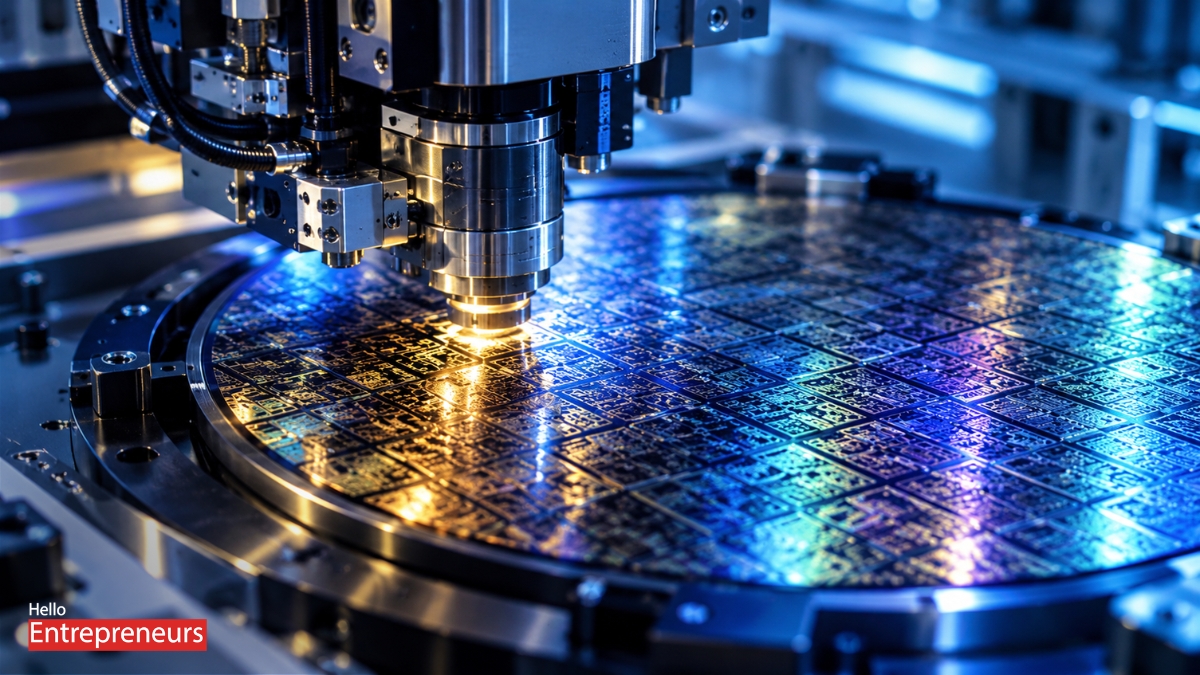







Mumbai: India’s semiconductor story is entering an awkward but important stage: building a factory is no longer enough. A shiny fab may make for excellent photographs, but chips do not appear because a clean room exists. They need designers, equipment, specialty materials, packaging, testing, research, skilled engineers, reliable suppliers and, eventually, customers.
That is the bigger message emerging from SEMICON India 2026, where the conversation moved noticeably from “Can India build chips?” to “Can India build the ecosystem around them?”
The three-day event in New Delhi brought together more than 600 exhibitors, around 300 international participants and representatives from 52 countries. It also recorded more than 51,000 registrations and about 40,000 visitors.
And now comes the considerably less glamorous part: making all of it work.
From Fabs To The Machinery Behind Fabs
At SEMICON India, Electronics and IT Minister Ashwini Vaishnaw described the transition as a move from establishing the semiconductor foundation to building the industry at scale. Under Semicon 2.0, the government is focusing on six areas: chip design, machines and materials, more fabs, advanced packaging and ATMP facilities, R&D, and talent.
That shift matters because semiconductor manufacturing is essentially a chain of dependencies.
A country can assemble or fabricate chips while still importing critical equipment, materials and intellectual property. The strategic question therefore becomes less about whether India can manufacture a chip and more about how much of the journey from design to finished component can happen within the country.
The government’s own programme now reflects that reality.
- Semicon 1.0: ₹76,000 crore programme outlay.
- Semicon 2.0: ₹1,27,500 crore approved outlay.
- 12 semiconductor projects: investment commitments exceeding ₹1.64 lakh crore.
- Five manufacturing plants: reported as having commenced commercial production by September 2026.
- Around 70,000 design engineers trained over four years.
It is important to separate these numbers. ₹1.64 lakh crore is the committed investment across approved projects, not money already spent by the government. Likewise, the ₹1,27,500 crore figure is the approved programme outlay, not an amount already disbursed.
The Less Visible Semiconductor Economy
The most interesting part of India’s next phase may happen far away from the headline-making fabs.
Materials, gases, semiconductor equipment, precision manufacturing, chip-design tools, packaging and testing can become businesses in their own right. Semicon 2.0 explicitly includes machines and materials, while the government says the programme is intended to cover the wider value chain rather than only manufacturing.
There is also a talent question.
The government says roughly 70,000 design engineers have been trained, while industry-grade electronic design automation tools are being made available to engineering colleges and startups. The stated objective is to expand India’s capabilities from chip design towards system design and precision manufacturing.
That distinction is crucial. Designing a component and operating a sophisticated manufacturing ecosystem require different capabilities. India has historically been strong in engineering and software services; converting that talent into deeper semiconductor ownership will take time.
Gujarat Shows Why A Fab Is Only The Beginning
Gujarat provides a useful illustration of this ecosystem approach.
A government backgrounder published in September said six of India’s 12 approved semiconductor projects are located in Gujarat. The Dholera semiconductor cluster is being developed alongside infrastructure such as housing, healthcare, education, emergency services and commercial facilities required to support companies and workers.
That sounds mundane until one remembers that semiconductor manufacturing does not operate in isolation.
A fab needs engineers. Engineers need housing. Businesses need logistics. Manufacturing needs utilities, suppliers and maintenance. Suppliers need customers. Universities need industry connections.
Suddenly, the semiconductor industry starts looking less like a building and more like a city-sized organism.
The Good News Comes With A Footnote
India has genuine momentum. Five commercial semiconductor plants are now reported to be operational, 12 projects have attracted investment commitments above ₹1.64 lakh crore, and SEMICON India 2026 generated 56 MoUs, announcements and strategic initiatives across manufacturing, design, packaging, AI, R&D, logistics and skilling.
But scale should not be confused with self-sufficiency.
The next obstacles include dependence on imported manufacturing equipment and materials, the enormous capital requirements of advanced fabs, access to technology, energy and water requirements, specialised workforce availability and the difficulty of creating commercially competitive products.
In other words, India has moved beyond asking whether it can enter the semiconductor race. The harder question is whether it can remain competitive once the novelty wears off.
The Real Test Begins After The Exhibition
SEMICON India 2026 may therefore be remembered less for the number of companies inside the exhibition halls and more for what happens outside them.
The government has already committed substantial resources: ₹76,000 crore under Semicon 1.0 and ₹1,27,500 crore under Semicon 2.0, while approved projects carry more than ₹1.64 lakh crore in investment commitments.
Now the return on that ambition will depend on execution.
Because semiconductor independence is not achieved when the first chip rolls off a production line. It becomes meaningful when the designer, equipment supplier, material manufacturer, packaging company, researcher and electronics maker can all find their place in the same industrial ecosystem.
The factory gets the headline.
The ecosystem gets the last word.
Read More: India’s 2026 Semiconductor Push Is Finding A Bold New Weapon In GaN